Zwingli’s Dare: From an Elephant Corral to a Leper Asylum With Spirit,Hope and Life

  Spring 2015 Mission Report: Part Four

If a hot shot TV preacher said it, I would reward him with a cynical grin, but it was Huldrych   Zwingli in the 1520’s. Zwingli, a German Swiss who was among the finest minds in the Protestant Reformation wrote, “dare to do something great for God”.  These words coming from this man provoked in me a rethink about ethics.  First when I read Zwingli’s dare I thought about it theologically but several months later by happenstance I thought about someone who took Zwingli’s dare. First here in this report I follow with a few reflections on Zwingli’s assertion then  I turn to a story about the transformation of an elephant corral that incarnated ‘Zwingli’s dare’.

In this statement “dare to do something great for God” I believe that Zwingli grasped the intersection between faith and ethics/service. When a person believes and acts from faith one does not view herself so close to God that she is a glove and God the hand and not so far away that its all about human free will and determination. In my reckoning, Zwingli, more than John Calvin, who came to dominate the Reformed branch of the Reformation, recognized the human ‘space’ and freedom that living by faith inserted into our service to God and others. When Ethics/service arise out of faith there is room for the human to be human and dare to do something for God and this daring to do something ‘great’ need not be the door to toxic independence, misguided visions of grandeur, pride, presumption, activism and willfulness but the space needed for a person to recognize and respond to a higher claim on herself to serve the Christ of God in the face of human need and suffering. The uncertainty and blindness that clings to faith (because faith by its very nature cannot exorcise uncertainty and blindness) protects and underwrites human ethical decision and action. In the end the person himself must transit from convictions and feelings of compassion, whether strong or weak and decide and act for a thing if help and change are to occur. This does not mean the hidden God is not before an endeavor preparing the way, in it and and following after it but ethics turns on driving a wedge of distinction between our and the subtle work of the invisible God.

Is it impossible, in some sense, for God to be delighted, even surprised? Is there room in the way of faith for us to irrupt in ecstatic gratitude and zeal and decide to give our best to serve God in the face of human need and suffering.The freedom of the woman befriended and liberated by Christ described in the Gospels comes to mind. In her heart she conceived a costly – great gift, one that mirrored her gratitude to Christ for his grace to her. Overflowing with thankfulness she went in search of very precious perfume and upon finding it she no doubt spent all she had to purchase it only to pour out every drop on Jesus anointing and washing his feet.  Touched by human need and suffering, often grasped, like this woman was, by the goodness  and gracious of God to her, humans time and again have gone beyond their inhibitions and limitations and beyond their instincts to make the primary focus of their lives taking care of themselves and prospering  and dared to do something great for God that cost them their all.

I stumbled on this Zwingli quote late in November (2014) whilst giving lectures on Christian Ethics in China but it wasn’t till this spring that it moved from the realm of idea into form. In May I went on a little trek to discover other mission projects in Thailand and without planning to I happened on Dr. McLean’s work. About the second day of four perusing the grounds where his mission occurred, reading placards and monuments and chatting with people Zwingli’s statement suddenly pushed itself back into my mind. With a rush of emotion I realized that I was seeing an incarnation of Zwingli’s spirited assertion.

Life is so short, for most people it is spent frantically trying to take care of themselves, secure, build and expand their nests on this earth. This of course is not a bad thing because from these settled abodes and livelihoods many sponsor indispensable help to humanitarian and Christian missions. But the following story of Dr. McKean stirs my blood because in a raw and real way, faced with human need he stood in the ethical gap where nothing is forced, required or necessary and dared to do something great for God in Christ’s service. Here follows a synopsis of his story.

It may not be exactly precise to state that Christianity came to Thailand first in Chiang Mai but the mission work that came to Chiang Mai in the 19th century laid an early decisive foundation for Christianity’s future in Thailand and it was holistic from the get go. Not only Gospel teaching and evangelism but education and health were in the mix. Around the turn of the century somewhere between the late 1890’s and 1900 a missionary doctor and a couple nurses working with what is now named The Church of Christ opened an outreach clinic near a bridge at the edge of the city where lepers congregated. From this meeting the great need and suffering of the lepers became vividly apparent. Leprosy was three diseases in one. It created social rejection and isolation because the nearest and dearest of the lepers’ kin cleaved from them. It ended one’s vocational and economic capacity creating desperate poverty and it cruelly deformed and severely handicapped bodies. Demonic loneliness, hopelessness and despair accompanied leprosy. Dr. McKean a Presbyterian doctor from the USA realized that their clinic response was a mere band-aid at best. But it cannot be said his work merely evolved. He faced a need and gave himself to it in a decisive and imaginative way. One moment in time facing this need he made a decision and dared to do something great for God.

Chiang Mai was a kingdom at this time and 16 Kilo out of town there was an island created by the Mae Ping River and a canal which the King owned, once a compound for training and keeping his elephants but now abandoned for fear of a rouge spirit of a great white elephant that reputedly inhabited this sanctum. Dr. McKean went to the king and petitioned him for this land requesting that it be given to his mission as a sanctuary for lepers, where they could live, be treated and rehabilitated and the king granted it to him. Because it was an island and created separation and because it was basically good land that could be built on and developed it was perfect for the mission  that Dr. McKean conceived.

In 1908 he commenced his mission “The Chiang Mai Leper Asylum”. From this beginning he began to treat leprosy with the herbs and compounds used at that time progressing with medical science as it unfolded all the while building living facilities, developing a gregarious working culture (leaving the asylum to beg was not allowed), creating enterprises that simultaneously provided vocational training and animal husbandry. Within this setting a lively culture was created that included not only work and treatment but recreational engagements and worship. Under all of Dr McKean’s endeavors the Christian faith was taught whereby hope, meaning, value and dignity could be restored and rebuilt on a new and better foundation.

In time McKean bought more land in out lying ares and organized 22 resettlement villages in Northern Thailand and staffed these with trained assistants once patients who could dispense medicine and maintain a healthy culture and order. In not a few of these settings former patients where returned to ownership of land and complete economic independence.

Albeit small in scale compared to the magnitude of human need and suffering around the world visiting and staying on this island for a few days I recognized that some one had dared to do something great for God with his life and over 100 years later, although change had come with the cure of leprosy, Dr McKean’s courage and labors continues to bear fruit. A fine small hospital thrives on this small island that treats many diseases including leprosy and a live-in center for the care of dementia patients has commenced. People deformed and handicapped from leprosy continue live and work there. Organic crops are grown and sold, fish farming for subsistence has been established and artistic painting and carvings are produced and sold.

I was moved by every facet of this mission project, its compassion and courage, its earthly wisdom, its holistic depth and its solid Christian base. The Christian foundation of Mckean’s work  among other things added to his material/physical rehabilitation the metaphysical glue needed for restoring and maintaining human dignity and hope as well as infusing self sacrificing love into all their societies and relations that developed in the asylum. Something great happened on this island and the shadow of it persists. Lepers came from as far away as Laos, Burma and China to live there. Not only bodies were treated but also broken and bruised excluded spirits where lifted to dignity, hope, spirited fellowship with each other and life!

Zwingli’s thought  “Dare to do something great for God,” stirred an ethical rethink in my mind but McKean’s work stirred in me the desire to deepen and build my own mission.

Ground Hogs, Pig Weed, Quack Grass, Black Locust Trees and Morning Glory: Why Love is the Greatest

Excerpts from Spring ICF Teaching Notes: Part Three

“Three things remain faith, hope and Love but the greatest of these is Love” (I Corinthians 13;13) – why? Paul Apostle to the Gentiles penned these words to believers in the city of Corinth in southeastern Europe about 57 C E. And they are holographic – meaning the whole is contained in the part. The big problem in Corinth can be detected in one little word in this verse. This word is ‘greatest’. The Corinth believers were enamored with greatness and commenced to splinter into competitive enclaves separated one from the other over what constituted  greatness in a leader. Some were in absolute awe about leaders who possessed great knowledge. Paul writes that at best our knowledge is partial (I Corinthians 13:9) and ‘if anyone thinks he knows anything he knows nothing as he ought to know it’ (I Corinthians 8:2). Others were enamored with oratory and homiletic skills. Others believed that great faith, the kind of faith that moves mountains, was the true mark of a great leader. To these claims Paul asserted that the spiritual gift to preach with the tongues like an angel or the gift to move mountains by great faith in and of themselves were vain. Even faith is a vain empty thing unless its mixed with a far superior spiritual ingredient he asserted.

Still others were bedazzled by prophetic powers and to these Paul reminds that Prophecies often fail. There is a novelty and openness about the future that defies the predictions of even the most Spirit filled prophet. ‘Now’, he writes ‘we see through a darkened glass’ (window) that is smudged and blurred by our anxieties, pride and simply for the fact that our feet are mired in mortal clay despite whatever spiritual giftedness we may lay claim to (real or imagined).  To this litany Paul’s adds an indictment against measuring greatness by heroic acts of piety. Some of the believers were no doubt insisting that greatness is to be found where the rubber meets the road – namely in heroic actions like bodily deprivations and sacrifices. ‘What is a man unless he puts his body on the line?’  But Paul argues, heroic acts of piety, no matter how costly to one’s body, are not in and of themselves truly great. Often behind such acts hides, not a humble self truly acting in courage for another’s good to the glory of God, but a soul desperate for applause thus venturing beyond himself and beyond the sanctuary of God’s blessing and protection.

Over against all these ways and means to greatness Paul asserts only three things really count – faith, hope and love and of these three love is the greatest. In a word Paul challenges the Corinthian believers yardstick of greatness asserting that they had it all wrong. Their measuring stick for greatness was not slightly flawed but dead wrong and needed to be trashed. Love alone is truly great and all measurements of greatness must be judged by the presence or absence of love. But while we hasten to agree ought we not to pause and question ‘why Paul is love the greatest?’

In this teaching I went in search of the greatness of love. I wanted not merely to accept Paul’s assertion that love is the greatest but feel after it and dis cover it. In this teaching I set out on a contemplative and “rational – existential” search to discover the greatness of love and seven reasons (evidences) emerged into the open. Here follows one of these.

Ground Hogs, Pig Weed, Quack Grass, Morning Glory and Black Locust Trees: Reasoning from Nature to Spirit and from Spirit to Love.

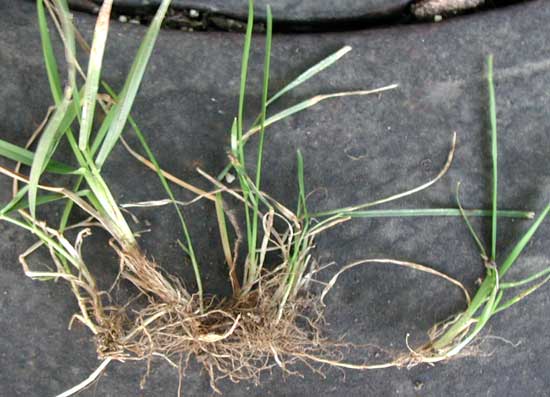
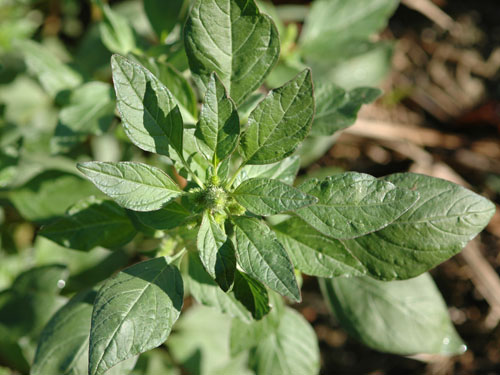
In another lifetime, in bygone days I owned ten acres in the Finger Lakes region of upstate New York. We had a spacious yard, a large garden, a three-acre meadow and four acres of beautiful mature Sugar Maple trees with a mix of wild Cherry trees great in stature, Beech, Pig Nut Hickory along with a smattering of scrubby ‘Iron Wood’ mixed in. It was not heaven but with my four kids, two goats and tractors I was determined to subdue this favored trek of land and suborn it to my aesthetic and practical desires and needs. But very quickly I discovered that there were enemies that were in place, rooted, ready and poised to subvert my determination. Not shy to name them openly, if only in detest I could even now twenty-five years later cast a shadow of shame upon them I list them here in the order of their ignominy. Let their infamy be published far and wide – Pig Weed (proper name Amaranth) Quack Grass, Morning Glory and Black Locust Trees. Add to these horticultural enemies the infamous northeastern United State Ground Hog that grew to the size of a small lumpy swine.

groundhog

When I first moved to this wind swept hill I was merely mused by their presence along with many other natural wonders like the Baltimore Oriole that came every spring, the Weasel that lived at the edge of the flower garden, the wild currents and shallots near the boundary of the yard and meadow and the Elder Berry Trees near the entrance to the woods. But within two seasons I realized they were not like the other rhymes and rhythms of nature. They were plotting a take over. Inbred in each of these was an inordinate self-interest, a grotesque over reach exceeding all other life forms that shared my stretch of land. Case in point. I set twenty long rows of kale plants in my meadow and commenced to cultivate them with my F 12 geared so low its driver could take a short nap by the time it reached the end of the row or listen to an inning of baseball on the radio. One day I came home and went out to the meadow to inspect my Kale project and spotted a Ground Hog at the far end of the field finishing off row eight. He and his wife had completely and systematically devoured eight complete rows of Kale the length of a football field.

pigweed

Pig Weed

In the garden I labored to achieve a fine pure tilt of top soil and then having achieved my seed bed I planted my entire garden only to realize that the Pig Weed was lying in wait. As soon as my seeds broke free and commenced their green career toward maturity the Pig Weed pounced. Everywhere I turned the Pig Weed was growing and growing ten times as fast as any of my plants gobbling up all the space, nutrition, sunlight and moisture.

morning glory

Morning Glory

The Morning Glory got their start on an edge of the meadow that I rarely visited. At first I paid little attention delighted by their happy light blue bell blossoms but soon I realized how aggressive these creepers were. They set about to abscond the land around them in ten foot leaps and bounds. And once they had it in their grip is was no easy task to reclaim it.

The black Locust Tree was sort of like Cassius Clay after he decided he was Mohammed Ali. To all other life forms on my land they boldly said, “we are the greatest”. A meadow left fallow for five years would literally disappear under the their avarice. Each year they would throw shoots out into the meadow 12 feet from the hedgerow and in one year they would grow two maybe three feet up and that far down. Here follows my point and one clue that reveals the greatness of love. The Quack Grass I will leave for another discussion. Here it is sufficient to state that its tactic was to look innocent above ground but underneath the surface spread like a malignant cancer in all directions so that it could not be uprooted.

Black Locust

Black Locust

There is a sturdy self-interest in all life forms in nature including of course human beings and here I am interested in human beings and employing nature to make my point. All to easily this self-interest heats up and becomes too great, too strong, captive to a destructive overreach. Sin as it is depicted in the Judeo-Christian tradition is not self-regard, or, properly understood, self-love, it is inordinate self-concern, inordinate exaggerated self-love. It is self-interest inflamed and expanded beyond its proper boundary such that it takes up too much social, spiritual and psychological space. Sin, as Martin Luther wrote, is self curved in, focused on itself (verses turned out to God and others). Sin is the opposite of love because as Paul writes in this letter to the Corinthians (chapter 13:5) ‘love seeks not her own’.

Here in this ‘does not seeks it’s own’ ( I Corinthians 13:5 KJV) lies the greatness of love. The way of love is great because love means to transcend the clamor of one’s anxieties, desires, needs and wants and turn out to the needs of one’s neighbor and the common good. To myopically focus one’s passion and energy on taking care of oneself, securing one’s place, one’s happiness and security not merely at the material level but at the social level is the opposite of love and the meaning of ‘sin’.

To focus on securing things (material) and one’s standing among others (the social realm of life) where honor, position, prestige, reputation, privilege and esteem have to do – is small and not great, no matter how successful one excels at this pursuit. And to relate to God purely on the level of one’s need and desire (the spiritual realm) is small. And this smallness is born not only from nature and the survival – security – anxiety instinct but driven by spirit, spirit that heats up and expands like the Pig Weed, Quack grass, Black Locust, Morning Glory, like the voracious Ground Hog whose appetite can never be satiated.

Quackgrass

Quack Grass

The destiny of Homo sapiens is different. Homo sapiens are called to venture humanness that involves being reshaped and remade beyond nature into the image of God. God and a higher destiny, higher than nature, are calling homo sapiens to break free from their slavish captivity to self interest, to tame, even transcend this propensity and venture humanness in God’s image by turning out to the uplift and needs of others, like God himself in the Christ turned out to lift up humanity.

“Love seeks not her own” here in this seeking not its own is to be discovered the greatness of love and this greatness the Christian Scripture asserts is the greatness of God. ‘God is love’ (1 John 4:8) and this assertion made by John the beloved is not merely an assertion of love as a pure seamless idea but the history of God; that God in time and place divests Godself of all divine power and prerogative and shows up on the human scene as a suffering servant to lift us up and set us free no matter the cost to God’s self.

The Good Samaritan Spring 2015 Mission Report: Part One

Spring has come to an end in the year of our Lord 2015, albeit with a qualification. Here in SE Asia “spring” is summer the hottest time of the year. Here follows my “Spring” (summer) Mission Report. Over the next two weeks, five or six posting will complete this report. It includes capsules of some of my spring teaching lessons, my explorations with three other mission endeavors in Thailand, reports on my meetings with college/seminary leaders. Here follows the first installment of a volley of postings to occur over the next two weeks.

WP_20150616_004

Excerpts from Spring Teaching Lessons: Even though  most of the colleges and seminaries that I serve bring their academic year to a close in March I have continued to work close with ICF (International Christian Fellowship) in Udon Thani, Thailand teaching lessons. ICF is a church and school that serve Thai Christians who want to worship and learn in an English speaking setting, Falang (foreigners) from Australia, Europe and America as well as Laos students who come to Thailand for 6 to 8 weeks at a time to study. ICF gains its funding from many sources including A G churches in the USA.  Here follows terse excerpts from several of these lessons.

The Second Question: In the parable of the Samaritan (which we call the Good Samaritan) we hear the lawyer, a scholar of the law, the Torah, attempting to save face by asking a second question. The lawyer had already asked Jesus one question and from this inquiry he came out looking a little suspect in the eyes of the people standing by. This can be deduced from the fact that he ended up answering his own question. This showed he already knew the answer to the question he had asked. Wanting to save face the lawyer ventured a second question. It goes something like this. “okay Jesus if you affirm that loving one’s neighbor as oneself is the gateway into life eternal who is my neighbor?” Without knowing it this question revealed the root of the lawyers spiritual – ethical disease. He had boundaries and limits to his neighborliness. The lawyer’s problem was sort of like the blinders the Amish put on their horses so that they cannot see anything except what is straight in front of them. He could not envision an application of the love your neighbor ethic beyond the horizons of his own kind. His family and kin, his Judean neighbors that lived in his sector, his Jewish people and the Jewish nation were the horizon of his love your neighbor as yourself ethic. In Jesus’ response to this second question he told the Samaritan story and literally burst the seams of the lawyers constricted ethical circumference.

WP_20150405_027

After Jesus’ story neighbor ceased to be parochial. It referred to anybody in need. The horizon of the love ethic was released from the cramped little religious, ethnic, familial, national spaces and places it was habitually caught in. Jesus’ love your neighbor ethic cast a light on the future world, what it will look like and the way of life it will incarnate, namely a true brotherhood and sisterhood where all care for each other and where difference ceases to divide. At first glance Jesus shows up in this story as its teacher –  a storyteller calling us into a new kind of future. But reading this tale in light of the New Testament Gospel Jesus pedagogy is wrapped in a riddle. He shows up in the human drama clothed in the Samaritan’s garb and is discovered hoisting our half dead bodies onto his donkey and taking us to a place where our souls are safe with and in God.

Spring 2015 Mission Report: Part Two

IMG_4233 copy

Excerpts Taken from Spring 2015 ICF Lessons.

One of the lessons I developed at ICF this spring was taken from the parable of the Pharisee and Publican who went into the same temple at the same time to pray. Here follows one small excerpt about the pharisee from my teaching notes.

Some one recently reminded me that 80% of human communication is nonverbal. The first thing we learn about the Pharisee is non verbal.  He positioned himself alone and central in the temple and lifted up his head. Not only did the Pharisees words signal his separation, as will be pointed out next, his physical posture and location sent this message. As soon as he opened his mouth his religious ethic that required him and prided him to separate from others became explicit. Words interpret actions. The Pharisee’s opening words “I thank you God I am not like other men” betray him. He views himself as morally – and religiously separated from “other men”. Indeed this assertion is historically precise – the Pharisees’ religion was fanatically focused on keeping themselves pure and separated from Gentiles and other Jews who they deemed were not careful in their Torah observance lest they be contaminated. The goal was not merely to be righteous by keeping righteous moral standards but to be righteous by being separated from the ‘unrighteous”. Righteousness was a sociological (and ecclesial) category. Separation from took on a life of its own and became the defining signature of the Pharisee religion.

These opening words not only betray his relation to others but to God. He assumes God is on the same page with him on this conclusion that he is fundamentally different – morally. He has not only made himself a stranger to other men but a friend of God. He views himself as on the inside circle with God so much so that he can speak for God. By thanking God that he is not like other men he assumes that God views him as he views himself – embodying the full righteous difference of the Torah, fundamentally cut from a different cloth, in a religious moral league of his own.

IMG_4232

Here are a couple of my reflections on this double entendre.

The real struggle in life is to remain connected to others who are different either in their moral sensibilities or absence of moral sensibilities all while being true to the way of truth and right that one understands and believes God requires of him. It is easy to remain true to one’s beliefs about how one is to live in this world if one keeps oneself separate from others who are different and lives safe and secure inside one’s own group (“he that shall save his life will lose it”). But the real struggle is interact with and befriend others who are different or ‘worldly’ while remaining true to oneself and one’s God. Jesus did this as the gospels tells us – eating with publicans and sinners. This is a practical observation but not one Jesus over looked (see Matthew 5:13 -you are the salt of the earth not the salt of the church ). Listening to the Pharisee’s prayer in light of the Gospel of Jesus Christ the root of the problem becomes evident.

“Jesus Christ” means the end of all elitist familiarity with God based on any and all distinctions that differentiate individuals and groups one from the other. Like the Pharisee, humans often imagine that their special, exceptional parts, whether they be moral, religious, doctrinal, denominational, spiritual, national, ethnic, racial or economic, not only set them apart from other women and men but set them at the table with God and God’s favor and blessing. There is a universal unbridgeable gap between God and humans. “Jesus Christ” is the name of that gap. Jesus Christ is God’s NO to all presumptions of intimacy and familiarity with God based on one’s darling differences no matter their source. “Jesus Christ” is the sword in the hand of God cutting the legs out from under ever person and people who have become intoxicated with the presumption that they are a breed apart, on the inside circle with God because of some distinguishing difference. The beginning of a relation to God founded costly grace is at the same time the end of all attempts to relate to God on the basis of something special within one’s person or people. Soren Kierkegaard somewhere writes that the Publican forgot the danger of God.  “Jesus Christ” is the presence of the danger of God toward all who cast about to find something within themselves and their religious, familial or national group that establishes common ground with God. There is no common ground with God there is only the ground of grace  incarnated and proffered in the Cross of Christ. The cross is at the same time enunciates a human gap and a  divine bridge between heaven and earth