

(To read a brief biographical and vocational sketch please skip to the end of this posting prefaced the title “Basic Biographical and Vocational Information” ).
.
Ordained to the Gospel Ministry and Mission: What is the Gospel and What does it Mean to Teach it and Preach it?
Daniel Age, M Div, Ph.D. is a theologian, teacher, and writer based in New York City and Udon Thani, Thailand
His teaching and preaching work proceeds from the central Gospel affirmation that in and through Jesus Christ God has reconciled humanity to himself. This means in a word all barriers between God and humanity have been removed and now, this side of the resurrection of the crucified Jesus, the friendship of God is extended to all through the preaching of the Gospel. The Gospel does not meet us telling us what we must become or do, nor does it instruct us in the changes that we must make to please God. The cornerstone of all Christian truth is descriptive not prescriptive, it is an ‘is’ not an ‘ought’, an indicative not an imperative. God has designed and prepared a way and a place whereby he enters into friendship with humanity and bestows his favor and the full measure of his blessings. The Gospel discloses this way and place and calls everyone high and low, the rich and the poor, great and small sinners, those who have lived by the righteous rules they were taught and those who have not, to meet him in this way and at this place. ‘The minister’s task is to attend to this truth in his or her preaching. And when teaching s/he must never graduate from this foundation but as Paul states wisely build on it. All truth must be integrated into this foundational truth and explicitly or implicity is drawn from it.
The Gospel of what God has done for us generates faith, repentance, and new ethical impulses. The seeds that generate faith are in the Gospel. Paul writes about “the word of faith which we preach”. In his letter to the Ephesians, he writes that faith itself is “the gift of God”. He also writes of the ” The obedience of faith”. Faith merely obeys the Gospel, i.e. integrates into a new reality that has come has into existence in and through Christ. Faith is not heroic, it is not the will to believe, it does not result from a phallic will. It is capitulating to the word of grace and love that has already laid hold of a person in the hearing of the Gospel under the influence of the Spirit. It is accepting the word of gracious acceptance that God speaks to us through the Apostolic Gospel. It is wrong to lionize faith. In light of the Gospel, it is not believing that is the big deal but unbelief. Scripture expects belief because God has already prepared the dinner and set the table. It is unbelief that must be scandalized in the form of a warning. “If you hear his voice do not harden your heart”.
This welcome of God that the Gospel declares contains within it an abrasive element. The yes of the Gospel must always be understood and taught over against the pre-existing no of God toward life lived by us humans independent to him as Lord of our existence and in conflict to his righteousness. Preach the yes of the Gospel separate from this pre-existing no and the Gospel becomes sentimental and loses its prophetic power. It is not the law that teaches us about the holiness of God but the Gospel. Inside the truth of the Gospel where the grace and love of God securely abound we learn about the depth of God’s offense and tension to life lived independently from him and his ways. If we were to learn of these ways of God’s, God as Lord of life, his holiness and righteousness outside of the Gospel they would harden and destroy us or tempt us to live before him in self-righteousness moralism.
Here then is the pinch of the point at hand. The church’s witness to the world must neither be allowed to degenerate into a weak sentimental proclamation of divine love nor become a strong and hard moralistic word that confronts the world directly with its wrong demanding repentance before it hears the Gospel. Both of these strong and weak propensities have become transformed by the Christian Gospel such that its witness can find us, comfort, unburden and lift us up whilst at the same time speaking prophetically to our lame parts.
The Witness to the truth of the Gospel must be applied to both the Individual and Collective/cultural Realm
If the religion of a church is to be ‘salty’ at any given time it must carefully think about what is going on in a given world/culture in light of its own historic script. From this unique perspective, giving witness to the Gospel and calling people to faith (i.e. in re-grounding peoples lives on costly grace), it will discover, through the Spirit and the Word, how to strengthen and redeem the virtue that is in the world and also name the lie for what it is, wherever it is falsely enshrined as good or liberating. The Church’s fundamental purpose of existence however is not to fix the world but give witness to the new way of the Kingdom of God that has come and will come through Christ. Ironically the peculiar shape of the darkness in a given world the church is located in does not present an opportunity to join with others outside or inside the church at large to repair this darkness. Rather this darkness presents an opportunity for the church to give witness to the new way that Christ has already established ( the Kingdom of Heaven -Matthew or the Kingdom of God – Luke) and call people by grace to enter it full and free right now, and having entered it by faith commence to prepare to meet it by more and more conforming to it in anticipation of the day when faith becomes sight – the Parousia. In this way change in this world here and now does occur but it is tangential and ‘accidental’ to something bigger
Some of the ways that the modern world has come to be formed are in deep tension with the ways of the Kingdom of God. For this reason, it is important for the church, appealing to the way of the Gospel (not the law) to clarify the points of departure and tensions between the world and the kingdom of God. In this way, the church and its witness remain potent, attractive, and rightly understood, relevant. Sin in this world addresses not only the realm of personal failure but also the shape of darkness that has become entrenched in any given time and place. ‘Sin’ is superficially grasped when it is understood merely as an individual’s misuse of free will. ‘Sin’ in Scripture addresses captivity. and the source of this captivity is both individual addictions and enslavements and also the power of collective bodies and their ethos to impose conformity on those who live within their umbrella. Everybody lives their lives inside of preexisting cultural formations and these often structure evil and legitimize it and thereby establish it. If the power of unrighteousness and evil is be broken by the witness of the Gospel it must be made to speak prophetically to the evil that entangles individuals and the cultures they live in.
Escaping the Right – Left Polarities Alive In the World and the Church
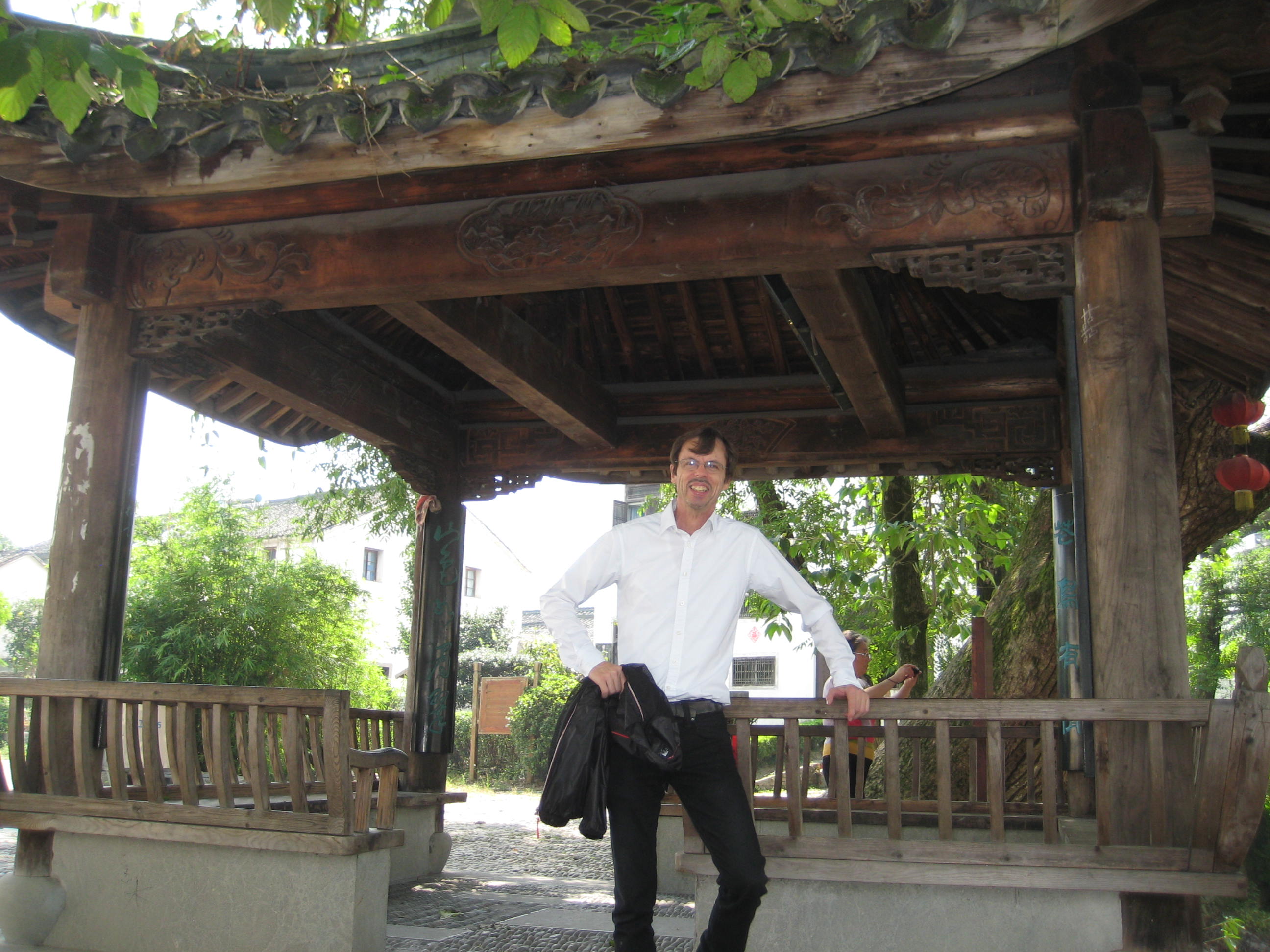 As such Age’s work refuses to polarize left or right. Neither cultural nor political forces on the left or right are immune from critique or without some merit. Most importantly, he urges that religion and the church must be vigilant not to divide and slip into captivity to the cultural polarities in the world it lives within and serves. Shedding its self-righteous robes the true believers must stand in solidarity with the world clothed in love and compassion, whilst at the same time struggling to find the difference between Christ and his Kingdom and stand up for it rather than suppress it to maintain outward concord. This is not a moralistic attack. The church and the world are in the grip of what God has done in Christ.
Attending to Context
Coming from the West to serve Christ in the East two things stand out to me as of chief importance. First is the importance of recognizing and reverencing the otherness of the other. Too easily we comprehend others as if they fundamentally share common likeness to ourselves. This is the first subtle step to violence, i.e., violating another. Instead of presuming underlying sameness, I believe one should presume the existence of underlying difference and commence on a path of reverence for the other as other. Over time this difference, when one presupposes it and makes room for it, I believe will become understood more and more. Understanding means standing under rather than over or above the other. Second I believe it is important to become more aware of the western shaping of Christianity. In other words, Modernity’s values and dogmas in the West have of course become suffused with Christianity’s beliefs and ethics in the West. The one coming from the West to serve in the East must continually beware of her or his propensity to try to import western values into a culture in the East in the name of Christ. Idolatry often takes different forms in the East than in the West but wherever it is established, in whatever form, the antidote is not moral pedagogy but the revelation of God’s love in Christ that wins from us a higher devotion, worship, loyalty and life service.
The church and believers must own the world as their home and speak from within the world a redemptive word of truth and hope. This requires one to understand the cultural contexts one is working in. In Asia, there are, of course, many contexts. China is not what it used to be, the ‘many true believers’ in the communist ideology are now few and far between, and in its place secularism, materialism, and a new growing national hubris (not entirely benign) are their gods (‘something in nature abhors a vacuum’). Christianity is growing in leaps and bounds partly, I believe, because of the seedbed that this vacuum created. And while the bold secularism promoted by Chinese Communism is less contagious in other spheres of Asia where religious traditions remain alive, materialism has heated up and is spreading rapidly. In India, it is impossible to understand culture without grappling with Hinduism the predominant religion and weaver of culture. In Laos, Myanmar, Thailand, and Cambodia Buddhism with its ethic of reverence and submission are deeply woven into the warp and weave of culture. Buddhism has been partially transformed by the influence of the West in the East evident by the proliferation of publications on how following Bubbhism’s disciplines can enhance self-fulfillment. Even Buddhism’s historic asceticism is being challenged under the acquisitive ethic imported from the West. Malaysia is struggling to work out ethnic and religious pluralism in step with the West albeit under the political and religious hegemony of Islamic morality and belief. Added to all these contexts is the unique historical struggles each nation and people have passed through and are passing through.
In Myanmar gruesome persecution against ethnic minorities has experienced a revival exhibiting new strength and terror. This occurred on account of the fact that the military managed to gain political power and thereby placed themselves above the law. This phenomenon in turn created a seedbed for change. Ethnic peoples, accessing help from both secular and religious groups ( NGO’s and mainstream Protestant missionaries and visiting professionals), have educated themselves in the values of the West (i.e. justice, human rights, the equality and dignity of all persons including minorities and non-Burmese ethnicities). The impact of the genocide in Cambodia has had a profound effect on the people left to rebuild the country. Historic traditions there remain but these are lighter and there exists greater openness to Christian teaching, freedom, and a quest for economic and social improvement.
By coming to understand in a self-conscious way the peculiar makeup of the world that a church finds itself it must compose its witness. But this sensitivity and clarity are not enough in and of itself. It is the presence or absence of the salty difference embedded in the Gospel of Christ that judges the church’s ministry at any given time. If it is not to simply polarize against the darkness and evil in a world in a moralistic posture, or meld into secular and cultural reform movements that are alive in a given world and thereby lose its own distinctive color and voice, the church must find and re-find the difference Christ has given birth to.
In Time and Place: Finding and Re Finding the Salty Difference Christ Gave the Church
The people of faith taking up common causes and concerns that are afoot in the world, and becoming identified with political, moral, cultural, and humanitarian movements and rising social spirits that gain attraction and magnitude in a given world that they inhabit, is too easy! And it is almost inevitable if and when its elemental Christian differentiation becomes weak in the church. ‘Christian’, rightly grasped, sponsors a different response toward, and understanding of the ‘good’ and the ‘bad’ alive in the world. What is difficult, and a constant struggle is for the church to remain genuinely connected to the world all the while finding the difference of Christ and being true to it by standing up for it vis a vis the peculiar shape of “lostness’ and darkness it encounters (“wise as a serpent harmless as a dove”). It is this challenge Dr. Age’s work seeks to suffer under.
The Church’s Message and Ministry: The Inversion of Worldly Relevance
While the mainstay of Dr. Dan’s preaching and teaching centers around the Gospel ( cf 1 Corinthians 15:1-3) the good, bad and the ugly underfoot in a given world ( culture) need to be viewed and understood in light of the truth that Christ gave the church. The power of darkness is only truly broken in our minds when it is seen within a greater framework of truth that exposes it for what it is. The same is true about righteous causes and justice ministries in a given world a church inhabits. The distortions and fanaticism that have attached themselves to doing righteousness are littered like garbage along the highway of history. The truth in Scripture rightly understood transforms righteousness and justice and serving ‘righteous’ and just causes. Is there any sphere of activity or movement of thought and culture underfoot in the modern world that merely exists parallel to the church’s life and witness? Dr. Dan does not think so. There is no sphere of human existence that can safely remain insulated and autonomous from the will of God and God’s redemptive strategy to redeem the earth.
For instance, he has written and lectured on many contemporary subjects like the spiritual and social downside of the profit motive as it has become heated up in late modernity, the power and force we deploy to suborn nature to serve our passion to continually expand and grow our economy, women in ministry, terrorism, the relation of the church to political power, the treatment of immigrants and other issues. Rightly presented the church’s interest and voice in the ‘world’s business’ is not an attempt to make the church relevant in a changing world or into an agent of social change, rather it is about exposing darkness wherever it exists with the distinctive light the church has been given. When and where this light shines some will see and believe it and glorify God. The change that the church seeks comes from repentance in preparation to meet the coming kingdom and its righteousness that the believer has already inherited. This witness may or may not precipitate an accidental or tangential change in the world. Nevertheless, when the church’s eye is single the whole body is filled with light ( Matthew 6). In its interaction with the world the church, if it is not to morph into something other than the church of Jesus Christ, it must be true to the calling and commission he invested it with. Christ is the head of the church. It belongs to him and exists to serve him as such it can never place itself in service to political parties, national and cultural campaigns, and causes. All too often the church has joined hands in common cause with movements in the world to seek change, but the change that the church is commissioned by Christ to serve does not enjoy simple coincidence with that underfoot in the world in any given time and place. Simply stated in its interaction with the world around it the church must keep the difference Christ invested it within the play. Here and there in this blog, I have addressed this. Recently I composed a short essay soon to be posted in this blog on personal and social change in light of the 23rd Psalm.
************************************************************************
Vocational and Biographical Overview
Dr. Age is an ordained American Baptist Minister who did his Masters’s work at Colgate Rochester Divinity School and his Ph.D. at the University of St. Andrews, Scotland. He has pastored four churches in New York State, carried out a full preaching ministry in Baptist and Presbyterian churches in Scotland between 1991 and 1994. Between 1995 and 1997 he was the resident archivist of the Baptist Joint Committee on public affairs on Capitol Hill in Washington, D C. serving under Rev Dr. James Dunn the executive director. Before and after these activities he pastored four Baptist Churches: Meridian Baptist Church, Camillus Baptist Church, South New Berlin Baptist and Church in the Garden, Garden City, New York. In 2010 Dr. Dan went to Asia to commence a teaching ministry that continues to date. Thus far he has taught courses for credit in colleges and seminaries in Thailand, Laos, Burma (Myanmar), Malaysia, India, Cambodia, and many underground seminaries located in major cities stretching across mainland China. Almost all of the schools have been fledgling institutions that exist on a wing and a prayer, often under-funded endeavors needing the support of trained teachers.
Name: Daniel W Age
Contact Information: Email existenceandfaith@gmail.com (For Employment Inquiries use daniel.age@gmail.com
Professional Information: Ordination 1990, Iroquois Association of ABC NYS Region of American Baptist Churches USA ) (Verified by ABPS Valley Forge PA)
Education: Ph.D. 1998, University of St Andrews, Scotland, M Div 1989, Colgate Rochester Divinity School, B A 1986, State University of New York (ESC) (Verified by American Baptist Churches USA, ABPS Valley Forge, PA)
Work History:
Preacher / Pastor 1985 to 2009 -(1) Meridian Baptist Church, Meridian, New York(2) Camillus Baptist Church, Camillus, New York (3) South New Berlin Baptist Church, South New Berlin, New York (4) Preaching Ministry for The Scottish Baptist Union & The United Church of Scotland (Edinburgh and The Kingdom of Fife) (5) The Church in the Garden, Garden City, New York.
Seminary Lecturer 2010 to 2020 Select Colleges and Seminaries in Mainland China, Malaysia, Cambodia, Myanmar, Thailand, India and Laos working in liaison With (A) Theologians Without Borders (B) Hua Xia Dynamic Mission Berhad (Currently Changed to Trans-World Chinese Mission Executive Director Dr. John Ong, President of Malaysia Baptist Theological Seminary), (C) Existence and Faith ( D) Dr. Saw Simon, Director and Dr. Saw Wado Professor of KKBBSC Mae La Karen Refugee Camp Tak Province, Thailand.
Specialized Ministry 1994-1996, Baptist Joint Committee, Washington, DC (Verified by ABPS, Dr. John Ong of MBTS and Existence and Faith)
References: John Ong, President of MBTS (Malaysia Baptist Theological Seminary), Dr. Saw Wado, KKBBSC Academic Dean, Rev Leon Oaks-Lee, ABC Pastor upstate New York, and Daniel Camacho, Editorial Assistant Sojourners Magazine. A complete list of Referents and their contact info is available upon request as well more personal information on Daniel Age is available via ABPS’ ‘MinistryElife listings and by writing a request to daniel.age@gmail.com
 existence and faith
Nice to know something about you more in this chapter. God Be With You!
pretty extensive studies since we hung out together Dan. I answered your e-mail just today and yesterday just getting back from vacation. I look forward to conversing if you find the time. My best always Ralph
check your e-mail Dan Ralph