MBTS Church History II
Penang and Kuala Lampur 2018


Picture # 1 Church History II Kula Lampur Class Picture # 2 Penang Class ( The T-Shirt I am wearing was a gift from the students. The Front is a picture of Georgetown in Penang, and on the back is printed “Church History 2 and each of their names)
Introductory Remarks
This posting explains how and why the church in the modern period gets sucked into political movements and loses critical elements of its essential Christian difference. The source of this essay comes from two lecture-discussions I delivered on April 18, 2018, to my MBTS Church History 2 class in Penang, later revised and delivered again to my Kuala Lampur class. After teaching it to my Penang class, I wrote a review as a follow-up to the lecture to help my students grasp more fully the ideas presented. What you will read in this posting is an edited version of that original review, Much of the original texts remains and betrays itself by direct statements from me to the class. I chose not to rewrite the text of my review that I sent to the students 48 hours after the lecture because it possessed it captured the passion created by the live presentation of this material on Aprile 18th, 2018. From the beginning to the end I have inserted additional into the original text in order to supply the background needed to properly grasp the subject at hand.
The general subject being discussed in the following text is the peculiar nature of the church-world struggle in the modern period. In the modern period, because of its unique make-up, conditions arise from time to time that pulls the church out of itself, i.e., out of its God-given difference and into conformity to political and cultural winds and storms that arise in the world that it inhabits. I presented to my students a thesis, my thesis, on the distinctive character of the church’s temptation vis a vis its encounter with the world in the modern period. This thesis is stated in the body of this posting. In order to unpack this thesis and give it historical flesh and bones, I reviewed the Mainstream Protestant Church’s struggle with Nazism in Germany in the 1930s and ’40s. If I was arguing my thesis before a panel, the above church struggle would be “Exhibit B”, “Exhibit A” preceded “Exhibit B” by several days. This “Exhibit B” lecture is touched on here and there in the following text in order to bring interested readers who did not attend my course up to speed.
The Church’s Relationship to the World: Understanding the Challenge that the Birth of Modernity Created
With the progressive demise of Constantinianism, i.e., the demise of the fusion of church and society accomplished through the alliance of political and ecclesial power which commenced in the 4th Century by the Roman Emperor Constantine and began to disintegrate by the 17th Century, a new challenge and a new temptation in the church’s relation to the world emerged. From the 17th Century onward, the church-world relation progressively was reconfigured, and the church found itself in a new location vis a vis the world. By way of ideological and political revolutions, the church slowly became privatized ( here ‘privatized’ means that the Christian Religion was disestablished rather than established by the state). The concomitant of disestablishment was that nations and their societies became secularised. Properly understood secularisation does not mean that nations and societies displaced religion for secularism. The meaning of these two words is dramatically different.
In the wake of the challenge of the Protestant Reformation with its theological revolt against the absolute top-down ecclesial authority, came the Enlightenment with its Age of Reason. This period gave birth to the primacy of the rational individual, the ascendency of science and technology, democratic governance, and a feeling of progress. Not to be overlooked there is also in this period the rise of the Free Church movement spawned by Baptist in England beginning in about 1603 quickly spread to New England. This movement made a potent ecclesiological – theological challenge that insisted that top-down political power must be made to suffer new limitations. Political power must cease to establish the Christian religion suborning everyone to subscribe to the King’s religious will and thereby desist from trammeling individual’s consciences arguing that no power has a right to meddle in the religious-spiritual zone. This zone is the sacred space between God and the soul. And no one power has the right to impose outward unity on the church the body of Christ. This unity is only real when it arises via the Spirit from the bottom up, from experience, conviction, and inner freedom. This is a thumbnail sketch of the forces that gave rise to Modernity but these forces were not equal in influence. the Enlightenment provided the largest and the most lasting contribution to Modernity. Under these forces of change, the western world (i.e., societies and nations in Europe and the Americas) began a long march toward progressively wresting themselves from their captivity to top-down political and ecclesiastical authority that had persisted for over 1200 years. But it is equally true that the church also joined in this march and reconfigured its power (more or less but ultimately more). But when I assert they joined this march I do not mean to state that they shared common underlying assumptions and beliefs.
Whilst Modernity came to judge truth from error by Reason and science alone the Church, when it remained true to itself, without scorning science and reason, ultimately privileged the revealed truth of its Sacred Revelation in the realms of theology anthropology, and ethics. Whilst Modernity called for the separation of political power from ecclesial power the church early on the church began to call for the emancipation of ecclesial life from the hegemony of political power. Whilst modernity began to view history through an idealistic lens of human progress the church when and where it wrested itself from the seduction of this charm reasserted that whilst penultimate change for the better was necessary and possible when humans via decision and action embraced the suffering and discipline to effect it real change was born from repentance and ultimately awaited the promise of end-time divine intervention. Whilst Modernity gave birth to the doctrine of the existence of absolute innate created right and freedom of the individual the Church while not aligning itself with a revolution against this political-cultural dogma taught that human rights and freedoms ultimately rest, not on a naked claim of innate right and freedom but a revealed truth that asserts that human right and freedom rests on grace alone conditioned by faithfulness to the higher will of God who is both judge and savior. While Modernity gave birth to a near-absolute doctrine of private property and dominion over nature the Church when and where it has been faithful to the revealed truth given to it then it witnessed to the existence of an unprovable invisible truth, namely that ultimately that God claims ownership of all land and nature and that humans are ultimately stewards accountability to the divine master. Modernity gave birth to a new dogma of economics that informed its ethics. This doctrine presumed that political restraint should be lifted from one’s engagement of free enterprise, this freedom should not be trammeled or obstructed because freedom combined with enlightenment reason always results in human uplift and advancement. When and where the church rediscovered the relevance of its realistic anthropology and eschatology ( understanding of history and change) it rebuked Modernity’s naive anthropological idealism and decried the gross exploitation of laborers by capital calling on political power to enforce restraints on this freedom that underwrote ( that legitimized) systematic greed. And they raised this witness grounding it in a higher witness to God revealed in the Sacred Text that disclosed the very nature of God, immutable way of God to all humans by recalling the Biblical vision and meaning of justice revolutionized by God’s treatment of the Hebrew people when he liberated them out from under the exploitation of Pharoah. Add to this Old Testament vision of justice the New Testament that proclaims liberating justice to all flesh captive to sin, guilt, and death through the Gospel ( Romans 1:16-17 “That he might be just and the justifier of them that believe ..”). The Apostolic Evangel proclaims that God bestowed justice to all Jew and Gentile through the Christ messiah requiring only the faith of dependence and trust in this good word. These and other contrasts marked the deeper tensions between the church and Modernity. But as I have emphasized the church’s witness is not revolutionary as if its goal is like Shariah law to displace Enlightenment morality and dogman and establish ‘Christian’ morality. Rather the Christian witness is not programmatic, not revolutionary, but dialectical! Its motive is to disclose the weakness and shortfall of the earth by the heavenly in order to lubricate the repentance that prepares people and nations to meet the Kingdom of God that Jesus and the Apostles assert has come and is already invisibly established in and through the Christ alone and yet is coming openly, publically and absolutely to rule and reign on earth via Christ and his return. “The meek shall inherit the earth”. As such the Christian Gospel rooted in Hebrew prophecy is the ultimate antidote to bowing the knee to modern Baal which upon looking directly at the resilience and dominance of evil, exploitation, greed, unrighteousness, and injustice in history asserts that all things continue as they always have been ( 2 Peter ). “Let us eat drink and be merry for tomorrow we die”.
The April 18 Lecture circles around the blowback that Modernity’s dogma of individual right creates and the pluralism that always emerges with a polis that structures this individual right suborning political power under its sanctity and in defense of its expression. To understate the matter, once Modernity in the West took hold, the new relationship that the church found itself in vis a vis, the world created new challenges and temptations heretofore unknown to it. First another explanatory not
( Explanatory note to the reader: The posting of this review of my April 18, 2018 lecture at Malaysia Baptist Theological Seminary, emailed to my students within 2 or 3 days of the lecture, attempted to clarify one side of the peculiar struggle confronting the church in the modern era. This review was not an exception. It was one of about twenty reviews I wrote for the class in order to deepen and clarify each lecture. I chose to post this review because I think it possesses ongoing relevance. Some editing has occurred, and some additions made to the original review have been made so as to clarify the text. I have posted the substance of the entire lecture here because I wanted this piece on the record. This was an important review because my meaning was grossly misunderstood by one student and if one, perhaps others. In order to understand what a person is saying, one must attend not only to the words spoken but the meaning intended. Or to state this another way, the student must attend to what a teacher is doing by what s/he is saying. Beyond this reason for clarification, there is another. I believe this lecture has ongoing relevance because it helps both believers and non-believers understand the peculiar temptation that the Evangelical segment of the church in America has been overcome by in many locals, some more some less.
The Aprile 18, 2018 Lecture Review.
The 4 lecture discussions that preceded this one all addressed a common focus – the church’s encounter with the modern world. In these discussions, I labored to provide you ( my Penang History II Class, later my Kula Lampur Class) with a paradigm that could become a working tool to understand the movements and skirmishes between the church and the world in the modern period. If this is possible, more or less, then I will have given you a device that empowers you to not only read church history in this period as a series of disparate events but interpret events and developments within a wider framework. In one of Bob Dillon’s songs (Bob Dillon is an American folk singer popular in my youth), there is an intriguing lyric “something is happening here, Mr. Jones, but I don’t know what it is.” The interpretive paradigm I have framed is an effort to give you a way of understanding “what is happening here.” It is not perfect. It is itself a work in progress that has been in the making for a long time ( my study and thought in this particular area commenced with my Ph.D. thesis in St Andrews many years ago).
Modernity that proceeded from the Enlightenment and the revolutions that occurred in the 18th and 19th Centuries in the West ( Western Europe, Britain, and North America, created a new playing field between the church and the world. Once Modernity took hold of the world in the West it was no more under the church/religion pedagogy that had been formally established (Erastianism and Constantinianism). It (the world) had emancipated itself progressively from the grip of the church’s tutelage and gained a magnitude of its own. This forced the church to re-find itself and re-understand its relation to the world. Protestant Missions and Evangelism were born in this period, and a degree of clarity emerged regarding the proper relation between church and the modern world, (insofar as missions and evangelism were not mixed up with the European hegemony over colonized peoples). This is one strand of the story in this period and I expect you (class) to do the corollary readings on this both in Gonzalez and other writers that will reach your email box shortly.
In the modern period, the church was forced to find its true and proper relation to the world. It had to! The Constantinian- Erastian model of relating to the world was on the brink of death, breathing its last gasps. With rationalism and the Enlightenment in the 1700s in Europe and America, Modernity was being born, and with its birth, the death knell was sounded of that 1200 +-year history of the established church, i.e. the world formally united to the church in the West via political leverage. But not all is lost because whilst something is dying something new is being born. In fact, the new made its debut with not a little fanfare. In American Football the game starts with a big kick-off when the kicker boots the ball nearly 100 yards downfield and 11 men rush forward simultaneously. The Wesley brothers, Whitfield, and in America other evangelists like Jonathan Edwards emerge simultaneously and the gospel leaves the sanctum of the established church and makes its way to the world in the shape of witness and a call to faith. In this shape, the church is back on track, re-finding its true relation to the world. The church is progressively disestablished (separated from its formal ties to state power which served to establish it). Actually, the seeds of this new relation, as mentioned a couple paragraphs earlier, were conceived from both Protestant Christian sources and secular Enlightenment sources. The Protestant roots go all the way back to 1530 and the Augsburg Confession, written by Luther’s colleague Philip Melanchthon and presented by him to many of the princes and magistrates in Augsburg including the Emperor of the Holy Roman Empire Charles the 5th. But the historical development of these seeds faltered until the English Baptists emerge in the 17th C (we have already given due consideration to the 16th Anabaptist movement and the peculiar character and motivation of their call for an end to the established church – this is fundamentally different development). But here I want to stay on track and not revisit the pre-modern period. This review is about the temptations endemic in the modern world that time to time in the history of Modernity heated up and seduced peoples in time and place and often seduced the lion share of the church and sucked them into conformity to political movements resulting in the substantial loss of their distinctive message and mission.
The broad setting of this lecture was about the struggle with the underlying dynamics of Modernity as they manifested themselves in particular historical developments. Looking at some of these developments guarantee we in this course of study continue to be connected to the church’s story and have not extricated ourselves from real history into the neat and clean world of ideas, concepts, and truth debates. The following recaps in a very few sentences the underlying assertion which I put forth already having provided my reasons at the onset of this section.
Modernity’s dynamics (I reduced these dynamics to five in my first lecture on Modernity and the church) became established and canonized in the West and began to spread from there to many, but not all places in the world. And Modernity and its underlying dynamics were not merely cool rational ideas they created ‘heat’, that is to say, they gained social magnitude and were carried forward as history-making, with a great deal of new confidence and idealism. It is not unfair to state that Modernity was infused with a sense of mission and optimism. It saw itself as the harbinger of a brave new world. Humanity was conceived as emerging from its childish swaddling cloths reaching for and moving toward its true nobility and dignity in hopes of realizing humanity’s innate promise. Man/woman was now poised at the crest of becoming, becoming mature, shedding their childish servitude. Humanity at long last was poised to unleash its own innate power to realize their God-given destiny. All this is smartly stated by Emmanuel Kant in the piece I sent you.
The significance in the assertion “they (i.e. the dynamics that self consciously coalesced in the wake of the Enlightenment period) gained magnitude” or “heat” is subtle, here I make it explicit. The new collective confidence that Modernity and its underlying principles gained is not merely intellectual, reasonable, mathematical. Modernity’s dynamics quickly gained emotional mass, “religious” devotion, and enthusiasm in the West, and as such, they exerted on the church a centripetal attraction. Centripetal is a keyword here. It is very useful because it describes that dynamic that pulls disparate pieces (particularities) on the outer parameter into the center. Modernity’s new idealism gains the center mass and exerts a centripetal force on the church. When this occurs, unless the church is well-grounded in its essential difference, it is pulled out of its distinctive character into this center mass that possesses a different geist or spirit (‘heat’) derived from wholly new dynamics. What happens when this occurs is that the church is in danger of losing its distinctive color and conforming to the prevailing ethos of the center that it is pulled into.
The church as I have argued, in skirmish after skirmish with Modernity, took up at least one of the following three postures. One they were pulled into conformity to Modernity (more or less) and became uncritically open to its spirit and rationale. Two they became anxiously protective and insular to the modern world with an aim to guard its Christian truths and ethics from corrosion and change. Their concern was that the modernist spirits in the church were carelessly surrendering the essential truths of Christianity to the dust bin of history. This response shaped itself in a defensive posture, or as Dillenberger and Welch state in their classic book on Protestantism, a “rearguard” posture. While this description may seem negative I do not conclude this. I believe this response is not without its importance. After my review on the 24th or 25th on the history of “Orthodoxy”, this will become clearer. Three the church struggled to remain differentiated from Modernity whilst remaining offensively connected to Modernity. Here differentiation is not merely a practical endeavor or accomplishment. To the degree that this third model occurred, it was empowered by a return to its formative truths because it found in them underlying presuppositions that enabled them to see and reclaim its difference with Modernity.
This 3rd response whereby the church refuses to become uncritically open to the modern world or anxiously closed and protective, I believe is of critical importance. Christ as the head of the church speaking through Scripture and the Gospel via the Spirit empowers the church not only to understand Modernity and respond to it but also understand Modernity in a way that discerns the promise in its formulation but also the seeds of destruction within it, i.e. the seeds of idolatry that can become harmful and destructive. This 3rd response then exerts, not a destructive or damning attack on the world, or a defensive retreat from the world, but sponsors a redemptive difference (redemptive with a small r).
In taking up this third response the church must often return to its evangelical Gospel to meet the challenges facing it. This, in fact, is what Paul did when he plumbed the truth of the Gospel to expose the fallaciousness of the movement in the Apostolic church to force Gentiles to become Jews in order to be full-fledged members of the church. And this is what Luther did when he returned to the Gospel to expose the legalism and sacerdotal idolatry in medieval Roman Catholicism. Once Modernity and its values established its sway over the West, progressively, from the Enlightenment period onward, the worlds in which it took root were in time exposed to naive optimism or in time a reactive pessimism. If the church could be prevented from being sucked into these geists it would be necessary for it to reground itself in its formative Apostolic truth, “truth of the Gospel” (Galatians 2:14). Only by drawing fresh insight from this Gospel, insight that could enable them to see what was going on in its world through a different lens, could it escape being pulled into an uncritical alliance with rampant harmful toxic pessimism and anxiety about the direction that the Modern world around them was headed, or escape being pulled into an alliance with naive optimism and idealism rife in the Modern world around them. In this way, the church becomes the salt of the earth because it finds its difference whilst remaining connected to its world.
I have posited these three relations of the church to the world that surrounds the church, but before proceeding to focus on the third kind of response it is important to note an important distinction that has everything to do with this lesson. The first response contains two different histories. These two histories are similar only in the fact of being uncritically pulled into a ‘world’ that surrounded them. Behind this commonality of being uncritically open, there are profound differences. At one moment in time, the church is vulnerable to becoming sucked into optimistic idealistic winds seeded by Modernity, at another moment in time the church is vulnerable to becoming sucked into winds that commence blowing within its world that arises in reaction to Modernity and its principles. The make-up of Modernity, mixing with historical changes and developments has created a seedbed for both of these. There was an idealism inseminated into Modernity in its birth, and although chastened by historical events and new ways of thinking, this idealism remains subtly present and just because of this there is also a perennial risk of reactions that arise against this idealism. It is sort of like the highland in Scotland. Hiking the highlands on a clear warm sunny day, no clouds as far as the eye can see, be sure and bring a poncho. Weather changes quickly in the highlands. Modernity contains within it latent makings for idealistic and pessimistic storms.
In my presentations, I have argued that this third response involves a creative return to the evangelical/gospel truth that gave birth to Protestantism. With this restatement, I proceed to one of the discussions we had on April 18. By the time I finished the class on April 25 I will have reviewed several of these skirmishes, but here and now my mind is focused on April’s 18th’s second lesson.
This “skirmish” has to do with the mainstream Protestantism’s encounter with National Socialism between 1932 and 1945 in Germany. This struggle between the mainstream Protestant Church (the DEK) quickly became the elephant in the (national) room. I have done a fair amount of reading on this epic struggle thanks to Syracuse University and the Bird Library, who hold a treasure trove of material on this subject. Here follows the important historical example of my church in the modern world thesis that I presented on the 18th. My regret is that all these discussions require further work and development in order to be helpful for the church in the East.
The April 18 Lesson
Modernity changes the make-up of society. This is so because Modernity structured into the political contract of modern republics a guarantee of individual rights and liberties. As soon as this happens many expressions of individual rights, once repressed, expressions good, bad, ugly, or beautiful (depending on who one consults), commence flowering in society. This flowering contains within its socio-cultural changes. Society once outwardly more or less monolithic, becomes increasingly pluralistic. And this pluralism eventually challenges preexisting hegemonies. These could be moral, ethnic, economic, religious, or racial hegemonies. These in turn create a seedbed or potential for an authoritarian blowback and a turn against parts of the modern social contract. Such blowbacks are potentially endemic to Modernity, but they do not just happen as a matter of course events, personalities, and fickle wrinkles or accidents of history come together. Add to the unpredictable rise of populist political figures who exploit and magnify discontent with changes in society empowered by Modernity’s commitment to individual liberty and pluralism ( i.e. equal public space and rights for minorities both as individuals and groups who do not share common values, beliefs, and customs with the majority).
In Germany’s history, the Weimar Republic replaced monarchial Germany, and, by virtue of its republican modern principles, empowered a new diversity in society. In my lecture, I quoted Martin Marty an eminent Lutheran historian who taught at the University of Chicago Divinity School, “everybody wants a seat at the republican banquet”. In other words, once the constitutional contract guaranteeing rights and liberties are put into place everybody emerges and demands public space for their difference, no matter if the mainstream in democracy likes it or not. This is so because democracy backed by a Bill of Rights guarantees’ space’ for the expression of individual expression as long as it does not explicitly harm another. Without this Bill of Rights or a facsimile thereof, democracy as majority rule easily transposes into the tyranny of the majority! Any expression of individuality that the majority doesn’t like it simply refuses public space. Here is a thumbnail sketch of how this played itself out in Nazi Germany. This digest is widely understood. It is not unique but before studying this a long while back, I did not see the populist and ecclesial temptations endemic to Modernity’s doctrine of inviolable individual freedom. The career of modern republican/democratic ideas, first as it came to dominate the West, but also as these ideas spread East, is not without a downside. Over time these temptations have become clearer. The rise of National Socialism in Germany looking back, enables us to see the nature of these temptations.
In its beginning, National Socialism magnified the feeling that German pride and greatness had been wounded and undermined and in this way, Hitler came into power on a platform of restoring Germany’s greatness. His slogans explicitly embodied this kind of language. Military defeats and the reparations exacted played a part in this sense of weakness. But added to this was the ‘the defective social consequences’ (so goes National Socialism’s logic and claim) that the Weimar Republic had inflicted on the nation. If Germany was to become great again, their logic concluded, the nation had to be cleansed of all these idiosyncratic peoples and practices that were allowed to emerge under the Weimar Republic because these had compromised the innate greatness of the nation. This, is in fact, the logic that was put into play by the new government, although the full reach of their designs was not known from the get-go. Gypsies, prostitutes, gays and lesbians, the mentally sick and challenged, even old people, the lame, and the infirmed were on Hitler’s cleansing list. Add to these the Jews. Progressively Hitler increased the authority of the government, and progressively recalled the rights that these minorities had under the fledgling Weimar Republic and set into action overt and also covert action to cleanse and even get rid of or push underground these groups and foreclose their practices. Here is one of the key points in this lesson. Nations organized on Modernity’s principle are always susceptible to optimistic and pessimistic winds, and some of these escalate into full-scale storms.
On the surface, this campaign sounded good, plus Hitler was possessed with amazing charisma. He bedazzled the masses high and low and drew them into conformity to his platform. A toxic authoritarian nationalism was born and part of the seedbed for this authoritarianism was Modernity’s doctrine of near-absolute rights and liberties. But what does all this have to do with the church? This is the question I want to privilege because this is the sole purpose of revisiting this chapter in history!
Hitler went after the mainstream Protestant church and courted their support for National Socialism and for the fascism required to give his socialism teeth. He wanted mainstream historic Protestantism on board and perhaps was anxious about their dissent. I outlined the several strategies he put into play. First, he applauded their historic religious-spiritual greatness recalling the Reformation born in Germany by Luther. Add to this that by the time the 20th Century arrived the mainstream Protestant church in Germany suffered from a low sense of public relevance compared to that which it enjoyed in the days of its former glory when it was established and revered (wherever Protestantism was established in German territories under the immediate impact of the Catholic-Protestant split). Hitler came on the scene offering it a new job description to help him make Germany great again ( church beware of relevance). This phrase popularised in America today is so close to the actual historical facts and language in play in Germany from 1933 to 45 that its usage here is warranted and not a distortion.
Second Hitler set about to unify mainstream Protestants (Lutheran and Reformed congregations existing in federated synods geographically distinct) by reconfiguring them into a new common National German Church and then formally linking this National Church to his government. In addition to this, he commenced a theological campaign to revise Christian virtues and doctrines by editing out vicarious suffering, meekness, patience, compassion, and the ‘passive’ virtues. In their place, he elevated more muscular activistic ‘virtues’. He also revised Christianity’s history by attempting to excise it from its Jewish roots, but not only these roots historically, but the Abrahamic Covenant Paul argues abides from Jewish antiquity through Christ to the present as the foundation of faith.
Leading spirits from within the mainstream church, identified as the DEK (German Evangelical Church), became known as German Christians and were sucked into and under Hitler’s platform taking the title “DEK” with them. As Germans they believed Hitler sponsored an answer to their nation’s wounded pride and weakness, and, more importantly, as the church, they believed that the new National Socialism platform answered the moral decay and licentiousness of German society that had ostensibly devolved from the Weimar Republic. At long last, they concluded, God had sent one to restore moral and spiritual strength and fiber to Germany. The toxic nationalism and authoritarianism were accepted as a necessary compromise to reclaim a strong moral nation. As the rollback of rights and liberties progressed and the concentration of authority increased the church adapted and tailored their sensibilities accordingly (“love covers a multitude of sins”).
In hindsight, it is clear that the largest sector of the church in Germany (mainstream Protestant churches) was seduced and from the get-go uncritically open to the Nazi development. While not excusing them, one must understand the strength of the deception they came under. A historical seedbed, growing out of the Weimar Republic existed, which inclined the church to embrace what appeared to be a conservative moral renewal movement. It was viewed as a God sent. To roll back liberties was viewed as a small price to pay in order to restore society to moral high ground. Part of this seduction grew out of Protestantism’s identity. Mainstream Protestantism, because it had been established and favored by the state over most of its history remained too closely identified with the state. By the 1930s the Mainstream Protestant Churches were much weaker than in bygone days. Formally its ecclesiology had become too closely tied to the nation. It had Progressively become a handmaid to nation and culture. This ecclesial subordination especially became problematic when, in the grip of Modernity in the 19th Century, culture and nation were thought to possess intrinsic future making significance. Coming out of the Enlightenment history was submitted to a rethink. History was not what it used to be. Humanity was shedding its swaddling clothes and now taking a giant step forward.
Karl Barth who drafted the Barmen Declaration for the Confessing Church who broke from the German Christians (the Declaration was corrected and minimally revised by both the Reformed and Lutheran Clergy gathered) later wrote that the changes in the church that rendered it powerless to resist seduction by the Third Reich occurred a long time before a Third Reich ever existed. In the 19th Century, beginning in the late 18th Century Mainstream Protestantism’s theology underwent changes that rendered it compatible with and integral to the historical and anthropological optimism and idealism birthed by the Enlightenment. Modernity could not in principle abide a unique revelation of truth, a God uniquely and definitively revealed once and for all time in Jesus Christ. Or as Barth asserted borrowing from Soren Kierkegaard that there existed “an infinite qualitative difference between God and Humanity” Modernity’s truth and the truth of God revealed in Jesus Christ could not be synthesized. Modernity had arrived at a place where they believed all truth was and is ultimately immanent, i.e. lodged in nature, history, and humanity in its essence or depths progressively and inevitably making its debut through the means of reason. Truth is ultimately resident in human nature and history (cf Schleiermacher, Hegel, and others). This transition Barth insisted accounted for the German Christian’s naivety. They saw, like almost everybody else, Hitler as a God sent. He was sent from God at that propitious moment in time, in history to restore Germany to moral greatness again. His charisma, his vitality, his conviction, his own sense of identity that he was called by God to fulfill a national mission to make Germany great again, his presumption to unabashedly grasp ahold of absolute political authority and use it, were all signs and wonders pointing to his providential appointment. Barth argued that when the church ceases to be grounded in God’s unique revelation of himself that is mediated through the Prophets’ and the Apostles’ witness to Christ, grasped by faith, sooner or later the seen, the immediate, the direct experience will heat up and bedazzle and seduce even the wise and great, even great philosophers and esteemed and revered university educators and even religious sages who were supposedly rooted and grounded in the sacred tradition. And it did. And this apostasy, I repeat, occurred because the unique revealed foundation the Gospel of Christ cradled in Scripture was sold out to relevance to Modernity long before Hitler showed up. Not only society at large, high, and low, was seduced, but the mainstay of the Church high and low was also seduced. The irony in this story is that the church’s uncritical alignment to Modernity’s idealism flowering in the 19th Century laid the foundation for the church’s alignment with an anti-Modernity storm in the 20th Century. And this is because their periscope ( i.e. their grounding in the unique revelation of God in Christ) had been dismantled and Put in storage. Tied too close to nation and culture, handmaid to them they followed them into the pit of hell having hooked their wagons to Hitler’s make Germany Great again project. They could not see what was really happening because the only lens that would have enabled them to focus the problem had been compromised a long time before.
After reviewing these things I shifted our attention to the heart of the lesson. How did one relatively small segment break off from the DEK (DEK translated in English – The German Evangelical Church) and form itself into the Confessing Church and resist becoming sucked into and under Hitler? How did this Confessing Church, which baptized itself as the true DEK, keep from becoming conformed to the new powerful gestalt that enveloped everybody else? Almost, if not, in fact, the only group in all of Germany that successfully resisted becoming seduced by Hitler’s moral greatness vision for Germany was the Confessing Church, something explicitly noted by Albert Einstein, a German Jew who survived.
(Explanatory Note to the present reader: This paragraph opens with the promise I made to my Penang students when I wrote this review) On Tuesday, I will go over the 6 articles of the Barmen Declaration drafted by the Confessing Church and sent to their brethren who were being sucked into and under Hitler, and also it was sent directly to Hitler, who upon reading (according to documents I discovered after repeated visits to Syracuse University’s Bird library) flew into a rage the likes of which exceeded all other outbursts except one. The document reads that regularly Hitler flew into rages in front of those he did business in his office but as soon as they would leave his office he would laugh. It was a pretense honed as a control mechanism. But when he received the Barmen Declaration he trembled with real rage the likes of which the person reporting this scene had never seen in all his secretarial dealings except on one other occasion. The lecture on Tuesday will complete this lesson. It is to be noted that the Baptists in Germany at this time refused to say anything that would introduce any tension with National Socialism in order to secure their right to continue with their evangelism and worship.
My argument and purpose for revisiting this chapter in church history are for one reason. The Confessing Church resisted becoming sucked into a toxic nationalism by one means only – namely returning to its Reformation evangelical base and anchoring itself to it. Barth sometime later wrote that he believed at Barmen Christ, the living head of the church gave the church, via the Declaration drafted and agreed upon at Barmen, gave them an insightful timely Evangelical word of truth enabling them to meet the emergency it faced. Those gathered at Barmen listened to Scripture and the Gospel of Christ and heard in it a fresh word that gave them offensive courage and freedom to escape the seduction that surrounded every other group in Germany like a dense fog. The reach of this seduction included their brothers and sisters in the DEK known as “German Christians”. Orthodoxy alone could not liberate them. The church graciously received clarity from the Gospel that exposed the deception the DEK was caught in. The pressure to conform was great. At the end of the day, those gathered at Barmen and those they represented did not simply need to gather heroic moral strength and character to resist the threat at hand. What they needed was a fresh understanding of the Gospel of Christ that shined light on what was really happening. Light exposes darkness as darkness. Hitler’s magnitude was everywhere felt and his platform to make Germany great again was everywhere trumpeted but only a small minority were uncomfortable and resisting. The document that emerged at Barmen, largely crafted by Karl Barth ( a Swiss Citizen teaching at the university in Bonn) who had already broken from 19th Century liberalism because he had stumbled on a new dialectical lens through which he came to reunderstand the primitive Apostolic Gospel faith. Fifteen years earlier Barth stumbled on this new dialectical lens through which he viewed the truth of the Gospel. This new Evangelical lens was the thing that completely broke the charm of 19th Century liberalism and revolutionized his thinking. This theological transformation he had already gone through prepared him to sit at the table with his German brothers at Barmen and script a pithy six article two-page offensive the was dubbed the Barmen Declaration.
The church, in order to keep and gain its footing vis a vis modernity, ( not only idolatrous idealizations of Modernity’s Enlightenment truths but the rebellions against Modernity such as the Nazi fascist debacle) must not merely retreat to Scripture or orthodoxy but seek and by grace find, in Scripture in general and in its Evangelical Gospel particular new light to expose the particular shape of evil and darkness that had stolen a march on the world. The darkness that is in the world always penetrates the church. In finding this difference and holding on to it the church will be praised and despised. The church must be about this task not in order to become politically relevant as if that was its calling, but first to save itself and its witness and mission from corruption. Differentiation from the particular shape of evil that has stolen a march on a given world in time and place restores the church’s proper tension with that world. But this tension is both a gift and task. No static rearguard move will suffice, the Gospel must be plumbed and opened up so as to speak to the particular shape of darkness that has stolen a march on the world.
Clutching hard and fast to orthodoxy will not ultimately save the church from being uncritically absorbed into the world nor provide the salty offensive difference that Jesus ordained his followers’ to mix into the world. Jesus said the faithful steward must bring out of his treasures things new and old. Old truth must, from time to time, be visited and re-understood and restated in such a way that it exposes the lie that has become a public parade. Furthermore, I believe this action, as I have already mentioned is not about being relevant, as relevant is most often understood. It is not the job of the church to export its truth and ethics to the projects and crises that materialize in the world around them. Rather, exactly the opposite is true. “Earth” must be viewed in light of the magnitude of “heaven”, the penultimate viewed in light of the ultimate. The truth and values of the world viewed in relief with the revealed truth given to the church. Keeping the church’s evangelical difference alive without sponsoring a division guarantees the potency of the church’s witness. In this, it has not changed its vocation from witnessing to its truth it was commissioned by Christ who created the Church for his own purpose to that of becoming a handmaid to the nation-state in times of crisis real or imagined.
Modernity is like a bowl of soup on the deck of a ship at sea. The church will be tempted to hasten to the deck and join with others outside the church in the world and clasp the bowl and steady it in stormy weather. This is not its vocation. Its job is to view what is going on in the world in light of the truth in its different meta-narrative so that when it speaks and acts what is going on in the world around will be lifted and understood in a bigger picture in light of a different view of reality. If in doing this the church influences what is going on politically this is not a successful effective effort but an accidental affective result. If and when the church is true to its vocation it may end up exerting an influence on the state but this influence is accidental, tangential, and most importantly it is the result of the presence of dialectical tension.
Whenever the church looks at its nation in time and place in light of the ways and means of the Kingdom of God which is and is coming to meet us and bears witness to the deep incongruities and contradictions that emerge into the light of day because of this contrast then it is “salty”. “You are the salt of the earth,” Jesus said. Then he added a but, “but if the salt has lost its saltiness it is useless to me.” But I hasten to repeat the presence of this salt, the purpose of this salt, is not to stabilize and help the state to fulfill the destiny that Modernity dreamed it had given birth. Rather, this salt witness, if it is potent in time and place, urges forward the change of repentance that prepares people at every level of their existence to meet the Kingdom of God that is and is coming. Corporate formations that structure evil and injustice are not exempt.
One student concluded I was up to something in shaping my lesson about the captivity of the German Church by the Nazis. He concluded wrongly that I was building a parallel between Nazi Germany in the 1930s and America in 2018 because I pointed out that both political entities brandished a platform about making their nation great again. While I did mention the presence of this parallel it was merely made in jest about how short our historical memories are. Anyone using such a phrase surely had forgotten that it was already used and it did not end well. This was not what the lesson was about. This person was getting his exercise jumping to conclusions literally because he actually jumped out of his seat and started screaming at me as he bolted from the class. The Aprile 18 lesson was precisely and only about one thing. It was about one historical example that I believe poignantly demonstrates the thesis I am teaching at this juncture of our course. The rise of Modernity in the West sponsored the optimistic anthropology birthed by the Enlightenment. Progressively governments, first in the West, began to restructure their political and cultural values after these new ideas. The Cromwellian Revolution, The French Revolution, and most influential, The American Revolution comprised the ideas and nascent forms needed for the development of the modern state restructured to protect the innate sanctity of the individual and privilege the power of the people, and underwrite the sanctity of all minorities giving them equal public space and voice. For the purposes of this discussion, it was Modernity’s near-absolute assertion of an individual’s inalienable rights and liberties, formally incorporated into a nation’s polity and seeded into its culture that birthed an ever-increasing individualism and pluralism in society.
The career of these dynamics in modern nations rendered them vulnerable to both the rise of naively optimistic and pessimistic movements. These ferments infected society and politics. On the pessimistic side, they gave rise to authoritarian blowbacks. This phenomenon, Dietrich Bonhoeffer, also a very significant churchman in this Nazi story, alludes to in his Ethics, without developing it. Every pastor who has completed her or his Master of Divinity course knows what happened to mainstream Continental Protestantism in the 19th and early 20th Century. First, as already stated, much of Mainstream Protestantism’s ecclesiology merged with Modernity’s vision and project to transform Western culture. Second, its eschatology merged with Modernity’s belief in progress. Modernity, coming out of the Enlightenment, seeded a seductive blinding idealism and the lion share of the Church in Europe, but also America, in a less dramatic and different way, became enchanted by its own version of this idealism and was in danger of losing itself. My lesson on April 18 reviewed here focused not on the idealistic winds that enveloped the West in the 19th and early 20th Centuries but on the pessimistic storms against modernity that arose in Germany in the 1930s and ’40s that seduced the church.
Reactive movements promoting a toxic nationalism, authoritarianism, and the rollback of rights and liberties, are endemic to liberal democracy. The pluralism and individualism that sooner or later arise from Modernity almost inevitably become the seedbed for such a reaction sooner or later. Liberal democracies create a climate, real or imagined, or both that moral order is collapsing and ragged immoral and unhealthy forces have come to roost and or national purity and greatness are disintegrating under modernity’s principles that underwrite pluralism ( “everybody wants a seat at the republican banquet”). When these occur many people outside the church, and many in the church are susceptible to becoming pulled into a toxic nationalism and the enlargement of top-down power to “clean up the situation.” Attracted by its moral tone, real or imagined, or both, the church can and has been drawn into this political-cultural heat. When this occurs it almost certainly will lose its saltiness (i.e., its distinctive Christian difference) as Reverend Martin Niemoeller from his Luthern pulpit in Berlin preached two weeks before being shipped off to Dachau. My purpose in my lesson could easily be misunderstood. I am not here aligning left or right (pessimistically or optimistically as regards Modernity’s dynamics). Rather my aim is descriptive. I have wanted to disclose the persistent elemental make-up of Modernity that time and again heats up in the nations where it is formed and renders these nation-states vulnerable to idealistic and pessimistic storms. Each storm, while having roots in the very make-up of Modernity, has an individual character unique to its particular time and place and the varied situations that serve to provoke it. And these social conditions can be and have been, exploited by populist political leaders. If and when the Christian Church (or the church that wants to remain Christian) existing in the midst of these storms is to resist being pulled out of its true Apostolic identity and mission and into alignment with these pessimistic and optimistic movements, it is helpful to understand this bigger picture and also to be firmly grounded in their distinctive Gospel mission and the relation of the church to political power that its mission imposes.
The answer to the question of whether I believe a toxic nationalism exists now in America is yes at the time of delivering this lecture comparatively a mild case. Do I then believe that there is a parallel between America in 2018 and Germany in the 1930s and ’40s, or to state it bluntly, between Trump and Hitler? No, I do not. As I have said in several public settings, in the USA, we measure the body’s temperature in Fahrenheit. The average normal body temperature on this scale is 98.6 degrees. I believe the temperature of the body politic in America, to the degree some members of its national body have become infected by a nationalistic fever at the time of the writing of this review of my lecture, is maybe 100 degrees Fahrenheit – a slight fever, perhaps – time will tell. Germany’s nationalist fever was comparatively 107 degrees Fahrenheit. At 107 F, the body will burn up and a body politic, metaphorically speaking reaching 107 F, will self-destruct, and it did. No comparative heat ratio currently exists! No comparison between Germany in the 1930s and 40′ and the USA in 2018 was made in this lecture on 4/18/18. No identification between Trump and Hitler was being made or subtly intended. Furthermore, the lesson was never about setting up such a comparison but clarifying the historical forces that grew out of the ‘back door’ of Modernity and created a powerful force field that sucked the mainstay of the church into its grip. If the mainstay of the church had been moored in its own distinct evangelical mission and truth, it would have recognized that this new movement that was calling the church to play a moral religious role in restoring Germany’s greatness possessed a different spirit, power, and ethic. Furthermore, the mission that National Socialism invited the church to assume was dramatically foreign to the one Christ had yoked the church to.
Here I insert a note to my E&F readers. I am now willing to think about what is happening in contemporary American politics and the alignment of Evangelical leaders and churches to it in light of the paradigm presented here. This was not suggested or discussed in this or any other lecture to my Malaysian students. I do, however, believe the insights contained here should be given consideration by church leaders in North America. Centripetalism is I believe a useful description that applies to this lesson. Here it is an action that pulls micro-entities that reside on the periphery of a national polis into substantive unity with macro entities that inhabit the center of the national polis. In my model centripetalism describes what happened in Germany when church congregations and denominations were pulled out of their Christian mission identity into harmony with a larger more powerful entity that had a different mission, different ethics, and different beliefs. I believe this is happening within a large segment of Evangelicalism at the present time. Politics has heated up in America, and I believe a toxic nationalism is alive and present at this time. Where it will lead and what will come of it, I do not know where the present political-cultural storm is headed and I am not writing and teaching about this subject because I am anxious about where it will go but only why it is happening. Here I have argued that the very makeup of Modernity seeds a naive optimism about the fruit its principles will bear, and it also seeds an anxious pessimism. Both of these when they gather steam consolidate and become more or less self-conscious movements and then proceed to suck or pull people and groups of people like the churches into sympathy and support to their cause. The genius of the Confessing Church was that they realized the church at large was being pulled out of its true identity and mission and into something else. While it seemed like they had identified with a great righteous moral cause and mission they were fast becoming post-Christian.
The makeup of Modernity’s principles almost precludes that if and when nations import these principles and build upon them in time it is almost inevitable that both pessimistic and naively optimistic storms will arise and the church will be pulled into sympathy to this storm. This is the main lesson of this lecture. When one places the lens on what is presently happening in contemporary America I believe the above paradigm generally applies to a large percentage of the Evangelical churches across America. This asserted other factors need to be remembered. Here are a few of these.
In American history beginning in the early the Colonial Period, Later at the time when America transitioned from 13 colonies to a nation with states, again in the 19thCentury leading into mid 20th Century, Mainstream Protestantism was intimately and explicitly involved in nation-building and not shy to suborn political coercion to effect this building project. In other words, American Mainstream Protestantism has within its historic genetic DNA a church- nation boundary problem. It has been intimately invested in the moral -cultural complexion of the nation-state, and in one form or another continues to be explicitly invested in it. To stay close to the main point of this lecture, much of mainstream Protestantism, precisely because it has been and remains too close to the nation’s political-cultural winds and storms it is thereby rendered vulnerable to becoming naively drawn into identification with pessimistic movements. The Moral Majority is not an anomaly in American history. Created by Jerry Fallwell Senior in the 1970’s it re-formed ‘Christian’ into a conservative moral shape and exported it as an antidote to the cultural moral changes and the anxiety that were occurring in the nation. In this way, a significant portion of conservative Protestantism morphed into The Religious Right. In this new identity, a segment of American Protestantism again achieved what seemed to them, and many on the political Right, to be a high level of public relevance by becoming a sentinel of morality unambiguously willing to court political power to correct its wayward child’s use of modern freedom.
Karl Barth’s indictment of Mainstream German Protestantism is I believe instructive. The root of the problem he insists was not merely formal (i.e. the development of a state church or territorial church at the time of the 16th C Reformation which compromised its ability to sustain a healthy separation from the state) it was material. By material, I am referring to the contents of the church’s faith. As already discussed in the 19th Century continental Protestantism’s mooring in Reformation evangelicalism deteriorated to such an extent it commenced to undertake revisions that rendered it compatible with Modernity’s optimistic view of history and anthropology. The church coming out of the Reformation believed that the revelation of the truth of God and God’s ways did not come through reason and experience. Rather the Gospel of Christ alone via the Holy Spirit revealed God and his way. Human beings of their own powers and native gifts of mind and body could not discover the way and truth of God. Under the influence of the Enlightenment, the church departed from this presupposition and worked out theologies that argued for a native point of contact between humans and God. In reason, in experience, in moral and cultural development, in the historical thrust of human history, God was innately present. Ironically buying into this optimistic view of human nature and history laid the groundwork for the church to be seduced by the storm the Nazis ginned up against the Weimar Republic. I state ironically because having bought into the Modernity’s anthropological and historical idealism the church prepared itself to be seduced by the negative attack on the Weimar Republic itself a shift that rebuilt German politics on Modernity’s principles. The seductive power of the Nazi’s vision to make Germany great again, which immediately required the constriction of individual and minority rights and freedoms by increasing top-down power is an anti Modernity move. Here is the clue to the Christian apostasy that occurred that is both the same and yet different from non-Christian Germans that also fell into line behind Hitler. Like everybody else they baptized Hitler as an angel of light, a God sent messianic figure to return Germany to greatness. Like everybody else, they were seduced by what they saw, felt, and experienced immediately, directly. But unlike secular Germans they had for decades played fast and loose with their Christian foundation that privileged the revealed truth of God in Christ above human rationality and experience. Christians do not hasten to baptize historical or natural manifestations of power and glory speaking great charismatic words as simple goods. It judges the immediate experience by mediated truth. Direct naked exposure to powerful charisma that moves the masses is almost impossible to resist unless one is spiritually grounded in a different truth that runs interference with what one is experiencing with their senses. The mainstream German Christians had decades earlier suffused the mediated truth of the Gospel with the immediate truth claims of Modernity and in doing so rendered themselves vulnerable to the Nazi seduction of power to make Germany great again at a time when Germany was indeed weakened in every way including psychologically.
I believe there exists a distant parallel today between German Christians in 1933 and Evangelicals (so-called) today In another study I address the problem of the church on the Left. Here follows three intersections. (1) American Evangelicals like German Christians have explicitly lent their religious resources to political power to effect cultural and moral change. In the 1970s the quasi Evangelical preacher, Jerry Falwell birthed The Moral Majority and became the ‘Morning Star of the Religious Right that soon emerged and managed to extend their influence over most Evangelicals and then widened its fraternity to other conservative believers and faiths. From the Regan era forward the Religious Right courted political power and the political far-Right courted the voting base of the Religious Right. (2) Similar to the German Christians Evangelicals (so-called) also revised their gospel into a moralistic legal or ‘nomosistic’ shape rather than an ethical shape informed by the evangel i.e., the Christian Gospel. Evangelicalism was never as consistently and profoundly evangelical as they advertised. (3) Like the German Christians, American Evangelical have also shown themselves to be persistently uncritical, naive, and tolerant of abuses of power. For the German Christians, there was no moral bridge too far that the Nazis could cross that would cause them to rethink their alliance. In principle, not in actual acts and deeds, the same kind of tolerance exists among the lion share of Evangelical in America that was exhibited by the German Christian aligned with the Nazis make Germany Great again project,
All Americans including the Evangelical (so-called) have witnessed gross arrogance, widespread corruption, tribalism with its aim to divide and polarize people, inhuman and unjust treatment of strangers and immigrant people, and habitual gross lying to obscure and cover-up wrongdoing and corruption in the current Federal Government. The problem is that the Evangelicals have persistently turned a blind eye. Why? My thesis argues that not sufficiently moored in the Gospel from which they take their name most Evangelicals have been sucked into the political heat generated by a far-Right movement. The true motives and mission and message of this populous movement, whatever it truly is for and against, one thing is clear it is foreign to the mission, message, and ethics Christ gave his body the church to carry into the world.
Although American Protestantism has a long history of mixing their ecclesial power with political power this is not the root of the present problem. Neither is it true that anxiety at large in the body politic over the nation’s greatness and its deteriorating moral texture real or imagined plays on the church and pulls them into sympathy to it. This is a contributing force but it does not excuse or justify the church losing its differentiated grounding. The real problem behind Protestantism’s church power-political power boundary problems is material not formal. Like the German Christians of 1933 to 1945 the essence of the problem is that their anchorage in the Christian Gospel is not sufficient to steady them when cultural-political storms arise. German Christians wanted to join hands with auspicious political power to save Germany from moral and cultural weakness and restore national greatness. While the German Church’s apostasy was much greater and deeper than American Evangelicalism (what I call the German Church here historically were called German Christian) I believe a distant parallel exists. And here to restate the purpose of this paper I am addressing the church’s response to cultural-political heat.
Many, if not all, nations organized on modern liberties and rights that always foster greater individualism and pluralism in society, now and then succumb to a nationalistic fever. When this occurs there is a shift toward greater top-down authority and a corresponding circumscription of pluralism and individualism. As discussed this shift in 1933 Germany sounded good to the church’s ears and the heat and attraction of the movement sucked them into identifying and supporting what developed into one of history’s greatest crimes against humanity. History is also the church’s teacher. it is not wise to become alarmist and apocalyptic about the winds that blow in one’s nation. It is not healthy for the church to participate in moral anxiety and be pulled into a society’s moral polemics on the terms and at the legalistic level that the moral positions are defined. It is not wise but indeed foolish and harmful to make correlations between a particular nationalistic fever and that heat generated by Germany under Hitler or any other megalomaniac figure in history. Unhinged spirits who make such identifications are false prophets who excite alarm, and create anxiety and close peoples’ minds, and seduce them. Such leaders and teachers are unsafe. One only needs to read Barmen to witness the steady demeanor of those who stood squarely in the midst of a real storm not a few eventually paying with their lives. Rather than resorting to hyperbole and apocalyptic pronouncements, they calmly confessed their faith in a passionate non-reactive, nonanxious way, bringing to bear truth with penetrating insight that exposed the lie that was enveloping the church then and there.
If anyone in the class still misunderstands my lesson, its precise meaning, and sole purpose, this review should clarify it. If only clarification was sought in a timely way, then a stitch in time saves nine. My political sensibilities do not possess such ludicrous conclusions – never have. In fact, I am only mildly interested in politics, and my comments in class are pro and con mostly made in jest and lightness, right or wrong, this is an American habit. I have scarcely sat under one professor that did not exercise such freedom – bad company spoils good manners. Henceforth I am most happy to lay it down. When I go into my closet and shut the door and talk to God in secret, there is no jest. What I am passionately interested in is theological ethics shaped toward the world that empowers us to remain connected to the world but connected to it with Christian love and ‘truth,’ i.e., our salt ( our ‘Christian’ difference), intact. It is not legalistic salt that I write of here but evangelical salt – salt derived from Gospel, not law. This is what I am teaching in this section of our course, nothing else!
I want to assure every student that it is not important to me that you agree with me or that you write papers that agree with me, only that you write and think as clearly as you can and interact responsibly with the subjects we have studied and discussed. This is absolutely true. What are we if we cannot disagree without becoming disagreeable! Master-level classrooms work best in an environment of respectful dissent and questioning.
One of my favorite passages text in Scripture is in 1 Corinthians 8:2 “if anyone thinks that he knows anything, he knows nothing yet as he ought to know it. “The truth in this verse, above all other persons, addresses me! “I see through a glass darkly,” “I know in part,” and “I do not know as I ought to know.” And even here in this review, my larger passion is not to get the splinter out of someone else’s eye but the two by four (the big log) out of my own by the grace of God. And here, the big log in me is my inability to communicate my teaching with sufficient clarity that will prevent people from jumping to wrong conclusions or listening to me and think I am teaching conclusions that justify polemical thinking in an already over polarized world. This is why I have labored here in this text to clarify the April 18 lecture, namely to remove, if possible, any obstructions that prevent the lesson from being clearly grasped.













 This academic year I lectured on the relationship of the church to political power. In the morning sessions I focused on what the Bible had to say on this relationship, followed by a survey of its history from the 2nd century to the present. In the afternoon sessions I lectured on the Barmen Declaration. I chose this topic not merely or mainly because 2016 compelled the attention of many believers on political issues, but because the church, in some of the countries where I teach, suffer the intrusion of political power, the precise issue that Barmen addressed. In this posting I share some of my notes on Article 2, Declaration 2. Each of the 6 Declarations in article 2 generated good discussions, but none more than Declaration number 2.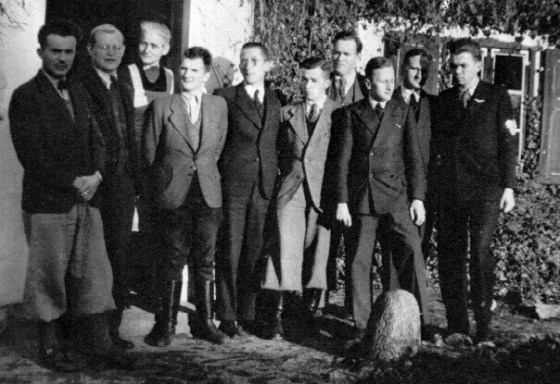


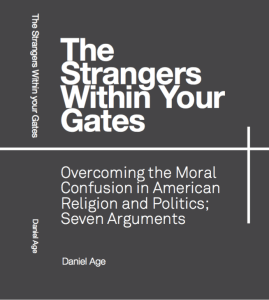
 Using reason and the very Scriptures Evangelicals parade as the Word of God this book sets forth seven arguments that expose the attitudes and proposed resolutions of the Religious and Political Right as immoral and non-Christian. Only truth exposes error, and in this little book the truth is put on a lamp stand. The reader need not check his or her facility to think and reason in at the front desk and go upstairs to be preached at. “He has told you, O man, what is good; and what does the Lord require of you but to do justice, and to love kindness, and to walk humbly with your God?” (Micah 6)

 existence and faith