
Biblical Criticism Inside Versus Outside the Church
A mother snake gave live birth to seven baby snakes. As soon as they exited her belly she ate them one by one. Daddy snake lay nearby and upon seeing what she did asked her, “why did you do that, don’t you know you destroyed our future?” “Now we are finished.” She smugly replied, “I must be true to the historical-critical method.”
The roots of the historical-critical method in nascent form first commenced on its career 500 years ago by Marin Luther who on April 18, 1521, in the Diet of Worms before Charles the 5th, Emperor of the Holy Roman Empire, and the papal delegation defended his writings by inviting anyone high or low to show him from Scripture and/or reason where he was in error. Up to this moment in time truth was established by the Church and ultimately by papal authority who decreed “a teaching is true when we say it’s true,” and “Scripture means what we the authoritative ecclesia say it means.” Luther elevated the authority of the Bible over the authority of the Church Ecclesia when he insisted that men and women of high and low estate could understand the truth if they sought to determine its veracity in light of Scripture and reason. In elevating Scripture over the church he did not set out to create a new individualism rather his interest was to expose the Church community, i.e. the hierarchy and the ‘laity’, to the prophetic power of Scripture. What should be believed, and how one should live, Luther insisted, ultimately must be determined by Scripture. The Word of God, i.e. God speaking to humanity via Christ witnessed to by the Prophets and the Apostles must have the last word. The institutional leadership of the church claimed for themselves the prerogative to know and determine truth and exegete Scripture correctly and required the people to receive truth directly from them. Luther inverted this equation placing both the Church leadership and the laity under Scripture whilst at the same time literally placing the Bible in the hands of all people by translating it into the vernacular and making it accessible by way of Gutenberg’s new printing press.
The simplicity of this revolution was not without its own set of problems. One of these was how to read the Bible so that its truth became clear. Luther was not naive. As soon as Luther gave the church (the Laos) this new locus of authority, the Bible, he simultaneous gave them the Gospel. The one he insisted must be wedded to the other, the former read in light of the spirit and truth of the latter. Here is the pinch of my point in recounting this piece of history. Biblical criticism in seed form was born with the 16th Century Protestant Reformation making its self-conscious public debut at the Diet of Worms on April 18, 1521.
Luther was clear the Bible had to be critically read, and the standard of criticism in that beginning was the central controlling truth within Scripture – the Gospel of Christ ( 2 Timothy 3:15, Hebrews 1:1-3). Scripture as a whole he wrote was merely “the swaddling cloths and manger in which Christ lies, and to which the angel points the shepherds. “Simple and little are the swaddling-clothes, but dear is the treasure, Christ, that lies in them.” This meant that what was written in the Bible ultimately had to be weighed and evaluated in light of this Gospel. Luther’s famous statement that the book of James was an epistle of straw reflects this. By calling this epistle “straw” he was thinking critically about Scripture. Almost certainly he was recalling Paul’s words to teachers in the Church of Corinth who had not grounded their teaching on the Gospel Christ. In 1 Corinthians 3:10-15 Paul insisted that because the Corinth teachers were not building the church with enduring ‘evangelical’, i.e. Gospel materials their work would be “burned up”. Enduring materials Paul identified, as those materials that square with the foundation he laid – the Gospel of Christ, “Gold, silver and precious stone”. Teachings that did not accord with this Gospel he likened to “wood, hay, and stubble” – straw-like. These would in time be burned up, not able to sustain the test of time and God’s judgment. Using Paul’s measurement Luther took a critical evaluative relation to James ( and all of Scripture). My point in this review is simply to build the case that a critical approach to Scripture made its fledgling debut when the Bible emerged out of Ecclesial hierarchal control with Luther via the Gutenberg press and was given directly to the people.
There is yet another dimension to this story often overlooked. This is the relation of the Spirit to understanding the truth in the text.”The Spirit rides in the chariot of the Word wrote Calvin and certainly, Luther promoted this relation but this affirmation falls short of understanding the Spirit’s’ ‘innovative’ or interpretive role in unlocking the truth in Scripture. The ‘truth’ in the text derives, not merely from reconstructing its precise original meaning by the aid of research, study and the Spirit, albeit this is important as Luther insisted when he wrote “The Christian reader should make it his first task to seek out the literal sense ( in a given passage) as they call it. For it alone holds its ground in trouble and trial” (Luther’s Works vol.9, 24). Unlocking Scripture’s truth goes beyond this exercise.
The text must be brought into an encounter with present forms of darkness and unbelief. The contextual past of a passage of Scripture and the present form and spirit of darkness needing rebuke and redress is both the seedbed out of which the truth of the text springs forth by the power of the Spirit. Here something of the spirit and form of truth from the past, embedded in the text, comes alive, not in ‘esoterism’, i.e.’ in the library’ alone or primarily, but in its encounter with the shape of darkness in a given time and place. It might be said light needs darkness. Light shining from and out of the text depends upon a dialectic with contemporary darkness. And The Spirit, which John names as the ‘Spirit of Truth’, in bringing truth alive in the present requires a movement back and forth. One that interfaces the text with a present need for truth and light. The truth embedded in the text, wedded more or less to its historic context, in order to get free, needs not only, or mainly a good library, but also a real situation crying out for the redress of spiritual truth. Analytic, historic, and technocratic skills brought to the text are not to be disdained or shunned but contemplative habits, prayer, and spiritual discernment, as well as a taste for the spirit and logos of Biblical and Evangelical truth, are to be prized. This approximates what Karl Barth called the ‘science’ underlying theology, (science because he discerned something of the abiding Christo-centric harmony and order of the truth of God). The student of the Bible and the searcher for truth must follow after both ends ( past and present) the best she can, which is never enough. Just as grasping something of the original context is helpful in releasing the revelation of truth embedded in the text, all the more the contemporary context, as it were, pulls on the text and compels it to speak truth because the present cries out for it. And in this dialectic, the Spirit is present so that if and when light exposes darkness in a given world the Church knows, and has always confessed, that a miracle of sorts has really occurred. And the name of this miracle is not naked ‘human academic ingenuity and prowess’ but “Holy Spirit”. Miracle, that is grace, explicitly stands behind the identity and job description of the Holy Spirit in the Gospel of John. Gift (i.e. grace) precedes task and undergirds it and follows after it.
This dialectic was not fully grasped in the Reformation even though it was certainly at work because the Reformers did not simply export Paul’s teaching of Justification by Faith in the shape, form, and purpose that he scripted it in the 1st Century Jew-Gentile crisis to the medieval situation. What the Reformers did do was connect something of the spirit, form, and inner logic of this Justification by Faith truth penned by the Apostle Paul to a contemporary ’emergency’ .”The Bible is alive, it speaks to me: it has feet it runs after me; it has hands, it lays hold of me…” Martin Luther
Recounting this is important because Protestantism was born not simply elevating Scripture but referencing it to ‘nauseant’ critical tools needed to read Scripture and arrive at the truth. They did this without fully grasping the hermeneutical secret of its original power or the dialectic necessary with a contemporary setting of darkness. Both of these play a role in opening up the power of the text.
It was from this critical and ‘reasonable’ beginning (cf Luther’s speech at the Diet of Worms) Protestantism elevated scholarship in the church and in the seminary. If the truth of Scripture was to be understood, pastors (and laymen to a lesser degree) must become Bible students. The mainline Protestant churches raised the bar of scholarship high and by the mid-sixteen hundreds, their original (limited) openness to reason birthed the discipline of Biblical criticism. 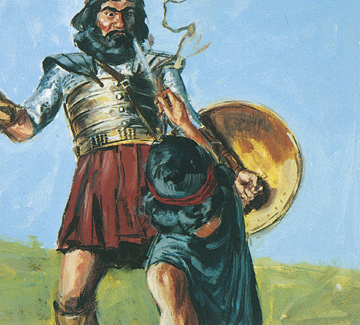
We view the birth of the Enlightenment as an outgrowth of the Renaissance and the independent rise of rational thought. But this is barely half true. Protestantism had created a primary place for reason in its religion that spread around the globe. And in theology and Biblical studies they opened themselves to the influence of reason, and rational disciplines in reaching conclusions about the meaning of the text. The Enlightenment has roots in Protestantism. Left unbridled this criticism often jumped the wall and left the Anselmian “faith seeking understanding” premise behind. In short disciplines of Biblical criticism brought into existence scholarship that proceeded on a course similar to the mother snake. “Faithfully” exercising their discipline many scholars progressively dismantled all that existed to regenerate and perpetuate the church.
Eventually, however, and this approaches a more Postmodern paradigm of knowledge, critical scholarship came to realize that the history and historical stories were never, or rarely, written in the interest of hard exact history, but as the stories and accounts of God’s dealings with them as His people, i.e. the people of God/Yahweh. Yes, these stories are rooted in real history not legend, but written primarily for the purpose of renewing and enlivening the faith and hope of the people in their God; the God who they knew had by his “mighty and outstretched hand” delivered them from captivity to Pharaoh. History and God’s judgments and deliverances were welded together in the Sacred Text. When they looked at the signature events of their history, they looked through the eyes of faith. They had faith glasses on (this understanding in the church, rightly presented did not compromise the assertion that God inspired and speaks through the Bible).

Using the historical-critical resources that have evolved inside and outside the church for over 400 hundred years, Malcolm Gladwell did with the Biblical record of the David Goliath story what any pastor with a decent search engine and library could do, ( see his YouTube video and book David and Goliath: Underdogs). No question it was a delicious rendition nicely spun and finely researched and an important corrective because it brought into focus the advantage David had in the duel. But like those faithful exegetes serving the church, he also revealed subtle underlying presuppositions that he kept ‘faith’ with. His David possessed great skill derived from his shepherding, as the text implies and Gladwell elaborated. Gladwell’s research magnified this. His Goliath was a clumsy ogre with a growth disease. This may be true but this conclusion or suggestion is a stretch. Correlated to science and historical studies it can be suggested but by no means proven. It is to be fairly noted that Gladwell did not reference all the detailed pieces of the record of this story, but only those that served his presuppositions; here is the pinch of my point, which betrays my real point of departure from Gladwell’s revision. The record as it is found in the text is composed to magnify David’s trust in the delivering power and providence of a present, but invisible, hand – Yahweh. Gladwell is almost surely right that the historical career of the story likely came to progressively emphasize the imbalance of power on the field of play. David likely got smaller and weaker and the giant bigger as the story snowballed through the centuries in the hands of the people of faith as my introductory pictures depict. Gladwell however passes by the Biblical record’s refusal to credit the victory to the nascent shepherd military prowess because it is beyond the reach of historical-critical tools and because it is in tension with his revision. His conclusion is that David had an advantage going into this duel and its outcome was all but certain from the get-go, thereby inverting David and Goliath. David became as it were Goliath ( as if he was innately powerful) and Goliath David ( as if from the get-go he was at a distinct disadvantage). Neither position is important to the actual text. The text as it reads shifts the rationale for the positive outcome of the duel to a place out of the reach of reason and higher critical tools of proof. Doxology in the Old Testament rarely reaches such acclaim as found in this story. David’s courage to go into this duel and his victory in it is referred back to a history of trusting God in his shepherd skirmishes with wild animals and coming out on top. By experience, the Biblical record infers, David knew before this epoch duel transpired that God had delivered him from evil many times and would deliver him again before this arrogant man who had dared to blaspheme the people of God. Anyone who has read the Psalms discovers a David deeply immersed in God’s saving power proved in crisis time-and-time again. David acts under pressure trusting, not in himself, and his proven abilities, but his God’s delivering power. 
Jesus said, “do not cast your pearls before swine.” Looking at things such as the events that lay behind this story through the glasses of faith, and experiences of faith, one sees the invisible hand of God and indulges in doxology (glory to God). Take these glasses off and one sees and praises human skill, preparedness, innate advantage, pre-existing hazards and existing weakness sabotaging the enemy.
The maturity of mainstream Protestant scholarship that has not thrown the baby out with the bath, has not accomplished this conservation by burying her head in the sand in fear of historical-critical conclusions. Even so, their work does not do violence to faith. Their wisdom (or folly depending on who is judging) concludes what the Biblical proverb nuances “the horse may be prepared for the battle but the victory is the Lord’s.” Before the burning bush that, though it burned hot and long, refused to burn up, the voice said “Moses take off your shoes you are standing on holy ground.” In retelling this story Gladwell left his shoes on; even so, his terse moral was smart and timely.


 existence and faith