Dr. Daniel Age in China: A Show and Tell Report

On November 1st Dr. Dan landed in Shanghai for a four week, four seminary teaching marathon. Here follows his personal account in a show and tell report – enjoy!

( The captions precede the pictures)

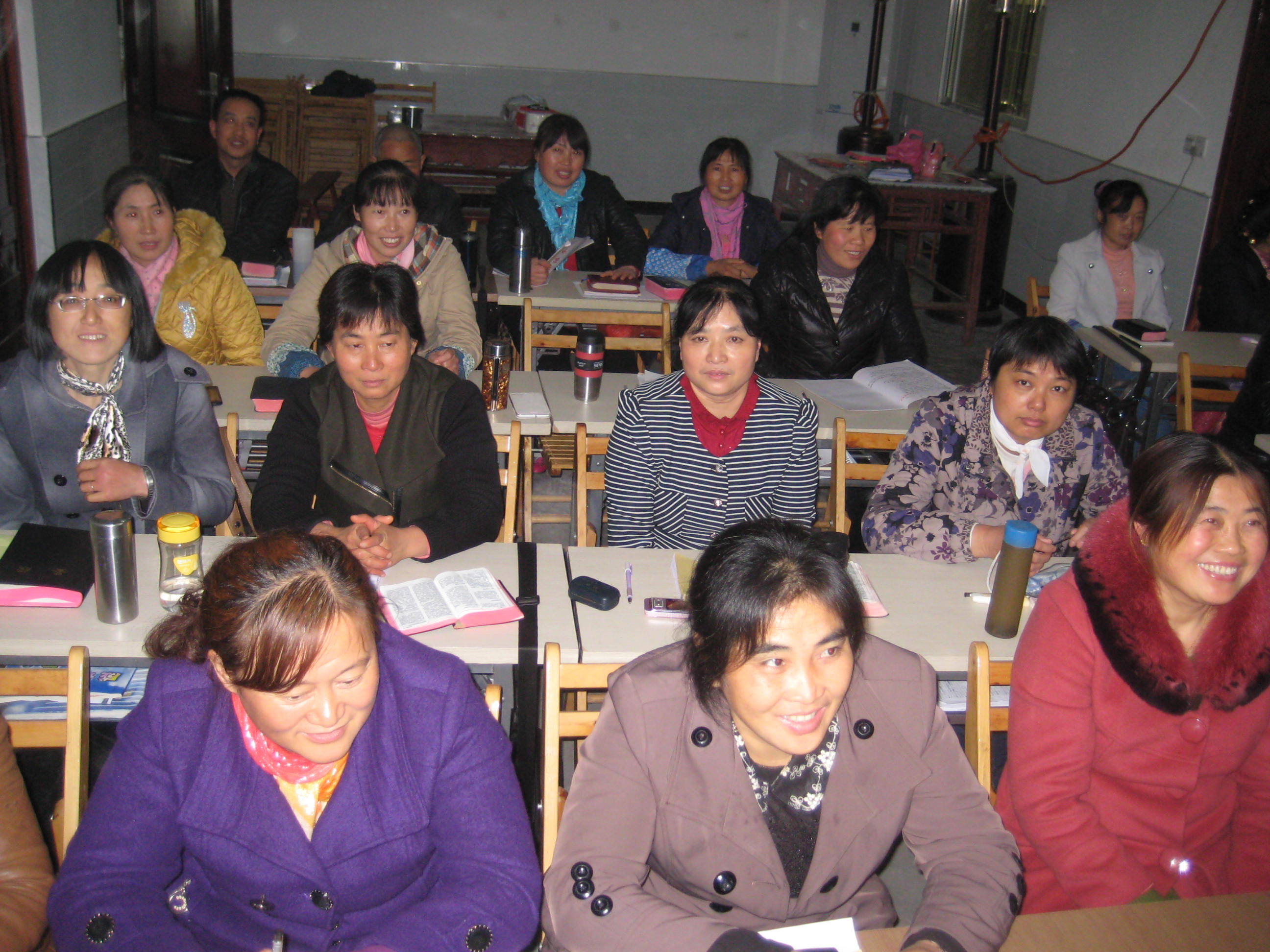
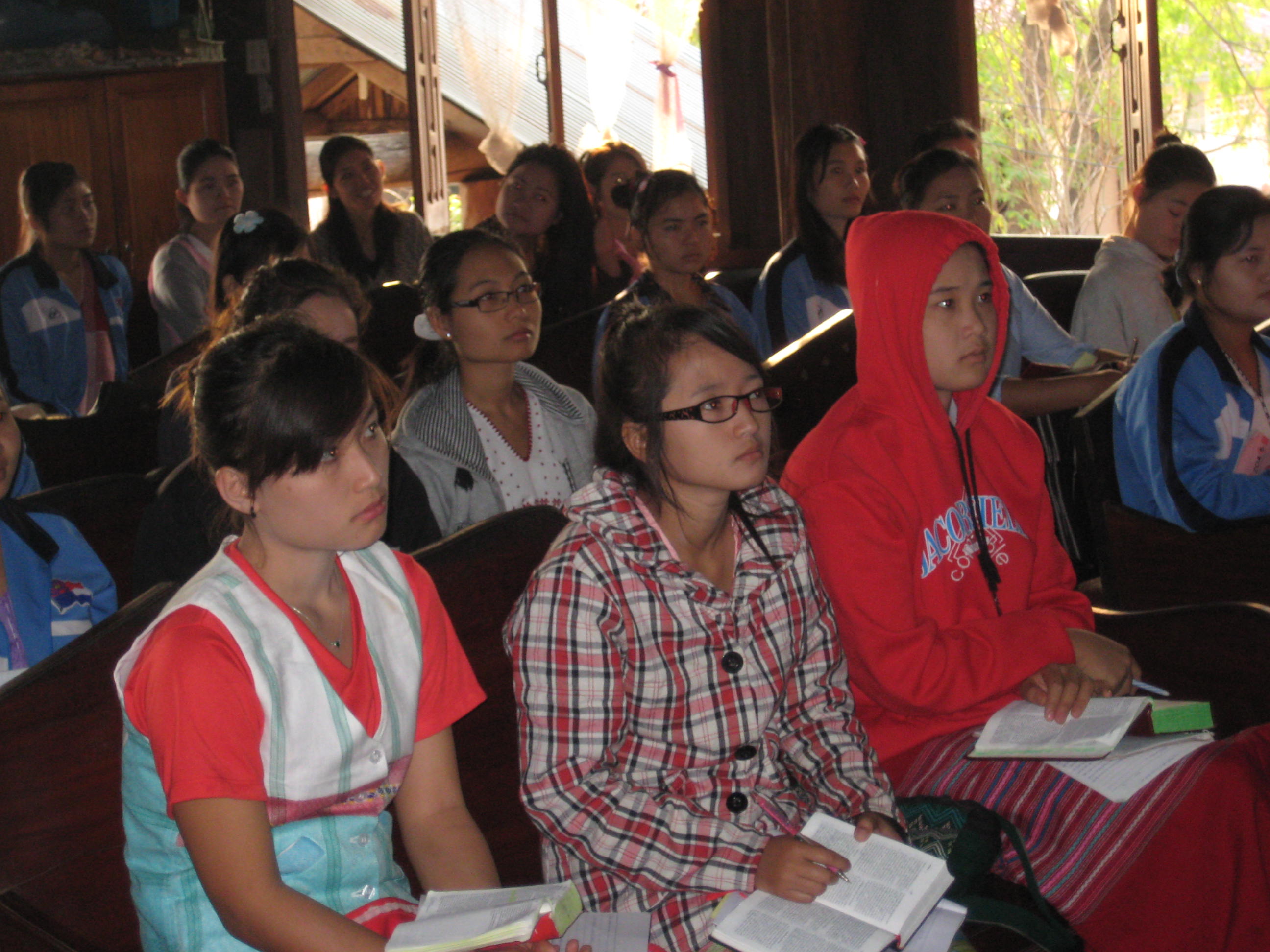
The students in the picture below are all church pastors working to earn their degrees. Unfortunately this shot only shows about two thirds of the class. There were about 25 ladies and three men in the class. The women were a force to be reckoned with. They are mothers, wives and the main stay of leadership in the church. Leaving their homes and families they came from quite a distance to learn for a week at a time. They were serious students and took meticulous notes often stopping me to get everything down on paper and demanding clarification. When they prayed during their worship time and at the beginning and ending of a class day the earth would shake because whilst one woman prayed at every phrase the entire group would resound “Amen”. It was awesome. It felt sort of like warriors ready to charge an enemy. I was suffering from the cold but it did not phase them. We would do class close to seven hours each day and then I would retire and take a foot bath out of a wooden basin. But I would give them assignments for each evening, which they would work on into the evening returning to their same seats till nearly ten P M.  This means in the cold they inhabited their seats over ten to twelve hours. Often bodily noises would be heard rising from among the group. I said to myself these women are the real deal. If one wants a yardstick to measure commitment look no further.

These are underground church pastors


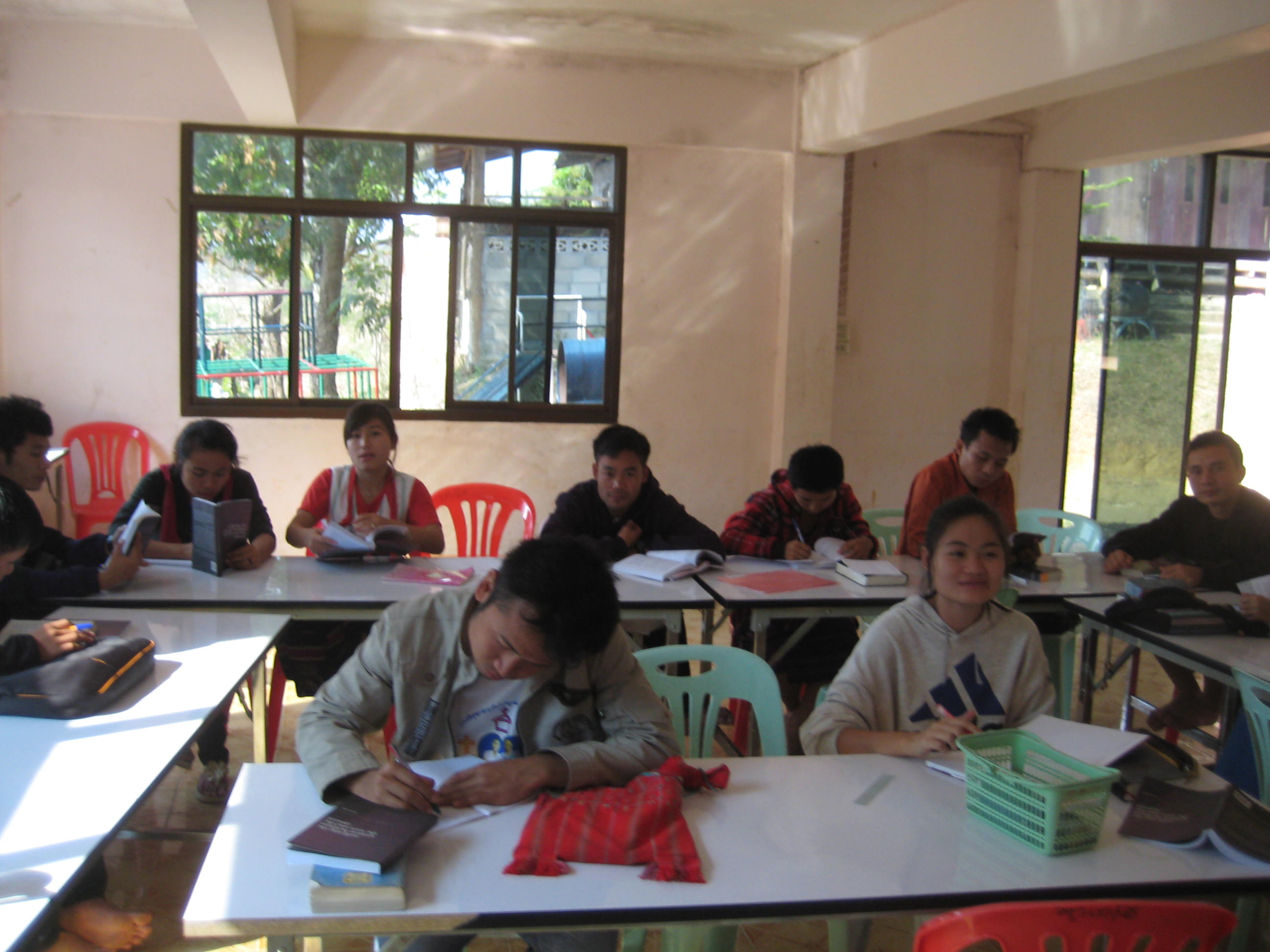
This school shown below is my favorite school. They took very good care of me –  washing my clothes and walking me to town and buying me fruit and whatever I needed. It was the only school where they were free to move about in their community. Each day at the end of the day we have an open forum for any question or comment. The ladies who on the whole excelled above the young men when given a chance to ask questions often focused on marriage whilst the young men wanted to stump me by asking me to interpret the most esoteric discombobulated texts in the Bible and there are more than a few. Gathered together there was no verse in the Bible they did could not find its whereabouts within 90 seconds (no WIFI needed). Even so like almost all the students I taught they struggled with my conceptual approach to teaching and learning. They wanted a more mathematical hard information approach. I wanted them to grasp a theological insight and apply it on their own to a new frontier of life and thought. They would rather undergo a root canal than follow this approach.

This school shown in a previous pic is my favorite school

This is another school sandwiched in huge city in an area where a mix of industries coexist with low income housing. I call this the “Jack Hammer Factory School.” The school founders bought the facility from a company who moved their operation leaving the huge factory vacant. It sort reminds me of the catacombs because there are so many rooms and niches in the building and the presence of a school inside the old factory is obscure.

This year about 80 students live and study in 4 month stretches most not leaving the premises during this term time. This is a master’s level class. The picture was shot from the rear because no frontal/facial view was not permitted. I have taught here three times. Maybe this school had the most mature and promising students at the Masters level.

This school sandwiched in huge city in an area where a mix of industries coexist with low income housing. The school founders bought the facility from a company who moved their operation leaving the huge factory vacant. Maybe this school had the most mature and promising students at the Masters level.

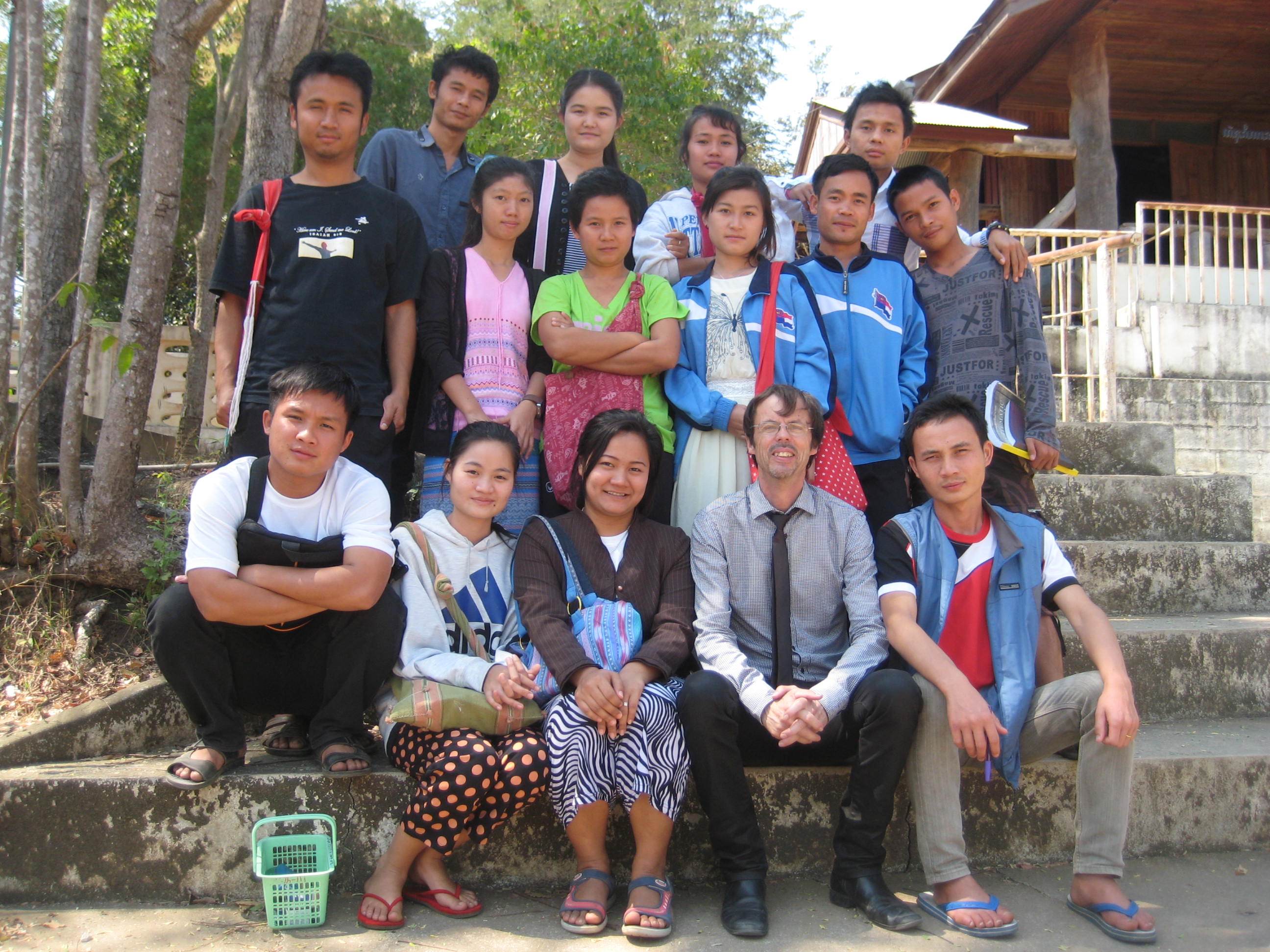
This is the entire student body of the seminary and Bible college located in one of China’s huge cities. All students no matter their level took my ethics course. The young man to my left I made the class Sergeant at Arms because he had a voice so powerful the window pains would rattle when he raised it.  I decided half way through the class to baptize him with an official role – calling the class to session and announcing break time. This is my fourth year teaching here.

This is the entire student body

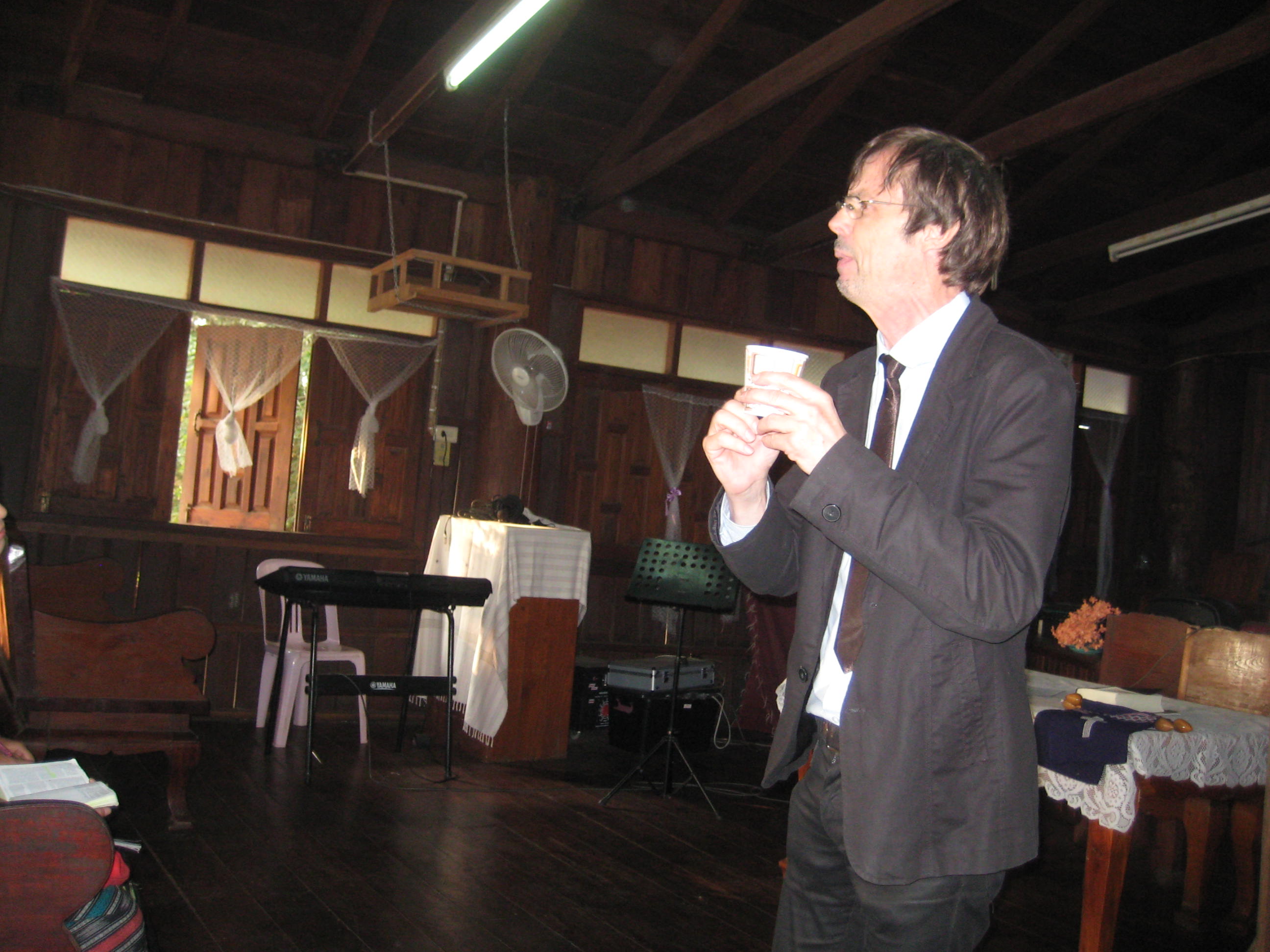
The young man in the picture below is my interpreter hired for the week he traveled by train 35 hours to reach the school in this mountainous region. He was a fine interpreter. Freshly married 4 weeks previous he pined for his wife and often received and sent texts. But he was fully present and deeply intrigued by my ethics course thesis. I realized early on I had the wrong idea about translation. I didn’t need to teach the whole class, but rather just teach him and he would teach the pastors. So while teaching publically and privately I expended all my energy helping him grasp the idea and if and when he got it my job was over. He would take it from there. The gap between Mandarin and English is that great! The glow in the corner is an electric heater. It was cold. But the power in the region went off often.

The young man in the picture

I went from the city to the country, actually the mountains to a middle province. When I arrived at the ‘school’ which was a two story house with many rooms I was sure at last I would be allowed to walk about outside because their neighbors were few and the location a sparsely populated mountain valley. But I was confined to the indoors lest neighbors caught sight and the gossip chain stirred unwanted attention. These are pastors walking to catch their ride after a week away from their homes and congregations to do my ethics course.

i went from the city to the country

Located in another massive city finding this school would be like finding a needle in a industrial hay stack. Picking me up at a hotel they drove me to the parameter of the city into a maze of heavy industrial operations and then when we arrived at their building they threw a coat over my head and hustled me to the third floor where I lived and lectured for a week. All the students inhabited the second floor. The living was a notch above camping maybe but they were spirited, dancing and singing during break time.  My interpreter hired for the occasion was first rate. There were about 25 students in all. The founder was a woman approaching eighty years.

Located in another massive city

Among Hmong – For Two Weeks: Teaching Mission Report For September 2014.

On Tuesday September 2nd located in ICF, Udon Thani, Thailand 45 minutes south of the Laos –Thai border crossing at Nong Khai I commenced a two-week course on ethics.

After a bit of a shake up in Laos I had only seven students in total, four earning their BA. Most students were Hmong from hill tribes in Laos and all relatively new Christians seeking to prepare themselves for ministry. The subject I agreed to teach was on ministerial ethics. Since there are no separate ethics for any particular class of people, and because all are called to minster, I set about to apply the ethical insights I developed in my new book, “Suffering the Tension Between the Seen and the Unseen” to ministry. In total our discussion ran about 45 hours. During this time the students, using our very capable interpreter and the principle/founder of the school, Ben McClure, expressed themselves ensuring that communication was occurring. Their input and responses kept the class interesting but no time more than on the last day.

September 2014 Teaching Report

On the last day I asked the students to present their papers. Part of the assignment was to share some of their pre Christian religious experiences and reflect on them in light of the insights taught in the course. The Hmong people have practiced Spirit Worship for centuries, maybe millennia. All my Hmong students shared personal experiences about their involvement in these practices having participated in them growing up in their families and tribes before they became Christian. For this reason they resonated with one discussion more than others. In order to appreciate the students’ responses I indulge the reader in the lesson in question that I opened up during one of our classes. Understanding this lesson a little will help one appreciate the students’ response and the story retold below on the last day.

In my book I have a chapter entitled “Don’t Get Your Exercise Jumping to Conclusions.” In this chapter I show that from times eternal humans encountering events remarkably good or bad tended to jump to far-flung spiritual conclusions. For instance, Hitler having escaped an attempt on his life by underground conspirators, because a thick wooden table shielded the explosion of a bomb placed under a desk near him concluded that his survival proved God’s favor rested on his work. My argument is that faith imposes a form of blindness on us — we cannot look at events on earth (the things that are seen) and correlate them correctly and directly to the movements of the unseen God in heaven. Time to time life as we experience it directly and immediately ‘heats up’ and when this occurs we are more often then not, seduced into jumping to false conclusions.

‘Sight’ without faith, (faith that anchors one in the ‘hiddeness’ and mystery of God) tempts antimony. The physical is thought to mirror the metaphysical. True faith interferes with this ‘spiritual’ correlation. Faith respects God’s ‘hiddeness’ in the earthly sensual, physical realm not only in terms of the invisibility of God’s eternal being but God’s day-by-day activity, God’s doing. Later with faith glasses we can see a little and at least say that what has happened was made purposeful by God (Romans 8:24) but up close in the moment we surely cannot say for sure what is happening and where or how God is in what is happening. Faith means to respect the ‘hiddeness’ of God. If we don’t live by faith we trespass and get our exercise jumping to conclusions. Here the street value of faith, on account of the fact that it grounds us spiritually to a greater unseen reality and the spiritual truth of that reality, is that it prevents us from being sucked into and under our immediate experience. It gives us a measure of distance from the charm and terror of our experience.

The Apostles and Prophets via word and Spirit reveal the reality of God, the relation God has to us and the kind of life God is backing and promising. And precisely because this revelation is different than that which direct immediate experience suggests is true we can cool and minimize the impact direct experience has on us when it ‘heats up.’ Experience without faith renders us fully exposed to the emotional, psychological and ‘spiritual’ impact of the phenomena we are confronted with. Experience with faith intact downsizes and qualifies this impact and anchors the soul in something greater.

This lesson intersects with the students’ stories on the last day. At class time each Hmong student told a spirit worship story. I chose to include this one. My youngest student, 18 years old, told us about what happened when his brother died. Immediately his father offered a chicken on the family alter replete with chanting in a non-literate ‘language’ to appease angry spirits. Unsure whether this would suffice his parents went to the Hmong shaman. Because their religion teaches that death always comes in twos they wanted to be sure their sacrifice would avail. Confident that the spirits had turned against the family the shaman made his judgment. The premature death of their young son revealed that the spirit’s displeasure with their family was very great. The antidote he concluded must be commensurate with the gravity and severity of the spirit’s anger – the sacrifice of a cow! The sacrifice of a cow would likely protect them and appease the spirits’ anger.

Daniel Age September 2014 Teaching Report

The trouble with this prescription was that the family was not well enough off to sacrifice a cow. Offering a cow would ruin them financially. For this reason they turned to a friend who suggested another possible solution – go to a Christian minister in a near by village and seek help. Under financial duress they opened their mind to things they were heretofore closed. After hearing out the matter the pastor assured the parents that there was no link between the death of their son and malicious spirit activity. Essentially the pastor said “don’t get your exercise jumping to conclusions” illness and death are related to real life and health not spirits. Not convinced the parents brushed aside the pastor’s attempt to disentangle spirit activity with illness and pressed the pastor for protection from another death strike on their family. This is what he wanted and expected.

Because the belief that physical life is the playground of fickle spirits is so deep in the Hmong’s psyche he did not expend too much energy trying to convince them otherwise. He pointed them to the unseen God who was greater than all spiritual and earthly powers and introduced this God as benign, just, good, merciful and loving. This unseen God, alone above all and before all was their refuge. Worship and trust this God and your life will abide under his care.

This helped a little. The pastor was mixing spirit with truth, truth with and into the spiritual realm and engendering faith. He was painting and coloring the spiritual realm in such a way that it ultimately took on a new shape in their minds and they imagined things differently. The truth of the existence of one God, good, faithful, merciful and caring whose power was greater than all earthly and spiritual powers began to disenchant their minds and lower their anxiety.

This coloring of the Unseen metaphysical /spiritual realm differently indeed helped, but only when the pastor broke out of the language of pure metaphysics and began to tell them this worldly Gospel story about how an anointed one came from God, sent from God (i.e. messiah) to earth and triumphed over evil and death did the fear of spirits begin to loosen their grip on them. The Gospel’s flesh and blood history, portrayed in a drama of defeat and triumph on earth where a real person, in real time and events, occurred in a real place provided the crucial stepping stone out of the spirit world morass they were caught in. The ‘physicality’, simplicity of the story transpiring in real time, combined with its spiritual interpretation broke the charm of the seamless erratic spirit world they were caught in. No cow was sacrificed and in time they became Christian and with them their entire family became Christian. Conversions from spirit worship to Christ among the Hmong people are rarely individual. The whole family transitions together under the leadership of the father.

Daniel Age September 2014

The unseen of the spiritual shaped and informed by the gospel and the nebulous unseen of the world of spirit worship competed for their minds but the power of the former compelled faith and freedom while the power the latter, real or imagined, seduced them, making them fearful. Using the help of the other Hmong students and their stories I have taken the freedom to shape the pastor’s way of leading the parents to faith. The irony is that we are not really that different. A faith that is able to resist the seduction of awesome phenomena needs the word of the Gospel of Christ. In this world, this world reality, a victory has occurred. The gospel of Christ alone gives faith in the unseen teeth!

My next stop is Phenom Penh. In an up coming post I will share the details this project.

Walking on Water With Peter– Everyday!

August 2014 Teaching Mission Report.

The last week of August I returned from the US to Asia and made my way to Udon Thani in northeastern Thailand where on Sunday August 31st I preached at the ICF (International Christian Fellowship). I chose for my text Matthew’s account of Peter walking on water.  My message circled around a theological and ‘homiletical’ involvement with the text. Here follows a digest.

Sooner or later you and I find our self at a juncture in life’s journey where the firm foundation under our feet disappears and Jesus’ call to Peter to get out of the boat and journey across the water to him transitions us from a voyeur amused by a tale from the comfort of our arm-chair to a soul at the crossroads called to surrender his anxious grip on fixity.

WP_20140831_002 (1)

Suddenly the love of another under one’s life may pass away or fail, the material means that sustains and protects us erodes threatening to thrust us into the vicious grip of want. Our vitality and health may slowly or rather quickly falter when an accident happens, disease or the downside of aging makes an unwanted call. And when any or all of these or other mishaps come knocking just as surely toxic anxiety, cynicism, bitterness, forcefulness, anger and despair come knocking at the door of the soul. At such times the good word of the gospel calls us to keep on keeping on and trust the invisible foundations under us more than ever. Happening upon any of these eventualities we must, as Paul writes, “look not on the things that are seen but on the things that are unseen.”

When the visible and tangible foundations that have been holding us up and taking care of our shalom fail all the more we must retreat to the invisible foundations and weather the storm. Then more than ever we must, as it were, abandon the boat and walk on water with Peter. When all that we see, touch and feel under our lives – socially, materially or physically – slips and slides and reveals its fragility and we begin to sink into anxiety or despair Scripture reminds, “underneath are the everlasting arms” (Deuteronomy 33:27).

The invisible God in Christ reveals Himself to be the invisible foundations of our life. The love that steadies and grounds us is ultimately invisible, the visible material pinions of our lives are ultimately connected to an invisible Provider and sustainer. Behind, before and independent from all the forms, orders and relations that steady and support us, as good and proper as they are, an invisible foundation abides that the eyes of faith alone are able to see looking past the weather of our lives fair or foul.

The presence of this invisible foundation is often made imaginatively clear through the Spirit when at kairos moments we need it the most. When fortune presents itself and life appears steady, secure and intrinsically good on its own accord the Spirit against the flesh, points us beyond the present but soon fading jubilee to an invisible security that abides under us on account of costly grace. Or the scene changes and life presents itself as intrinsically bad and insecure and fickle. At such times life ‘heats up’ and attempts to seduce us into thinking and feeling that “what we see is what we get,” that what we see, touch and feel is the be all and end all. Learning to follow after the invisible security presented in the Gospel i.e. learning to walk on water we refuse to give too much dignity to abundance or scarcity, trouble or triumph, success or failure, want or wealth, the presence or absence of the love of another or even our righteous life or lack thereof. Faith sees something invisible that trumps the visible.

Eventually walking along on this invisible foundation of life, love and righteousness under us we come to a place in the journey of life similar to that which Dietrich Bonhoeffer came to, although hopefully absent the malice that pursued him. Upon facing his imminent demise he stepped to the gallows and for the last time ‘walked on water’ firmly confessing, “this for me the end is the beginning of Life.” “Ah to die well is an exquisite but rare victory.” ( Author Unknown)

This message seemed to be received fairly well and was welcomed by ICF’s pastor Ben McClure who back in July wrote me in New York and asked me to preach on this theme hoping members would be attracted to audit the class I would commence teaching two days later on September 2nd.

The Ties That Bind: A Trilogy Forming and Renewing the Marriage Union

In a recent discussion with a friend here in New York City marriage and weddings came up. Both of us agreed that for many young people in the modern world choosing to get married seemed to be getting more difficult while staying happily united after married even more difficult. Inadvertently I mentioned to him that I was asked to perform a wedding on the 26th in Ithaca, New York for Lauren and Manuel. Upon hearing this news he urged me to shape my marriage homily out of the “Behold the Turtle” chapter in my new book. The suggestion stuck in my mind and with considerable revision and expansion I did just that. The following is a reworking of the words I spoke here reset within the Christian ethics setting that my blog is committed to.

Daniel Age, Schwartz-Pesqueira Wedding

The Ties That Bind: A Trilogy Forming and Renewing the Marriage Union

Humans are not made to be alone. No one is intended to be an island all to herself. But how to be together and stay together in a way that is mutually good this is the question and especially a pressing challenge when it comes to love and marriage. A phrase in the Lord’s Prayer provides the clue to the answer. “Thy will be done on earth as it is in heaven.” Find out what relationship “tools” God uses in his/her relationship with us humans and borrow them i.e. export them from “heaven” to “earth.”

According to the Christian teaching in the commerce between the human and the divine there are only three ways of relating that are significant faith, hope and love. Faith because God requires us to trust things unseen, hope because God makes promises to us and love because God bestows great love on us in and through Christ.

A final refrain in an early Christian poem concludes “Only three things remain (when all is said and done) faith, hope and love but the greatest of these is love.” (The Poem of Love found in Paul’s letter to the Corinthians 13:13)

Paraphrased into the modern vernacular and correlated to the subject of love and marriage this conclusion might be rendered as follows “If we take all the virtues, all the morality and all pedagogy about what is right and wrong, wise rather than foolish regarding how couples are to relate to each and throw them into the air, only three things will come down the rest will blow away.”

The ties that unite are three. Like a cord, one strand is weak, two strands are better but a cord with three strands is strong. “Faith, hope and love, these three alone remain but the greatest of these is love.”

FAITH

Faith does not have to be viewed as a religious idea for religious type people. Here I present faith to you as a very human way indispensible to healthy human relating and nowhere more than in the union formed in marriage.

Faith references unseen things, this is the very nature of faith (2 Corinthians 5:7) and in the relation between two much remains unseen that need not be proved or required to reveal itself. For instances one cannot always see the love in the heart of another, if and when it has been declared, but is important to believe that it is and wait for it to reveal itself in its own time and way. Love is a kind of freedom which when constrained to disclose itself either retreats or falters to find its truth. In this way faith protects love by waiting for it to reveal its charm and mystery whenever it wills.

The more one presses in on the other to see the affections hidden in his or her heart the more these hide and the more they become fettered and complicated. When the sun shines and the clamor and pressure subside the turtle’s head protrudes and so it is with love. When we want it the most there is no easy way out. In such times we are called to the restraint that comes from faith. In my recent book on faith and hope I have written “if we doubt what is there in another when we do not see it or discern it we weaken it and are in danger of eventually destroying it. Only a few know the radical mystery and power of trust, how it creates a positive force field in relationships. When it’s timing is right it helps call into existence the very thing it believes in.”

Faith references the unseen that is the essential nature of faith. Lodged in the other is unseen depth, mystery, uniqueness and difference – ‘otherness’. When we believe in the existence this unseen profundity and when we believe in our own fundamental short sightedness to discern it then it is we are prepared for reverence and respect for the other. Nothing is more banal than a “what you see is what you get” attitude toward life and another. Much remains hidden, much lies in subtly, beyond our grasp, understanding and comprehension.

If we form the grace of faith in our relations we will need less outward agreement in our communion, give more space for the other’s difference to manifest itself and we will suffer the abrasion this difference creates with humility. Where faith endures the mystery of the other endures. We can in the journey of life lose each other – lose the unique wonder and surprise that inhabits the other. But if we venture faith we will believe this profound difference obtains even when we do not see it shinning through. No doubt the abrasion of difference is not always appreciated but it is the freedom of difference in our relating that energizes growth, change and attraction. The dance of love begins to end just when we think we have comprehended the other.

Faith references things unseen and this includes our promises. The heart of a wedding rightly involves the exchange of promises and now and then one way or another pieces of these promises are restated. It is in the nature of a promise that it cannot be fully proved because it casts a line into the unfulfilled future. Anytime we make a promise and believe a promise we are a little beyond ourselves. Promise making and promise keeping are risky business but just so, for this very reason, there are potentially good dividends (returns) from the investment of promise making and keeping and the troth these require. Faith is the inner verve to believe and rest a measure of one’s happiness in life on making, receiving, keeping and believing promises.

Actions alone are not self-disclosing. Bob Dillon’s lyric comes to mind “something is happening here but I don’t know what it is.”  There comes a time in courtships and flirtations when we are subjected to another’s actions – actions that cause us to query “maybe this person loves me” or “still loves me”. But sooner or later actions await words without which the actions are not safely comprehended. Everybody knows how often actions have been employed in romance for subtle reasons less than honorable. In times of love we await words, and in time we give and receive words and these words name and clarify ours and the other’s actions and this exchange calls into existence our humanity in its essence. But once promises are given and received we arrive at a new place where the challenge becomes keeping and believing these words, embracing the restraint and freedom that accompanies this venture.

HOPE

Hope is the sturdiest of the three things alone that Paul the poet asserts abides, indeed not the greatest but the one that involves the most grit and strength. And this is so simply because it calls for patience and endurance. Waiting and working for ends and goods beyond one’s present reach is not easy. To weave common hopes into a couple’s relation, into their way of being together means that two become stretched toward a better future. And I submit that this better future is not merely or mainly the shape of the determination between the two united rather it is a three way conversation between (1) life’s possibilities and crookedness (2) the gifts and potentialities resident between the two united and their community and (3) the unseen power and purpose of us – God. Hopes that have a courageous rather than a presumptuous rooting emerge out of these three forces.

We go to meet these hopes but it is equally true in some way they come to meet us and bait us toward a bigger horizon of good. And this bigger horizon of good need not be conceived in merely the materialistic terms or in terms of the fulfillment of the quotient of happiness made ideally possible by a given marriage union. In this way hope, the good hopes born in any marriage union go out to meet bigger hopes for the world which Jesus Called the “Kingdom of Heaven.” We are not free till all are free. If our hopes in marriage for our own uplift do not really and truly intersect and play to the common uplift then marriage is merely a private party.

True hope expands outward breaking the parochial boundaries of solitary good to include others and greater needs. Hope is not only or primarily achieving an ideal realization of a couple’s own good and happiness drawn from their own common potentialities and dreams, its circumference must keep expanding outward to others and a needy world. Marriage is a vocation of hope carried on inside the added strength, comfort and encouragement of two united in and mutually supported by love.

But here follows the pinch of my point, the place where the rubber meets the road – the cash value and pragmatic truth about the presence and or absence of hope in our relations in general and in the marriage union in particular. Without hope we fall into the grip of the problems and pleasures of the present. And when this occurs then we either twist our lives away in anxiety or we rot and decay for these are the unavoidable consequences of the absence of hope and the presence of problems and pleasures.

Hope weaves into our relation tone, strength, verve, nerve endurance and it pulls us up and out of the morass of subjective fixation with ourselves and whether we are realizing romantic fulfillment. A quagmire awaits the couple focused on the fulfillment of their romantic subjective expectations and that communicated by popular culture. Hopes well formed give birth to objective things that must be tended to, real external things that require doing, tending and nurturing over the long haul. Hope is the mother of vocation, ethical existence and the sweat and toil of the forward pulling together of two yoked in love harnessing their differing strengths for greater goods and ends.

Dream dreams dear readers united in love – common dreams. Dream them quietly, wisely, prayerfully, daringly ever expanding their circumference.

LOVE

In this wise and poetic verse “faith, hope and love abide but the greatest of these is love” the Apostle is a sage and the sage an apostle, for here love’s supremacy is asserted without proof, its truth to be discovered by conviction and practice.

But before drawing up close to this assertion of love’s greatness I digress to ask what is this love here praised?

Is it philia – fraternal love – the love of which the French wrote of so eloquently, love of kin and kind, of shared likes and common dislikes – the fraternity created by similarity, the friendship formed by affinity? No it is not this kind of love but just because it is love and the unity of marriage under discussion here its fair game to wander as we travel toward the climax of this trilogy and for a moment inquire into the significance of philia. By taking the scenic route rather than the direct highway we afford ourselves the pleasure of a wider purview of the subject at hand. There is more than one kind of love, more than one meaning to our English word love but whilst phila is not the meaning of the Greek word love in our poem we pause to discriminate and query whether there is some fruit from this meaning that is right and good for the union entered, formed and forming in marriage? And the answer is unequivocally yes. Yes any time two or more people discover and develop common likes of whatever source or making their union strengthens. To share some common interests, beliefs, values, vocations and avocations, the ‘language’ embedded in culture strengthens a kind of unity that while not great can be a good thing. It is a generally a good thing for couples to discover and develop common ground. Friendships of this kind are not the natural or divine foundation for marriage but one should afford ever good support to support and strengthen the union marriage is and rests on. In short couples strengthen their union by developing friendships with each other and friendship results from shared likes and interests.

Is the love celebrated in this poem eros? Eros, the love of beauty and grace in the form and spirit discovered in the other not known in oneself? Is it the attraction of difference? Is it the incompleteness of self, overcome in the difference found desirable and fulfilling in another? No this love of which Apostle writes is not this kind of love. Nevertheless this eros love is real and present in our natures and is not without its significance and role in marriage. As already alluded to in the first discussion on faith the difference that eros is drawn to provoke abrasion and attraction at the same time. It is fire and ice and where it is preserved and guarded it births the challenge of community. Where this abrasion and difference is conquered unity may endure but not community – community preserves individuality inside a circle of togetherness. Nevertheless eros just because it is fire and ice, just because it is driven at such an instinctual level is subject to flux and change and does not possess within itself what is needed to build lasting healthy unions. Smart couples learn to keep eros alive without allowing it to destroy their union. This requires not only smarts but also the love of which the poem celebrates and elevates – Agape.

Agape love calls us above our root and base in nature to Spirit, beyond the drives and desires that propel the self to unite to another to the freedom to help the other, build up the other and care for the other for no reason or motivation except the good and need of the other. This love transcends self and the primacy of self-interest and in freedom serves another especially in times of need and suffering. This love forgets about self, goes beyond the myopic propensity of self’ need, want and will and finds freedom as well as emotional and psychological space to tend to another whether beautiful or ugly, deserving or undeserving, whether such costly loving is timely or untimely.

According to the Christian teaching this love comes from God because in God was in Christ incarnating servant love. “God is love,” John asserts and we learn something of this way of love by first receiving it from God and others. And we also learn something of this love’s power and freedom by practicing this way. When agape is brought into the marriage relation it fosters unity because people who serve each other and put each other’s needs above their own have no cause to divide.

But this kind of love is confusing to people. People get the wrong idea when another shows up to uplift them, serve and care for them. Pushing one’s own needs and wants to the periphery confuses people. From the outside, without spiritual discernment this kind of love concludes that weakness, the loss of individuality and self-esteem is present.

Love is about giving not getting (either subtly or explicitly).

Love unites because it prioritizes the need and good of the other.

Love is not afraid to bend under another and serve precisely because dignity and worth is grounded deeper and this ‘deeper’, Christian teaching asserts, is not merely deeper in one’s self but in God and God’s love who is Other.

Love cannot be commanded, controlled or ruled by another. It comes from Spirit, wisdom, maturity and the radical ethic of Christ to serve one another.

Love is not necessity it is freedom.

Love is not weakness it is power.

Love is not subordination it is the transformation of service drawn from the invisible wells of inner freedom.

The sum of my argument is this: Without the strand of faith woven into our relations we fall into the grip of what can only be seen, touched, felt and proved immediately and directly. When this occurs freedom and trust cease. Without hope woven into our relations we free fall into the grip of the pains, problems and pleasures of the present. Without love, agape love, woven into our relationships we fall into the grip our own self needs, plans, feelings, desires, wants and whims. These, gaining an inordinate magnitude, cause the unity of our relations to fray and tether

Faith, hope and love–these three abide but the greatest of these is love. Put these three ways of relating into play in your union, especially love, and it will become strong, enduring and it will yield much blessings and happiness near and far.

Here follows the Apostle sage’s poem of love in its entirety.

“1 If I speak in the tongues of men and of angels, but have not love, I am a noisy gong or a clanging cymbal. 2 And if I have prophetic powers, and understand all mysteries and all knowledge, and if I have all faith, so as to remove mountains, but have not love, I am nothing. 3 If I give away all I have, and if I deliver my body to be burned, but have not love, I gain nothing. 4 Love is patient and kind; love is not jealous or boastful; 5 it is not arrogant or rude. Love does not insist on its own way; it is not irritable or resentful; 6 it does not rejoice at wrong, but rejoices in the right. 7 Love bears all things, believes all things, hopes all things, endures all things. 8 Love never ends; as for prophecies, they will pass away; as for tongues, they will cease; as for knowledge, it will pass away. 9 For our knowledge is imperfect and our prophecy is imperfect; 10 but when the perfect comes, the imperfect will pass away. 11 When I was a child, I spoke like a child, I thought like a child, I reasoned like a child; when I became a man, I gave up childish ways. 12 For now we see in a mirror dimly, but then face to face. Now I know in part; then I shall understand fully, even as I have been fully understood. 13 So faith, hope, love abide, these three; but the greatest of these is love.”

I Corinthians 13:1-13 RSV
Dr. Dan Returns to Long Island for Another Book Party

On Friday July 11th Blanca Alzate hosted a late afternoon book party in her home on Long Island.  Several women gathered to hear Dr. Dan expound the thesis of the book and hear about his teaching mission in Asia

“The whole experience was surreal,” Dr. Dan said. “I had not been on the Long Island Railroad since 2009 when for nine years almost every week or so I rode it somewhere in greater New York City. Off peak the ride for me is like crawling back in the womb, I love trains… ‘roll roll your burdens away.’ But the best part of returning for me was seeing a few of my old friends from Church in the Garden. I came to the book party feeling four feet tall and left feeling ten feet tall” he quipped. “After a five year hiatus the love and good will from my Ecuadorian and Columbian friends was as strong as the good old days.”

Long Island Rail Road

Those gathered wanted to hear about his teaching work but even more they wanted to hear about the book–and get a copy. When he left his pastorate at Church in the Garden Dr. Dan gave as his rationale his determination to transit his ministry to teaching, writing and publishing. It took four years to keep the book part of his promise and not a few of the members had remembered his public statement and wondered if he would deliver. After sharing a few experiences from his teaching work for struggling Bible Colleges and seminaries all over the Far East he took several minutes and developed the first strand of the thesis in the book.  Here follows a few quotes taken from this part of the book party.

The whole book is a development of one insight on the little phrase by Paul found in 2 Corinthians 5:7 ‘we walk by faith not by sight’ and the first glimmer of light on this text came from a Bible Study at the local Ecuadorian crossroads, Maria’s place on Braxton Street in Uniondale, Long Island back in early 2009” he said. “Living by faith imposes a form of blindness on us. Not only is God invisible to us His way in the world and His way with each of us personally is most often so wrapped in subtly it too is invisible. Faith means to live in this world ‘as if’ God is there and at work even though most of the time you can’t, see, touch, feel or sense this power, presence and activity.”

“But this is just the top side of the truth embedded in this text. What we as humans see, touch, feel and experience directly and immediately heats up at different junctures in our life journey and when this occurs we are seduced into taking the experiences we encounter too seriously and are in danger of losing ourselves and our souls. No matter how wise, cool, calm and collected a person may be by nature or training when life ‘heats-up’ she is inevitably sucked in to and under the magnitude of the visible immediate experience. Only when a person is connected by faith to a greater unseen magnitude (God and God’s promises and saving hope in and through Christ) is the immediate seen and felt experience sufficiently downsized and brought into perspective so that one can pass through it without losing herself. In the wisdom and providence of God the seen and the unseen are caught up together in a dialectic, so that the former cannot be safely enjoyed or endured without the latter. There are three strands of the thesis, this introduction summarizes the first strand.”

From this point Dr. Dan went on to give examples of how life heats-up and the immediate experience sucks us in and threatens to undo us. “For example our material security, Scripture asserts, is ultimately invisible, hidden in God who is Spirit. But when wealth comes knocking and visible security presents itself it tempts us into believing and trusting what we can see, touch and feel all the while weakening our spiritual connection to invisible security. The same is true of economic hard times and want which when it comes knocking tempts us to look at our visible deficit and conclude that our lives hang on the precipice of ruin. Without faith in the unseen hands of care under us we are driven beyond ourselves to chronic anxiety–myopic self concern, over working, over reaching, cheating, stealing and a host of other unsavory habits of the heart.” This is just one life setting he applied his thesis, “the book is replete with life settings, illustrating and illuminating the spiritual depth and mystery lodged in the ‘we walk by faith not by sight’ maxim of the Apostle,” he assured them.

Many thanks to Blanca Alzate for inviting the guests and opening her home and for the big platter of fresh fruit she served up. All toll about 15 books were purchased and several people donated to Dr. Dan’s teaching mission.

Blog Editor: Elizabeth Lindsay Age

June 12th Book Party Report

On Thursday evening Dr. Dan held his first Book Party Discussion in Midtown Manhattan. As a participant I was asked to write a little a report. Here follows a few of my observations

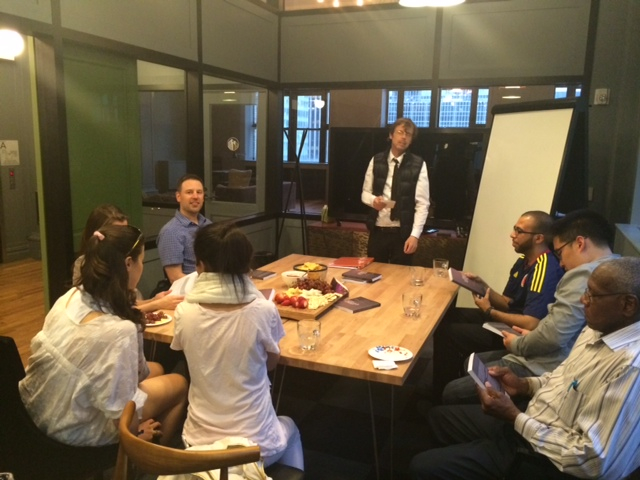
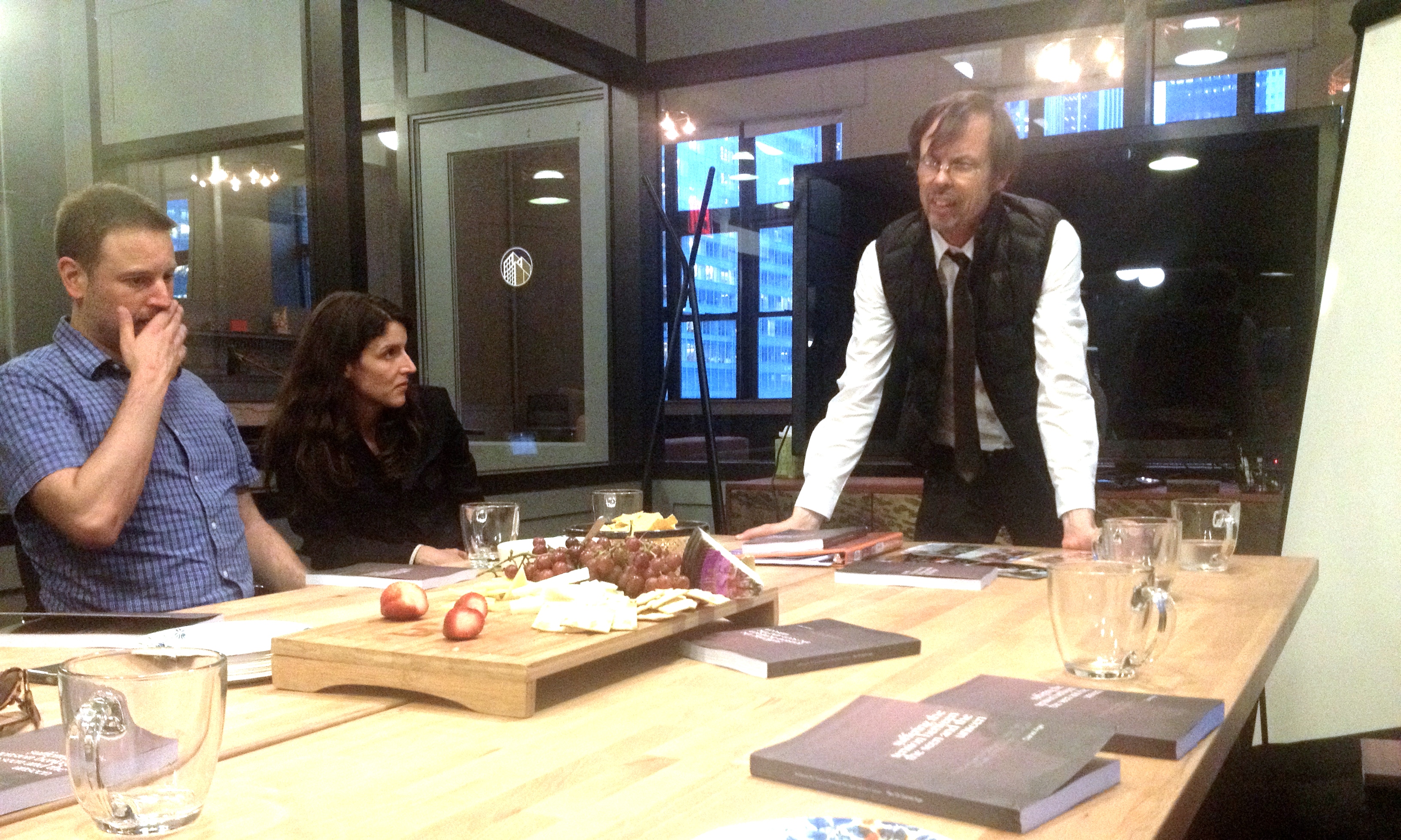
The event was very well attended by a group with diverse religious and non-religious backgrounds. The room reserved for the party could not have been better. Situated adjacent to beautiful Bryant Park in Midtown Manhattan it was a warm cozy room, well lit, smartly laid out, and perfect for a relaxed engaging discussion.

First Daniel shared the inspiration that led to writing the book: “I kept encountering students all over Asia in the colleges and seminaries where I taught who had a naive romantic notion of American religion and culture” he said.  Asked to develop some ethics lectures in Burma he worked out some thoughts taken from the little phrase by Paul the Apostle: “We walk by faith and not by sight.” “The truth in this phrase” he said, “gradually opened up a new horizon providing fodder for a rethink about what is going on in many strands of Christian spirituality, religion and culture – especially in America.”

Daniel Age Book Party

Daniel Age Book Party   Daniel Age Book Party

Here follows a couple fragments from the notes I took during the discussion.

“Poets, prophets, sages and apostles spoke of the spiritual magnitude, God, who is under, in and over all of life (‘underneath are the everlasting arms’ Deuteronomy 33:27). Hidden behind the material veil this spiritual power – God – is present and real. But this hiddenness sets up two follies, spiritualism and secularism. Spiritualism, or better described as toxic spirituality, tries too hard to discover the Spirit. It wants to see, touch, feel and verify if not possess these hidden ‘everlasting arms’ that are said to be under us.  But this attempt to remove the veil that clothes the unseen means trespassing a boundary.  The attempt to bring the hidden spiritual things of God out into open where they can be seen and experienced without faith may be sweet in the mouth but bitter in the belly. The insect that flies too close to the light is burned. Hiddenness protects God’s godness, and when faith is in the equation, it protects humans’ humanness.”

“Secularism on the other hand has staked its honor on the premise ‘what you see is what you get.’ But when what we see, touch, feel and decipher through, reason becomes the be all and end all, the measure of life’s offering, sooner or later life will take us too high and too low. It’s like hooking one’s skates to a roller coaster. Severed from the invisible the visible becomes everything and destroys us. Severed from hidden divine love we are left with human love, and whether fickle or constant, it is not enough. Separated from hidden divine forgiveness and mercy we are left alone with our immediate experience of life and the regrets, hates and hardness of heart that follow in its train. Exorcise ‘hiddenness’ out of the equation of life and one ends up with a banality that progressively destroys everything wise and precious. Taking its queue from the sacred text, faith posits hidden meaning, hidden value, hidden love, hidden mercy, pity and compassion, and hidden grounds for hope all rooted in the invisible magnitude of God. Exorcise this hidden reality and sooner or later the visible immediate experience itself gains a demonic magnitude that becomes our undoing.”

“Faith is a form of spirituality that respects this ‘hiddenness’ of God and releases an ethic of restraint, reverence and respect.”

The application of this thesis explicitly within Christian understandings was saved for another discussion.

These thoughts provoked comments and discussion, several books were purchased and everyone had a good time. Stay tuned for the next report preceded with an announcement of the date, time and place of the next book party/discussion.

Elizabeth Age
Blog Editor

Hosting a Book Party: A Letter of Invitation to My Friends and Supporters

I have a fun plan to share my mission work. Many of you know I wrote a book (286 pages) while packing around Asia, which was published by a Malaysian Seminary early this year. The book is not perfect but it has, what I believe to be, a keen challenging insight and, as it intersects our life journey at many points, it is written in such a way that is accessible to all.

Now back to the States and looking for a way to promote the book I came on a plan. I have decided to hold book parties. The plan requires that I secure the commitment of someone to host a small home party, someone who is sympathetic to my teaching mission and or intrigued by the thesis in the book. This person would then agree to host a book party of about 8 to 12 people in their home who they invite. On an agreed upon time and date I would come and talk about the thesis in the book, taking sufficient time to open up one of its many insights so that a spiritual blessing could be gained. At the gathering I would give an introduction of the book’s insight inside the greater framework of my teaching mission in the Far East, sharing some of the stories and experiences I have had. After the presentation I would have an open Q&A time and provide books available for purchase while sharing refreshments.

Maybe you are thinking you would like to host a book party? Because of the nature of the material and the easy setting that ‘a party’ affords and because the material is around one of the most basic of themes– faith and hope. This venue provides a great setting for anybody to gather in a not too serious, not overly religious setting and gain a blessing and this includes non-believers. My insights, stories and experiences whilst doing my teaching mission in Asia would further lighten and spice up the evening.

Take a look at the below fliers for a sample of discussion topics. To make a date for a book party simply email me.

Daniel Age Book Party Daniel Age Flyers 1 Final


Spring and Summer 2014 Book & Mission Tour Launches in the US 

I am writing this week’s blog post from New York City. Still suffering from jet lag a few days ago I left Bangkok and via Hong Kong and made my way back to the States. Since most of the schools I have been serving in Asia are now on break for several months I opted to return home until August. During this time I will be building a couple of new courses and sharing my teaching experiences. Along with this I will also share themes from my new book Suffering the Tension Between the Seen and the Unseen. My arrival opens up an opportunity.

With this letter you are being invited to book a date with me this spring or summer to speak to your Christian circle in your home, church or town. Here follows a synopsis of the above two areas I would bring to your circle.

One: Stories, Insights and Observations From My Teaching Ministry in the Far East.

Recalling tales and insights garnered from teaching all over the Far East I will open up to your circle first hand experiences and reflections about what is happening in the churches and schools in many places in Asia where I worked. My educational ministry led me into China (as a ‘visitor’ many times), India, Cambodia, Thailand and Myanmar. I am offering you an opportunity to learn about the underground church in China, about the educational endeavors of the Karen Baptists refugees from Burma now still in camps along the Thai-Burma border and other endeavors.

Two: My New Book and Its Thesis – Applied to Life

While tramping around Asia I wrote a book which by now many of you are reading – Suffering the Tension Between the Seen and the Unseen:The Doing and Undoing of Christian Faith, Spirituality, Ethics, Religion and Culture. My thesis contains a fresh insight and challenge subtly radical in its scope. Reflecting on many of life’s experiences that all people struggle with I argue for the recovery of the native tension inherent in faith and hope. Faith’s trust in the unseen sets up a tension with that which is directly seen, felt and experienced when these gain magnitude – real or imagined. And in the same way hope’s interest in better things coming creates a tension and struggle with the problems and pleasures of the present when these gain ascendancy as if they were the be all and end all. The present and the seen time and again suck us in and under them. Faith and hope reassert a healthy tension without falling into the dualism of Eastern religions. I argue that if and when the Church and individual Christians embrace this tension we risk losing easy favor and friendship of the modern world, but if we fail this tension we risk losing the salt that savors the world (‘earth’).

When you book a meeting inviting me to speak to your church or circle I will open up and apply my simple but far reaching thesis developed from Paul’s dictum “we walk by faith and not by sight” (2 Corinthians 5:7). From the truth embedded in this little phrase I work my insight forward indirectly calling into question many of the forms of spirituality, religion and culture that much of American Christianity has been and is presently generating. Could it be that much of our religion is trespassing faith and hope? This would not be a weighty matter if faith and hope were merely two virtues in a long list spiritual Christian graces but faith and hope along with love are the ethical DNA of the Christian way.

Nothing is quite as dangerous as a new insight into an old truth. Once it is grasped it forever stretches the mind beyond the boundaries once considered fixed, safe and secure.

Booking Details: Timelines and Geographical Areas

You can contact me about booking a meeting via email or by phone: 516-996-0905.

  • April and May – the Northeastern USA
  • May and June the Southern USA
  • June and July Midwest and Western USA

There are no travel or speaking charges to book a meeting except in unique situations. This is an opportunity to learn, think and challenge your faith and broaden your vision of the church in the world. Seize the moment and send me an invitation or inquiry, let’s make a date!

Daniel Age

Kawthoolie Karen Baptist Bible School and College Spring 2014 Graduation

A First Hand Report With Reflections

KKBBSC Spring 2014 Graduation

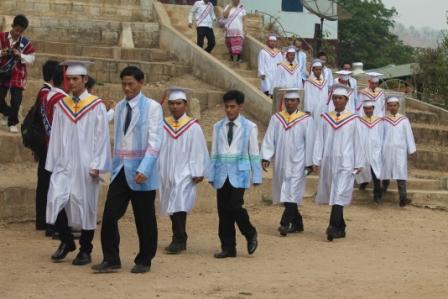
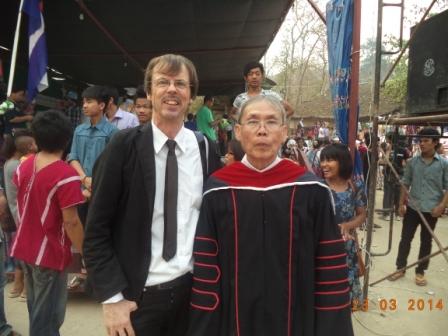
On Sunday March 22 leaving Chiang Mai I traveled 7 hrs by bus to Mae Sot, Thailand. The next morning Sunday the 23rd bright and early I boarded a pick up bus and traveled along the Burma border for an hour and half north to the Mae La Refugee Camp where I have taught many times since 2011. Kawthoolie Karen Baptist School and College (KKBBSC) was graduating their senior college students and I wanted to be present to encourage and congratulate them. The first service was at 10 AM and lasted till 1pm the second service started at 2 pm and lasted past 6pm. Seated in the congregation I was summoned to the platform where it was hotter but free bottled water was passed out. Three students spoke all toll and many adults – leader figures – honored guests from far and wide. On the platform there were VIPs so called, many seemed a cross between NGO and Church leader with a smattering of volunteer teachers and a couple preachers. These came from Germany, Denmark, Australia, Korea, Malaysia and the US as well as from Thailand and of course the Karen from Burma (most everyone present were already working in Thailand or Asia). I would estimate the entire count of persons present including students to be over 900. This being the case it was especially difficult for anyone with preacher blood coursing through his or her veins to sit down once he mounted the pulpit.

Here follows a few brief reflections taken from my 6 hrs on the platform on this auspicious day with its auspicious guest speakers and honored students.

KKBBSC Spring 2014 Graduation

1. First consider the setting. Mae La Refugee Camp is situated 65 kilo north of Mae Sot along the Thai- Burma border on the Thai side. It is nestled at the base of a great mountain with a sheer rock face and it is out in nowhere. There are no towns or villages even close. It is rugged mountainous terrain typical of the Tak province of Thailand. 50,000 refugees live in this camp their dwellings cut from the flora and fauna they inhabit. In this desolate outback approximately 70 seniors, all Karen save two or three, robed and polished, as the proverb states, “after the similitude of a palace” filled the outdoor pavilion. With all the pomp and ceremony one might find on graduation day in a great cathedral on 5th Avenue Manhattan the occasion went forward. The setting made me recall a chance casual conversation I had with a young lady sitting at the table next to me in Manhattan a few years back. She told me at long last she believed she now lived in the center of the planet – Hells Kitchen downtown Manhattan. This is where she believed culture peaked and she experienced herself on the cutting edge. I openly scoffed at her judgment but sitting on the platform the thought lit upon my mind like a butterfly delights a blossom – this, here and now, is the center of the planet. Here is why.

2. The Karen have many gifts but among their finest is music and especially singing. They not only love to sing and fill the valley with song from morning to night they have developed exceptional skill. At one point in the ceremony the entire student body rose and sang the Hallelujah Chorus. During the chorus I closed my eyes for a moment and saw the angels weeping. No words can describe the harmonic ecstasy and the sheer spiritual and aesthetic power of this moment. Where such worship occurs, I mused, then and there we find the center of the universe. This is so because in my humble judgment when such exquisite praise occurs in the midst of such hardship, there one has pushed trouble to the periphery and found the goodness of God to be the center of life.

KKBBSC Spring 2014 Graduation

3. Dr Simon the founder and director spoke of the origin of the school. Even though I had heard the story many times before it moved me again.  In 1990 having fled Myanmar for the terror of the military that was reaping violence on their land and having found sanctuary in this camp Dr Simon dreamed a dream. With three other teachers and 6 students he opened KKBBSC and now 24 years later it has 500 students. But what’s more, the military who were motivated by ethnic hatred to destroy the Karen will in the end be defeated. Because soon the Karen will return and instead of returning beaten, weakened and begging for land and a share of the means of life they will return stronger, educated their native talents and gifts developed more than anytime in the past and confident of their belonging and right. What is the saying “revenge is sweeter when served cold.” And here certainly no revenge is intended but in the dues of God, (“God laughs at the wicked” the good book tells us) what was chased out and under will reemerge more potent and resilient than before. When justice, dignity and right are violated then it is, if and when education, study and reflection are mixed with this experience, that these become stronger, more self–conscious and determined. From the black churches in America the greater church at large awoke to the Prophets and Christ’s vision of justice. The Kawthoolei Karen Baptist have a distinctive fabric of justice and dignity woven into their religion and from the church in their midst (if they will) other churches in Asia may also awakened to the cause of justice incorporating it into their evangelism. This leads me to my 4th reflection

4. Of all the distinguished and illustrious guests rich in experience and degrees no one in my humble opinion spoke with the poignancy and clarity as two senior Karen students. Each from his own perspective cast an eye upon their return to their homeland. They spoke of restoration of the land, the community and the work that needs to be done to replant and re-root their culture and nation again. These were at the same time concrete practical and visionary speeches. Never before visiting KKBBSC have I felt the imminence of the Karen hopes as with these seniors. It is as if many of them do indeed carry the burden for the return even more than the elders whose work is passing. “Young men grown up in their youth daughter polished after the similitude of a palace.”

KKBBSC Graduation 2014

5. Much was said during these speeches about the Karen nation and indeed a nation they were and a nation in exile they remain and a nation determined to be again in their homeland.  Sitting there on the platform I could not help but think of the Jewish nation and their Babylonian exile. The shape and form of their nation before and after it changed. National ‘restoration’ no doubt echoed during the seventy years in Babylonian captivity but when the time of restoration came what occurred was not simply a restoration of the way things were in the past but a transformation of it. Judaism did not go forward in the same shape it was before. ‘Restoration’ on the other side of all exiles, no matter their cause, whether personal or collective, is found and built in a new way. The old that was lost when it is reborn goes through a change and re-emerges in a new form. Judaism returned to new religious and ethnic pluralism and keeping their identity depended more upon piety and taking care of the law (Torah) and embodying the way of the law in life. From henceforth the synagogue and the teaching that occurred within it began to emerge and eventually became an important center to hold the people together. This piece of Jewish history is, I believe, very instructive to Karen people at this time in their history – perhaps even more instructive now than the Nehemiah text of rebuilding the wall – the Scripture reading for the graduation.

Add to this historic reflection and comparison the fact that when messiah Jesus came upon the Jewish 1st century scene he laid the groundwork so as to tie their ethnic identity as the historic people of God to ecclesia not nation perse. The future of nation was caught up by Jesus into the coming Kingdom of God something much bigger and broader than nation. And ecclesia i.e. the called or called out (church) became the gathering point this side of the kingdom and included all believers, Jew and Gentile and existed separate from state/nation. All confusion of church and state stand not only under the judgment of Christian history but also the ways and means of messiah Jesus. Nations do not cease to exist but they cease to be  ‘Christian bodies’. There is only one Christian body – “where two or three are gathered in my name there I am present”.  Nations who have within them genuine Christian communities (salty eccelsias) indeed benefit and are built up, strengthened and ennobled in a tangential accidental way. This side of the kingdom this is as close as ‘Christian’ comes to any institution whether it be a nation, marriage, political or social body.

KKBBSC Graduating Class

Epilogue

I was asked to speak and introduce myself in a 2-minute envelope of time. I may have by passed my name I am not sure. Having taught many of the graduating students some of my insights on faith and hope I wanted to remind them of their significance for the time at hand. So instead of an introduction I told them that if they were to fulfill their graduation commission to serve Christ they must venture what Peter did – walk on water, not literally but after a similitude. The key to walking on water I said was learning to walk by faith not by sight. With this rather abrupt cryptic message lasting 1 minute 43 seconds I sat down. Here follows my meaning that I trust will make it round robin to a few of the graduates.

Yesterday (March 22,2014 and before) you  (the graduates) were in the boat called KKBBSC. In this you were not much different than the 12 in the boat called GMS (Galilean Missionary School) under the head master Jesus. Today (March 23) you have gathered with family and friends in the presence of your teachers and elders to hear Christ bid you leave the boat and serve him in the world. In the boat you have each other close and you have the KKBBSC institution under your feet and in this boat you sing, study and play despite your refugee survival. You sing your dream song “row row row your boat gently down the stream merrily merrily merrily life is but a dream.” But now graduation has come and with it the definite word and time has come to arise and get out of the boat and get about your work. Times have and are changing for you. It is time to enlist your youth, zeal, time, strength and talents in service (with the exception of those of you who will post pone this calling and go on and study more).  Like Peter, Christ bids you to get out of the boat and serve him in the face of humanity.

The boat symbolizes a degree of security. It is under you and saves you from being submerged in the often troubled waters beneath you. Some of you when you grasp the degree of the challenge ahead will say Lord just let us stay together and row the boat where you want us to go, others will say “give me a bridge Lord.” “Lay up a bridge and I will walk over it and go where it leads and there serve you.” But in the call to serve Christ bids you like Peter to abandon the security of the boat and walk on water.

KKBBSC 2014 Graduation

If you are to get anything done for the Lord, if you are to make your way in service and be fruitful you must now graduate from life in the boat to life walking on water, that is to say you must forego the luxury of having a clear, strong, firm and secure foundation under your feet thereby upholding your journey. You must forego your predilection to first have in place all the material needs to get the job done; forgo having a firm foundation under your feet. No, to truly serve and obey his call you are and will be a little beyond the safe zone, beyond your means, beyond your native strength, beyond what hard logic and good common sense dictates and beyond the measure of competence that the preparations you have made heretofore equip you. And here in this place all that is solid melts into air and water and here you learn and relearn to trust something that cannot be seen, touched or felt. And when you venture forth without having all you need to hold you up then and then only have you graduated. Even so be sure all of us without exception fail and graduate over and over by the grace of God. We all hanker after a material foundation under us before we go forward, often demanding it in vain from God and others.  Yes where opportunity puts helps, better preparations and supports within your reach do not be foolish, avail yourself to these but know one thing for sure – again and again God calls us out of the boat onto the water to get us where He wants us to go, do what he wants us to do and become what He wants us to be.

Look straight at what is not there, what ‘should’ be there, look directly at your lack of good support and the lack of material economic subsistence under you and your lack of thorough preparations and this absence will gain a negative spiritual magnitude will subdue and overcome your faith and destroy it and you will retreat. Sooner or later in life we all must learn to walk on water else we will either sink into despair and retreat or we will become graspy, demanding and forceful, ways far from the Kingdom of God that Christ has sponsored.

“Underneath are the everlasting arms” so reads the good book but most often you and I cannot see, touch or feel these sturdy caring arms. Courage, duty and Christ call you beyond feeling and sight to go forward on by faith alone and lay up good work and efforts in service to Him and his kingdom.

Together with you in His service,

Daniel Age
Teacher of the Gospel of Christ and Way of Faith

KKBBSC Spring 2014 Graduation

Photo Essay: Dr. Dan’s Teaching Visit to Hill Light Seminary

From February 2nd through February 14th I was invited to teach the third year students at Hill Light Seminary. This was my first visit to Hill Light, a Karen Seminary, about 25 kilometers South of Mae Sot Thailand along the Burmese border. The school was recently established five years ago in the wake of the Karen diaspora. The school serves around 80 Karen Baptist Students from ages 18 to 24 all Myanmar refugees. By request I was asked to teach an ethics course based on my new book. What follows is a photo essay documenting my experiences at Hill Light.

1. These first two photos are from the Burmese Market a large open market dominated by Burmese immigrants, legal as well as undocumented, who have crossed the border into Thailand. Every morning almost before the roasters crow it is a teeming chaotic throng. My Bus to Hill Light Seminary left from this location.

At the Burma Market
At the Market-
2. The photo below is another shot at the Burmese market – the blue pick up with the cap is a bus, my bus which took me to a place called Ban Mae Kon Ken and from there I took a motor cycle taxi to the camp. Total Cost – 30 Baht per ride ($1.80)
Burmese Market Blue Line BUs

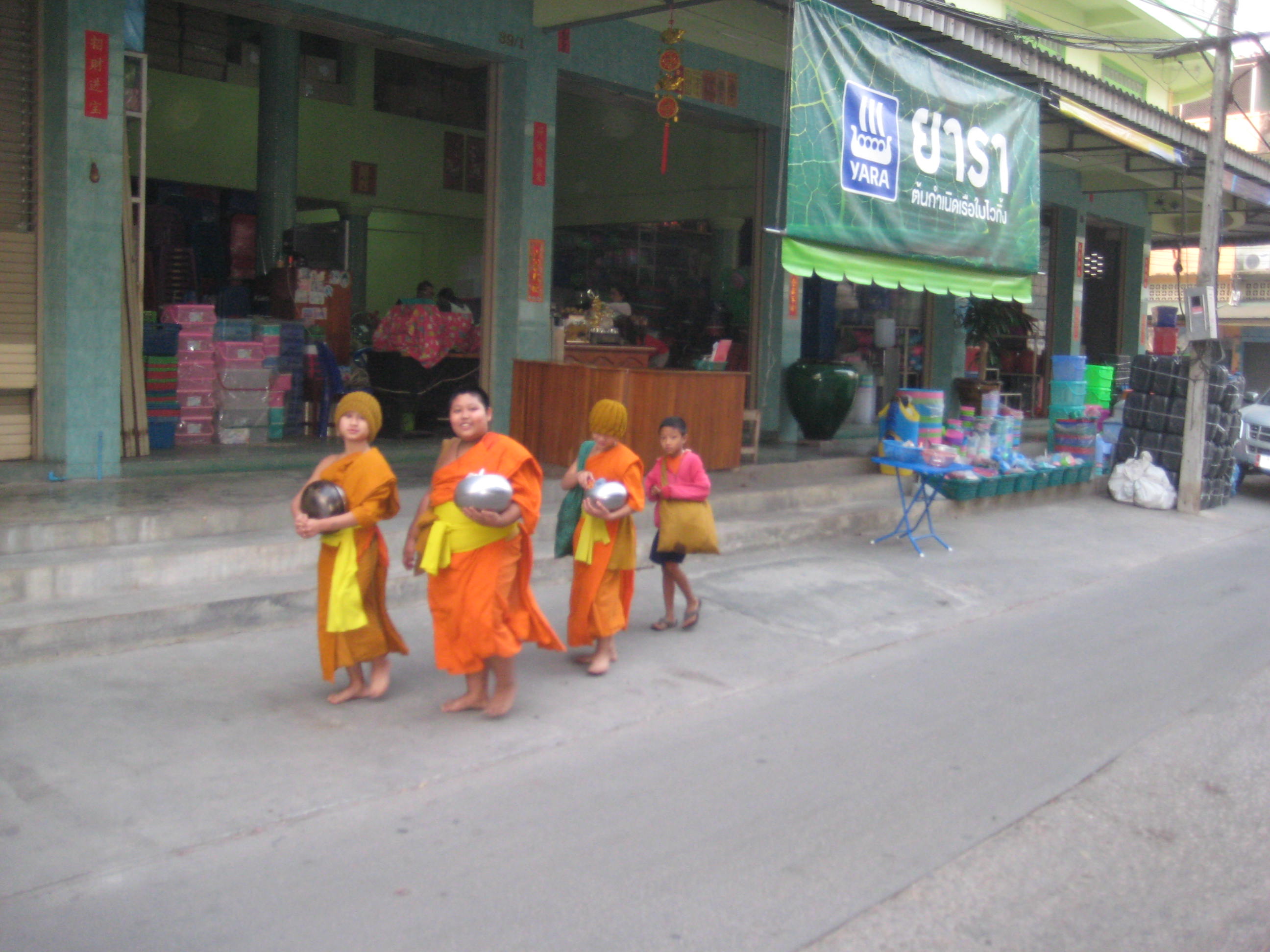
3. This next shot I took from my bus in route to the seminary as we were leaving the Burmese Market. It was about 6:30 AM and these young monks in training were out for to give the local Mae Sot citizens an opportunity to acquire some fresh merits by supplying them food stuffs – mainly rice. The big fellow, not yet fully groomed and cultured in the soulful monk decorum sported a wide gleeful smile for me.

On an earlier occasion walking on an empty stretch of road I passed two young monk candidates about 9 and 11 years of age. As I passed my phone rang but I had set the ring to a frog tone which in the early morning air sounded true to life. The eleven year old remained expressionless and didn’t blink but the nine-year was over come with amusement and burst out laughing.

On the way to Hill Light School
4. The next picture was taken at the general assembly which meets every Wednesday morning at 8 AM. In the early morning it is still cool this time of year in Northern, Thailand so many students come bundled up. I am speaking on a New Testament passage which the director requested. These are all 18 to 24-year-old Karen students from Burma who have come across into Northern Thailand seeking sanctuary from in the Myanmar military who invaded their villages killing, abusing and plundering. Myanmar is changing and hopes are high that a return from exile will soon come.

General Assembly Hill Light Seminary

5. I was asked to preach at the Wednesday morning General Assembly on Colossians 1:15-23. Colossians is about fullness – “pleroma.” Holding a cup with water I opted to introduce the point by asking the proverbial question “is the cup half empty or half full?” After sorting out how many pessimist and optimists I was preaching to I proceeded to make my point. The Colossians were being suckered into a religion in which they were told that they could realize pleroma i.e. “fullness” here and now. But in this letter Paul’s testimony can be heard. Christ was indeed filled with all the fullness of God (2:10) but here and now we, on the other hand, suffer much emptiness and only enjoy a small measure of this fulness of the Spirit and life (just a taste of this promised fullness of Hebrews 6:5, Ephesians 1:12 & 13). By faith and hope in and through the Christ we are regarded as full (1:27 & 28)but when the fullness of time comes we will indeed enjoy this fullness in reality full and over flowing.

Now we suffer faith and hope – faith connects to unseen things as they exist by promise and by the word of the Gospel that declares the existence of unseen and even things not felt and experienced directly to be so. And hope lives with a measure of emptiness and suffering with courage waiting for this pleroma. We like the Colossians are tempted to break the tensions inherent in faith and hope and sucker after pseudo fulfillment, spiritual and secular.

Hill Light Seminary Daniel Age
6. Here is a shot of my class of third year students. The actual campus is really very beautiful, sitting on a hill-top overlooking a fertile valley. The campus is situated inside an old Karen Thai village called Kway Nam Ku. The building housing this class room, one of seven rooms, was donated by Korean Christians who retain the title and a degree of control over its use.Note the young lady in the front. Before her lies a copy of my book – a gift to each one who came to class and did the assignments. Fifteen students received books (I am in search of donors to back the cost at the discounted student price of $15, please email me if interested).
Third Year Karen Students at Hill Light Seminary

7. Below is a photo of my class and I on the last day of the seminar along with some of the feedback I received from the students on the lectures .

“I like this book very much because it provides many examples to understand. Jesus also used examples in His teaching.We don’t fully understand God and His ways, sometimes not even a little. But this book opened my eyes to walk by faith and not by sight (blindness is not a big deal).” Thit Sae

“I learned so many things from these lectures. Two weeks are too short of a time but we received an advantage from this time….This was strong spiritual food. It encouraged us to deal in God. It also encouraged us to steady our faith… Today we face many challenges and we know we can overcome these when we walk by faith not by sight…” Hsa Klay

“In this class I learned about faith and sight, faith and sight you explained very well and I understand more. I like this class so much because you tell us the teaching using short stories and then I read the chapter in your book which follows the lecture. I want to say thank you that you came and taught our class may the grace of the Lord be with you… the blessing of the Lord over flow you.” Naw Moo Christ

Daniel Age with Students at Hill Light Seminary