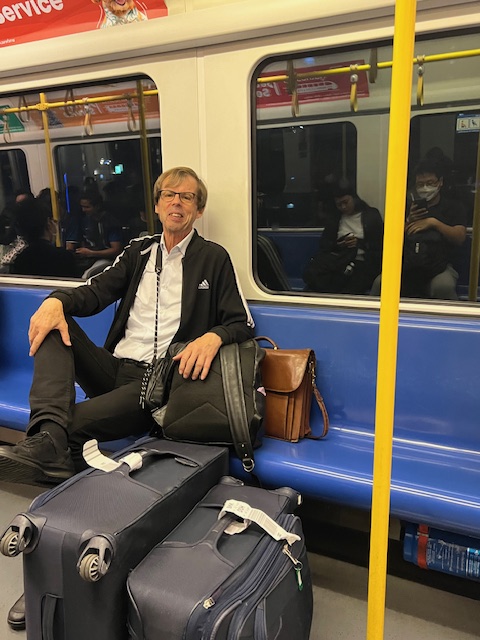
Tell Me Brother, Tell Me Sister Have You Been Down The Damascus Road?

“The churches of Judea, which are in Christ, kept hearing, “The man who once persecuted us is now preaching the faith which he once tried to destroy.” Galatians 1:23

Saul on the Damascus Road: “Bent on checking a plague that threatened Israel (Saul) was constrained to turn right around and become a champion of the cause which, up to that moment, he had been endeavoring to exterminate… (henceforth) he was dedicated to building up that which he had (previously) set out to destroy…” F. F. Bruce Apostle of the Heart Set Free

Saul of Tarsus Does a One-Eighty

In 1973, I did a one-eighty. Driving my 1964 Chrysler four-door, returning to Cortland, New York, from Southern California. With five other people in the car, I went into a slide on the Pennsylvania Turnpike. It was not yet dawn when we commenced to climb a mountain pass where the roads turned icy and snow-packed.  Even at highway speeds, I was comfortable on such surfaces and normally nimble at the wheel, able to manage slides and ride them out. As a raw youth, car slides were part of my daredevil joys growing up in Oregon. I would find a curvy gravel back road and speed into a curve, inducing a slide, and then manage it as close to ninety degrees as possible before aligning to the straightaway. But on this occasion, no fun and games were in my veins. The reckless teens were behind me. Near the crest of the mountain pass, there was a slight curve and patches of hard-packed snow, but something else as well – patches of black ice. Usually, extra weight helps a vehicle grip the road in snow and icy weather, but if and when the car begins to go into a slide, the weight can work against you. It was going into this slight bend that I suddenly felt the black ice and the car helplessly drifting to the right.  All my instincts developed from my youth leaped into play. Braking is the first impulse, but braking accentuates the slide. Instinctively, I stayed away from the break, let up on the gas, and slightly curbed my front wheels so as to go with the slide, not away from it. Usually this works. I thought I was going to pull out of the slide, but the full load worked against me. Add to this the slight bend and the slight downward slant hampered my recovery. At the last second, realizing I wasn’t going to bring the car out of the slide, cinching down on the steering wheel, I pulled myself up out of the seat and jammed my right foot, shod with my trusty Red Wing Cowboy boots, down on the brake with all my might. Instantly, the car did a 180 and came to rest on the shoulder parallel with the road, pointing in the exact opposite direction. At that precise moment, an eighteen-wheeler crested the hill and wisped by us, traveling full speed. I was not just stirred, I was shaken!  

On the Damascus Road, Saul of Tarsus did an existential and missional one-eighty. He was headed one direction in life (evidently making admirable progress) and near the conclusion of his week-long journey, big trouble suddenly stole a march on him and overcame him, and one might state, threw him into a slide that lasted 72 hours (it’s not over till it’s over”). Paul lost control, not merely of his purpose for coming to Damascus, but of his life purpose and mission, in fact, all that he understood himself to be and be about. This happened near the conclusion of his journey to Damascus when Jesus, in all his glory, appeared to him a short distance from the city gate.  But while this direct encounter with the Lord caused him to immediately lose control, the out-of-control movement of his life did not cease for a full 72 hours, during which time he did not eat or sleep. Only at hour 72 did the vehicle called “Saul of Tarsus” come to rest, pointing in the exact opposite direction his entire life had been traveling up to that point in time. 

In this meditation, I argue that when this Damascus Road encounter occurred, he was left between heaven and the deep blue sea. This direct encounter took away Saul’s mission and subverted the beliefs it was founded on, but it did not immediately give him a new mission and a new ground of belief to rebuild on. One thing was for sure, for weal or for woe, on the Damascus Road, Saul fell into the grip of the divine power and glory of Jesus.  

Listening to the accounts of this happening on the Damascus Road, it reads like an arrest, inquest, and indictment all wrapped into a few terse words with an opaque, cryptic charge tacked on at the end. Saul, the zealous Pharisee commissioned by the high priests to use force to arrest, capture, whip, stone, beat, and imprison members of the Way, is himself arrested in his tracks, made to gaze into the face of the glorified one, forced to hear charges made against him before being struck blind. Yes, at that encounter on the Damascus Road, there is an opaque, terse reference to something more coming, but this is not unpacked or developed. Only at the end of the 72 hrs does it make its debut via Ananias, whom the Lord sends to Saul (note: it is true in one of Luke’s three renderings of this event in Acts, the one depicting Paul’s speech before Agrippa, Luke / Paul collapses the Street Called Straight climax into the Damascus Road encounter. Why? because these timing gaps were not germane to the point Paul was making before Agrippa. On the Damascus Road Saul and Jesus share a terse exchange on the Damascus Road about the future. It begins with Saul crying out, “What do you want me to do?” as if, for a long time, subconsciously, he was on the run from what he was really supposed to be doing. As I will note later, there is also the following phrase spoken to him at the time of this direct encounter: (Saul) “it’s hard for you to kick against the pricks (“my yoke is easy, my burden is light”). Saul of Tarsus is subconsciously battling with the Spirit and his destiny and calling!

I believe the spread of 72 hours is helpful and significant for grasping the transition Saul went through. On the Road to Damascus, Saul suddenly lost control and was thrust into a slide in which he would not and could not recover. This slide continued in slow motion for 72 hours in a room off the Street Called Straight inside Damascus city. Only after 72 hrs did the crisis Saul was thrust into come to a rest. In other words, for sure, Saul suddenly lost control of his life as he was living it on the Damascus Road, but it would be 72 hrs before he regained control of his life. And but this control would not be of a kind he practiced before. Saul (who Luke would commence to call Paul after his first telling of this story) henceforth proceeded to live suborned into and aligned with the higher will and Apostolic commissioning of Jesus. He was now enlisted in the very mission he had been enlisted in to destroy. This happened when a member of the Way named Ananias entered his room and, standing beside “Saul of Tarsus” audibly restored his sight, after which Ananias clarified why he had seen Jesus with his eyes (“the Just One”) and heard his voice from heaven on the Damascus Road when he cryptically referenced something he must do. Only at this Ananias intercession did that something he must do come out into the open – namely, he had been chosen to bear witness to Christ to the Gentiles.

Something Is Happening Here, Mr. Jones, But I Don’t Know What It Is” (Bob Dillion)

Something of momentous significance for the career of the WAY was occurring in this Damascus Road apprehension and the Street Called Straight 72-hour reflection, and its climax with Ananias. The religious ground floor needed to mainstream the Gospel of the Jesus is Lord message to the wider Gentile world was lacking. In short, until Paul Gentiles converted to Christ still had to become Jews. It was Paul’s job to free the “Jesus is Lord and Savior” Gospel that commenced at Pentecost from its Torah -temple ties inside Judaism, where it existed as a sect. Paul created an “extra nomos (Torah) ecclesia“(church-people of God body). It would be naive to think that this would occur without the new movement creating a radical Christocentric theological ( i.e., religious) foundation.

The Existential and Missional Reasons For Saul’s Arrest. 

Lest we have missed anything necessary to unpack the significance of what went down, it is necessary to linger further. Ananias told Saul why he was arrested on the Road to Damascus. When Jesus physically presented himself to him in his glory, it was because he had been chosen by “the God of our fathers” to bear public witness to the Gentiles. After this, he was instructed to rise, eat so as to restore his strength, and be baptized and wash away his sins.  

At the end of these seventy-two hours, Saul’s entire life, all that it consisted of, including his passionate anti-Christ religious mission and the Torah foundation of his life, was lost for good, and his life became aligned in the exact opposite direction that he had been going. What happened?  

From Darkness to Light: Seventy-Two Hours of Saul’s Life 

Saul was immediately blinded when Jesus appeared and spoke to him on the Damascus Road. After seeing the risen Lord, the brilliance totally blinded him, and he remained blind in that darkness for 72 hours, during which time he did not sleep or eat but prayed, the wheels of thoughts no doubt furiously turning. Sometimes, literal darkness, cutting off the outward gaze, serves as a catalyst for inward reflection. But this darkness was like no other. Saul almost surely turned every stone of his life journey, starting many years back, feeling after the anomalies, the mistakes, and wrongs in his life when and where he blunted his conscience. No doubt he recalled the verses of Scripture that he had used over and over to defend and justify his mission to stamp out the Jesus is Lord and Christ movement.  In times like these, myriads of threaded memories neatly packaged and stored in the recesses of his mind suddenly break free and present themselves to one’s consciousness as if the time of their captivity had expired and the moment to speak the bare truth, that had long been neatly domesticated and cocooned, had arrived. Like a beast takes to the saltlick, Saul returned to every word and phrase uttered to him by the glorified Jesus Christ on the Damascus Road. One phrase in particular, however, stuck in his mind: “It is hard (Saul) for you to kick against the pricks”.   

The mind is all too often in subtle bondage to the perversity of the spirit that has taken shape within a person. This perversity often subdues reason, Scripture’s witness learned from youth and rehearsed, conscience too is dulled, even heaven’s footprints often fail to give one pause in life’s journey. Johnny Cash’s lyric comes to mind “I hurt myself today to see if I still feel”. Nothing is to be dreaded more than the day when. “Kicking against the prick” (i.e., resisting the Spirit’s attempt to awaken one to light and truth over darkness) will on our part succeed in quieting and silencing that which has drawn near to free us for God’s truth and purpose. When the self succeeds in squelching truth, light, and conviction, the soul is in danger.  It is the truth that sets one free. John writes in his Gospel, “you shall know the truth and the truth will set you free”. The seat of our problem is in the heart. Jeremiah states that “the heart is deceitful above all things…who can know it”. Even the self deceives itself. The Damascus Road was the end of Saul, “kicking against the pricks”. The subtle sophistries of the mind were once and for all exorcised. 

In this verse about Saul kicking against the pricks, we change seats. We cease to be onlookers, voyeurs of Saul’s unique experience, but fellow travelers on the Road to Damascus. Suddenly, we too understand and know Saul. Saul is perversely invested in something contrary to the will of God. Saul can give himself or a fellow inquirer a thousand reasons justifying his actions, and so can we. Often, God ups the ante as he did with Saul. If we succeed like Saul, we also will lose, but if we lose control of our justifying narrative like Saul did in his 180 slow-mo slide, we will “succeed”. 

 I submit that Saul, at this juncture, is tired. Why? Because the text states, “Its hard to kick against the pricks”. If it’s easy, one has a long way yet to go, or God has already left (“grieve not the Holy Spirit whereby you are sealed”). “Come unto me all you who are weak and heavy laden, take my yoke upon you and learn of me, my yoke is easy, my burden is light”. 

The Unique and the Common 

The Common 

The Damascus Road was not the first divine encounter Saul had, but it was like none before. The earlier ones were subtle and not game changers. And these resistances to God’s moving on his mind and spirit, we understand. We, like Paul, are in this sense contemporaries. Moreover, many souls going down the road of life in the wrong direction have suffered a subtle or not-so-subtle challenge such that s/he could not persist onward but must turn around and go the opposite direction!  As a raw youth, Martin Luther headed off to study at the university to become a counselor of the law in obedience to his father, and also with the desire to please his father. Midway, a bolt of lightning hit the tree directly in front of him, and he instantly cried out to St Anne for God’s mercy and instantly changed course and went into the monastery, obeying the conviction he had suppressed.

The Unique

But there is another side of Paul’s story that was as subtle as a train smash. Saul did not merely come face to face with the risen glorified Christ; he did not merely have a close brush or an amazing spiritual experience. Christ, clothed in his glory and power, arrested him, charged him, and made a claim on him for weal or woe; at that moment, Saul did not immediately know for sure. One thing was clear – henceforth, it was Jesus with whom he had to deal. Saul’s life was, from that moment on, caught in the inexorable grip of Jesus and his power and authority. There was no altar call, no confession, no formal repentance, no call to faith and decision. Paul, in his own words, was “apprehended” (Philippians 3:12), then commanded, and at the conclusion of those 72 hours, commissioned to undertake a new mission. Paul’s Christian beginning was very muscular. How to get inside this muscularity? Directly after the Diet of Worms, Martin Luther, returning to Wittenberg, was kidnapped and spirited away in the dark to a castle. Soon enough, Luther learned it was Fredrick the Wise, his protector, who arranged this ‘kidnapping’ for his own safety. This piece of history reminds me of the word Paul uses in his words, scripted to the Philippians, translated as “apprehended”. Quite apart from Paul’s permission or will, God made a vertical non- non-negotiable claim on this man who was called Saul of Tarsus, soon to be known as Paul. In this, we see the power and freedom of God.

An Apostle is a unique foundational entity in God’s purpose. They see and then believe and proceed to witness to the rest of us who do not see but hear and believe and proceed to live by faith and hope. We are all standing on the shoulders of the Apostles. Yes, of course, all the Apostles had to proceed to live by faith, hope, and love, suffering the contradictions between faith and sight. When I was about 19 years old, I learned N T Greek and translated 1 John 1:1-3. These verses, in my estimation better than any other in the N T, poetically describe the exceptional, unique experience of the Apostles. Paul’s direct physical encounter with the risen Christ and his Apostolic charge to witness to Christ was a belated part of this Easter encounter and commissioning.

But Paul’s Apostleship possessed a unique purpose. As noted, the Gospel under the shepherding of the Apostles and especially the leadership of James, the half-brother of Jesus, was in danger of remaining inside the ecclesial piety and purity marked out by the Torah, a messianic sect somewhere on the outer boundaries of Judaism.  Moreover. As I hope to discuss in a later Part Two of this discussion, Saul of Tarsus may in fact have been Jerusalem’s top Priestly officials’ merciless answer to that part of the WAY Jesus sect infecting Judaism from the inside, especially those who increasingly relativized the temple and the Torah. Almost certainly, the apex leaders of Jerusalem saw in Saul of Tarsus a zealous, highly educated Pharisee who embodied in his person both the avant-garde Hellenistic (Greek) culture inherited from his Tarsus upbringing and also his extensive Hebrew Torah training in Jerusalem. It was this combination that rendered him a suited candidate to purge Judaism from the more radical fringe of this WAY movement. Almost certainly, Saul’s fitness for the mission he embraced for Judaism and its vanguard leaders included his distinguished Pharisee credentials. But the matter, as not a few scholars have noted, goes deeper than the above sketch.

It is to be remembered that the Jerusalem church possessed ethnic tensions from the get-go. There were the Hebrews and the Hellenists (the natives and the immigrants), and the latter (on account of their cultural depth within the Greco-Roman culture) were the immigrant liberals in the Apostolic Church. Stephen was a Hellenist; in fact, likely all the decons’ so-called waiters of tables were Hellenists. Stephen was stoned, and the charges were that he spoke against the law and the temple. And Saul was there at his stoning, almost certainly not as an observer, but overseeing the nasty deed, fully justified because the Torah foundation of Judaism, ostensibly being subverted by Stephen, must be defended.

Here then is the pinch of the point regarding the peculiarity of Paul’s apostleship. Following Scripture’s and F F Bruce’s assessment that Saul of Tarsus did a 180, I am not merely using fanciful dramatic language. Saul of Tarsus possessed the perfect background, upbringing, professional training, and Pharisaic alignment and bilingual bi-cultural make-up necessary to purge Judaism of this Jesus is Lord and Saviour WAY scourge. Ironically, this entire unique make-up, all of it A TO Zed, once transformed by his Damascus abduction and commissioning by Jesus Christ, provided him all the religious, Biblical and cultural insight and learning needed to carry the nascent Hellenist-Stephen Gospel vision of the Way’s destiny to transcend Judaism and embrace the world. The seeds were almost certainly in Stephen but Paul’s apostleship was needed to bring these seeds to reality. Almost certainly, Saul of Tarsus was motivated to purge Judaism of a Jesus Christ witness to truth that had begun to take shape in its more radical disciples. According to his enemies, Stephen spoke against the Torah and Temple. But Paul in his teaching and ministry, cogently argued that the covenantal people of God rested on a new foundation. In the space of 72 hours, this highly educated Pharisee (who studied under the famed scholar Gamaliel) embraced the position of these former WAY Hellenists, some of whom he had stoned. Moreover, he became the movement’s foremost advocate for a transition to a new foundation -Jesus Christ for the People of God. But he was not merely one of eventually many such advocates; single-handedly, he plumbed the elemental makeup of the existing Christian Gospel/Evangel preached and taught by the Apostles that preceeded him and relaid the foundation of the ecclesial people of God such that Gentiles and Jewish believers shared common fellowship in and through Jesus Christ alone outside the gate-keeping perogatives of Torah purity and piety. Without this unique work, “Christian could have never proceeded to realize its radical inclusivity and universality. Indeed, it is no exaggeration to state that ‘christian ecclesia’, whenever and wherever it draws its truth and witness from this Pauline transformation of the Apostolic Gospel, impregnated as it is with inclusivity and universality, again and again is set free to transcend all parochial, ethnic, national, political, cultural and religious attempts to domesticate and quarantine it.

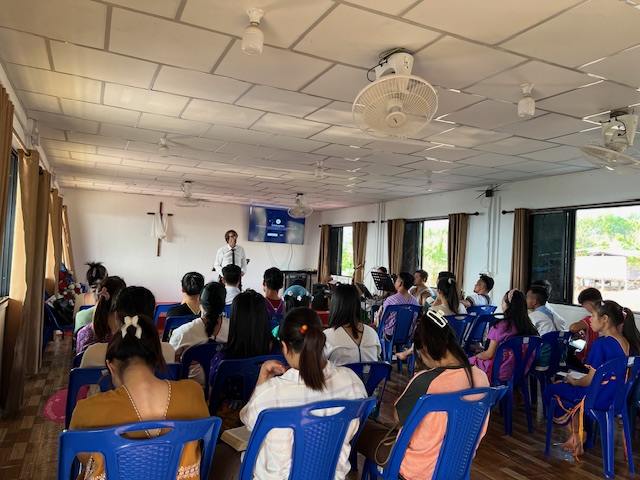
Daniel Age’s S E Asia Teaching Ministry 2024

Thoughts and Photo Recap

Part One: Movements and Assignments
This past year I made two teaching excursions to S E Asia. The first trip began in February with what I hoped would be several weeks of intense prep time in Chiang Mai with the plan to proceed to Thailand’s Tak Province to teach in three different Karen schools. The second teaching trek commenced in October.

Departed Well but Landed Sick

On my first trip (“Spring” 2024 trip) I boarded my outbound flight departing from JFK – apparently hale and hearty but exited my plane in Bangkok very sick. I had the shakes, a fever, and other disturbing signs and wonders going on in my body. After one or two nights in Bangkok, I realized I had to go someplace where I could better manage my plight. I proceeded onto Chiang Mai unsure what had taken hold of me. The MD I was assigned to at Chiang Mai University Hospital became frustrated with me because I refused to be admitted. She wanted to run every test on me in the book. While I was outwardly deferential, I wasn’t convinced. I said to her “Please let’s wait a longer see if I come right after I complete the antibiotic routine you prescribed”. “Maybe the symptoms will change for the better”. After 7 days I returned and after examination, she concluded I was close to 65 to 70% improved. But despite these results in hand, she still wanted me admitted to the hospital. She said, “even though your body is responding well I still have questions”. I can’t yet prove for sure what it is you have. She wanted a name for my malady, I was less interested in a name I just wanted my body to do its immune job and come right.


To Be or Not to Be = To Teach or Not to Teach

On the Road Again

In short no matter the improvement she wanted me admitted. My stubbornness frustrated her so she flatly told me that I must return to New York and go to my own doctor. I agreed with reluctance. But in truth, I could not reconcile myself to returning. After several more days, I boarded a bus left Chiang Mai, and traveled 7 hours to Mae Sot in Tak Province. Upon arrival and taking a room at the DK Hotel I had three more days of rest before my first class. Nearly four weeks had passed by this point in time and all the symptoms had left but I was very weak.

The Christian Karen have their own clinic and M D’s outside of Mae Sot; in years past I had visited it and met the staff. Having served them on my own nickel every year starting 2011 to the present save two COVID years I reasoned “If this thing, whatever it is, comes back on me I would beat a path to their door confident that they would take me in”.

The decision to stay in Thailand and proceed with my teaching mission commitments was a big existential struggle because it involved disobeying a doctor – plus my body had alarmed me in a way I never expected or recognized. Still very weak I commenced teaching not alerting anyone to my plight. My first assignment was at KKBBSC (Kawthoolei Karen Bible School and College) located inside the huge 50K Mae-La Refugee camp.

I was given the senior class numbering about 80 students strong. As I worked and prayed my strength gradually improved. I am sharing this experience knowing nearly everybody my age has their body battles and this may sound like dis-ease naval watching 101. But the real reason I am sharing it has to do with the existential struggle I went through. Allow me to explain.

Faith in the Midst of Doubt

On the 4th day of classes, I was 51% sure which side of the line that divides presumption from courage (faith) that I was on. In many situations, we cannot boldly assert which side of the line we are standing. I had disobeyed a doctor and this bothered me. Sometimes it is with “fear and trembling” that we decide and act. These words “with fear and trembling” are taken directly from the Apostle Paul. He writes we must “work out”, act out, i.e., act on faith and conviction the will of God that we believe God is working in us to do, (work it out even though we cannot prove for sure it is God who is leading us). I was doing some serious praying about wanting to proceed and deliver the good things I had prepared for these students.

The theologian Paul Tillich I believe is spot on when he wrote that faith is exercised in the midst of doubt. Faith and doubt both live within us all throughout our lives. The presence of doubt does an important service – namely we ourselves must own the deciding and acting and in this, the self gains solidity. Conviction and faith await action, and this action gives form to faith. It is important to clarify that faith and doubt are not opposites, only faith and unbelief are opposites. Take courage, those of you who like me are often beset with little faith, partial faith, weak faith because as Scripture states, faith as small as a mustard seed is welcomed by God. Angels rejoice and God’s benediction falls on feeble minuscule faith!

A Surprise Doxology Leads to a Moment of Certainty

On the last day of my time with this senior KKBBSC class they held a thank you service where they asked me to be seated in a chair they provided in the center front, then they sang to me, said formal words thanking me, and prayed for me imploring God’s blessing on my ministry. Then before we dismissed, they asked me a special prayer for their future because their graduation was a mere five days away after which they were facing major changes in a very uncertain world many venturing outside the safety and predictability of the Mae La Refugee Camp. I have rarely been so blessed! This was the decisive moment I knew for sure which side of the line my decision to disobey the doctor was on.

A Friend in Need is a Friend Indeed

Not to be forgotten was the help a colleague Terry Clayton provided. On his own nickel after learning of my straights he flew from Udon Thani to Chiang Mai and helped me negotiate the massive Chiang Mai University Medical Complex. (If you read this Terry again thank you x 10- a friend in need is a friend indeed- may our friendship keep pace with the passage of our time!). “Winter, Spring, Summer or Fall All You Have to do is Call and I’ll Be There”

With the Wind at My Back: Steady On

After leaving KKBBSC I went to Hill Light Seminary about a half hr South of Mae La Camp. This undergraduate seminary is in an ancient Karen village near the Phop Phra District. Here, I held morning and afternoon classes on the same lecture series Bondage Making, Bondage Breaking Justice, and Freedom Building. This series was built out of the Book of Exodus. The entire student body, not large in number but indeed spirited and keen to learn, gathered morning and afternoon to take in and discuss my ‘new’ paradigm for Biblical redemption.

While the Hill Light students understand English, many do not understand it very well. Therefore, a new way of teaching developed. As I taught the students one of the teachers as well as the president, who were both taking in my lectures, themselves proficient in English, listened to and digested my subject material and then finding a natural transition point, they would call a timeout and take over the class and re-teach my material in their own words in Karen language.

Nature and Grace

When I finished at Hill Light I took a short break and then headed further South in the Phop Phra District to KHTS (Kawthoolei Hope Theological Seminary). Here all students are studying for an M Div or an M A. Hill Light is an undergraduate school as is KKBBSC. Once at KHTS my sister Elizabeth and her daughter Audrey flew in from the States and joined me (the first time I had ever had family present).

Immediately upon arrival, President Dr Wado announced a change. Since this would be the last course for the seniors before they graduated, he arranged a deal with a beautiful nearby mountain resort. My sister and my niece would stay in one cabin and I in another and the students would arrive and join us in a hall adjacent to the resort’s café for classes. The setting was magnificent, and the students had a lot of spirit, but time flew by too fast. I wanted to climax my Bondage-Justice-Freedom trilogy during our time together. I think I succeeded in getting halfway through my course outline when time expired.

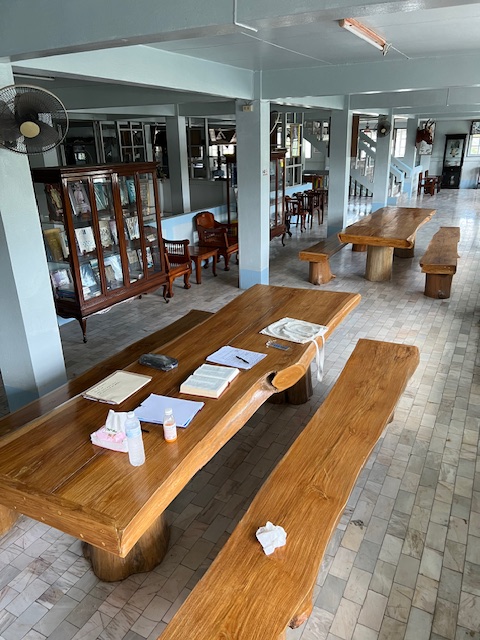
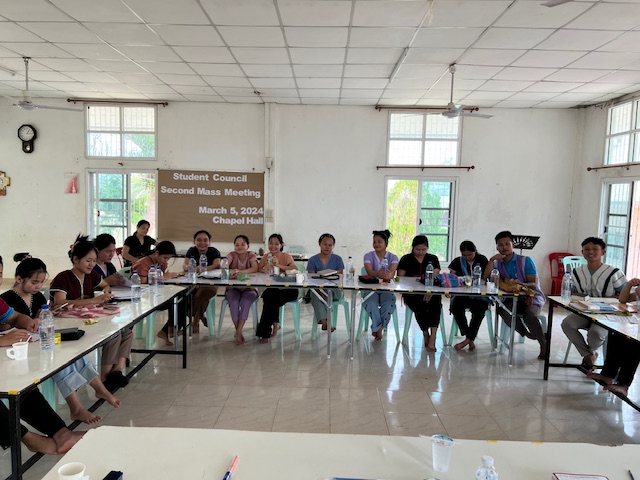
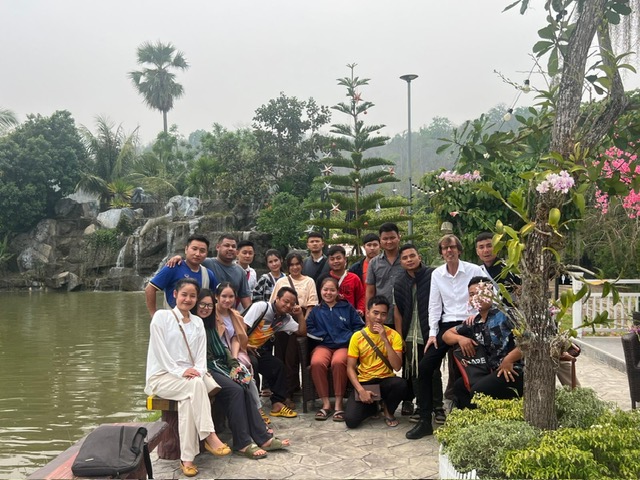
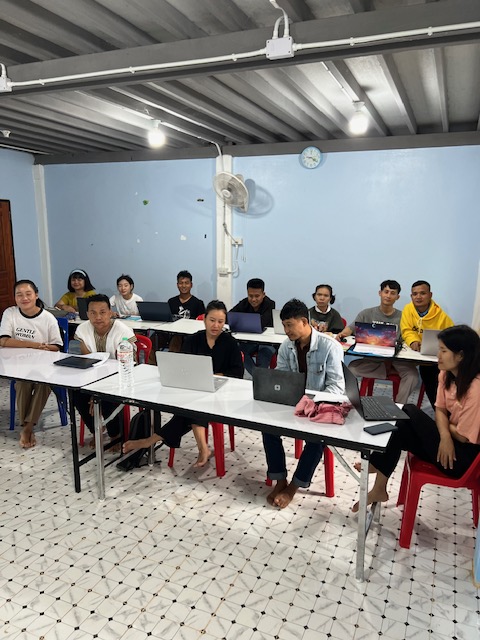
The pictures below provide a peek into my classes and the students. Hopefully, there is one with my sister and niece included. (Pictures of the senior KKBBSC are missing because, with this teaching hitch, described above, I had waded into a deep water with little strength. I had one thing on my mind, and it wasn’t “Hey self wouldn’t it be cool to take a few pictures of this moment”).

After my KHTS lectures my final Karen class was over for spring 2024. Within a few days, graduation was held which I attended and said a few words. In April I made my exit but my mind was a little out of joint because I hadn’t completed the course. Therefore, I called Dean “Wapa” (who with his wife Ashe- both trained gifted teachers who came from Nagaland, India to KHTS for a three-year hitch) and accepted his invitation to finish my trilogy. later again in 2024 in October I returned to begin teaching in November. Pictures of that new class of seniors are also included below.


Part Two: Teaching Picture Album

Photo Captions – Starting from the Top Counting From Left to Right: (1)KHTS Senior Class (My Class I am in the Center and my sister Elizabeth on my right -Spring Trip (2)KHTS Sunday afternoon Preach -Titled “Why, Who” Luke 10:25 ff The Lawyer “Who is my Neighbor” (3)The sacred halls of the DK Hotel Hqtrs for missionaries and NGOs coming to the Thai Burma Border for decades (my 5am study spot) (4)Afternoon teaching hours KHTS Spring (5) HillLight Seminary South of Mae Sot, Thailand Bordering the Phop Phra District (6) KHTS Fall Senior Class ( Graduation occurs in March)

(7) KHTS Seniors Fall (8) March Graduating
KHTS Seniors (Get a Gift Note) (9) Hill Light
Spring (I am Seated Beside the President
Rev Dr Ye Ye)(10) Myself With KHTS Seniors
Enjoying an End of Class Party)


Part Three: A Piece from My Bondage, Justice, Freedom Lectures

Both of my 2024 teaching trips to S E Asia to Karen Schools along the Thai-Burma Border, the first commencing in February the second commencing in October, followed one course of study that was a trilogy built out of, but not limited to, the Egyptian enslavement of Israel and the subsequent Exodus. This trilogy was entitled Bondage Making, Bondage Breaking Justice, and Freedom Building. At the heart of my lessons was Hebrew justice. Bondage was the prologue and freedom was the epilogue of this justice. The story of the Exodus, the body of Laws – the Torah, that emerged after the Exodus at Sinai and laid the foundation of Israel’s common life, many of the Psalms and finally not a few of the prophetic oracles all contributed to giving birth to a distinctive Hebrew understanding of justice. As Psalms 103:6-7 (NRSV Updated Edition) states this unique debut of God’s Justice began when God showed his ways to Moses and his acts to Israel.

The Difference Between Religion and Ethics

This experience of justice formed the foundation or essence of Israel’s ‘religion’ where then it was transformed over and over again into ethics, worship, and eschatology (i.e., the coming kingdom). Religion, in the way I am using it here, has to do with what God did for Israel in delivering them from bondage. Ethics derives from this religious fountain and mirrors in some way what God has done for them, i.e., mirrors it in their (the Israelites) relations with each other, especially those among them who were vulnerable to, or entangled in, nascent or full-on bondage (cf -Isaiah 58 – note the key bondage like words repeated in this oracle). Many laws in the Torah were aimed at preventing the formation of social and economic conditions out of which material / economic forms of bondage emerged. (The assertion in the previous sentence, while not defended here, coalesced in my mind while studying for my course. In a forthcoming publication, I will defend it.)

The Beach and the Mountain Top: Two Horizons of the New Hope

Israel in Egypt was caught in the grip of binding forces stemming from Pharaoh’s imperial power mixed with his economic greed; forces that they could not extricate themselves. This bondage shines light on the historical meaning of justice. They (the Hebrews) needed help to get their life back, i.e. place themselves on a new footing whereby the promise inherent in created existence would be returned to them. The genius in the outcome of Exodus story is that this restoration of the physical, earthly (this-worldly) material conditions necessary to restart the life blessing given in creation must be mixed with something else.

Or one might state that this “something else”, this “new contingency” this “added feature” was there all along but only ‘on the other side of being extricated from Egyptian-Pharaoh bondage, at Sinai was it made open and explicit. On the other side of the Red Sea (‘Reed’ Sea) Israel was re-formed ; formed from a tribe into a unique people for the first time (cf Ex 19). And, but in this re-formation Israel was ‘legally and covenantally incorporated, first and foremost on a new religious (spiritual) foundation and then secondarily on a new ethical, economic, social framework (Exodus 20, Matthew 22:34-40).

The Pinch of the Point

Two main things occurred in this “new something” Here I have chosen to state B before A. What are these two things? (B) This re-organization of Israel ensured that the new beginning created by the Exodus would not revert into bondage. The Torah, I argued in my lessons, contains within it something(s) that intends to immunize Israel from bondage. To be sure Israel had a part to play. They must take this ‘antibiotic’ (take hold of it) and put it to work in their collective body relations so as to ward off bondage. Bondage is sort of like a wanton virus that lurks in the dark in search of environs where weakness or laxity exists. This example is imperfect because the bondage under discussion occurs most often at the nexus where power meets weakness or vice versa (Pharaoh the bondage maker has 1000 different suits he wears to pull the weak into service, many of which lead to bondage. This explanation does not by any means exhaust the Biblical insights of bondage. In my lectures, I went to chapter and verse in the Torah to defend the preceding assertion. In the N T bondage becomes more spiritually perceptive.

Now comes (A) because it is most important. It is, one might state – “elemental” and the ground of (B) By way of this re-formation at Sinai Israel is returned to the “true path”; the path whereby they could recover and freely build and enjoy their material, i.e., their this-worldly existence, and again partake of the blessing impregnated in it. The Hebrew vision of redemption has a residual earthiness. Take for instance this prophetic text “You will build houses and inhabit them, you shall plant vineyards and eat the fruit of them, you shall not build, and another inhabit you shall not plant, and another reap”. On the other side of the Reed Sea, the shackles of slavery left behind, surely, they turned their attention to this material physical blessing they had hoped through the long days of bondage. But there is a ‘hitch’, a caveat, the small print at the bottom of the page yet to come into the clear light of day.

Soon they will leave the safe shores of the Reed Sea and travel about Eight weeks to Mt. Sinai/Horeb where it all started between Yahweh and Moses at that juncture a spry 80. There at Sinai they will learn more details about their life in Canaan land flowing with milk and honey. Among these details, they will dis-cover, via Moses, the new arrangement upon which this prize existence ultimately rests.

The Torah ‘record’ states that there was a great mass of non-Israelites who were also part of the Exodus standing shoulder to shoulder with Israelites waiting to embrace this future. Almost surely all present on the other side of the Reed Sea were wonderfully focused on a one-dimensional future – the beginning of a free good life on the land. Life’s created promise was soon to be returned to them by this remarkable debut of bondage-breaking justice. Freedom plus land already prepared with wells, houses, orchards, and cultivated fields, was almost surely the horizon of their future.

Sinai is as subtle as a train smash. There the physical material this-worldly future is explicitly shown to rest on a religious ‘spiritual’ foundation (and here I am using ‘spiritual’ only to accentuate that this foundation is not solely material). Yahweh, via his words and power, did not simply show up (via his servant Moses) to face down Egypt’s bondage maker Pharaoh and perform a one-off saving emergency only to retreat; sort of like a prototypical Hollywood Western where Marshall Matt Dillon shows up with his side kick deputy Chester and delivers justice. The deed done, then, after the fact, tipping his hat on the way out he says, “Good luck, remember to contact me if you get in trouble again”.

This is a different kind of justice. Henceforth Yahweh, in his own unique way, becomes the living abiding spiritual foundation of their future. The religious emerges into the open and reveals the invisible ‘spiritual’ ground upon which the visible material/physical plane of human existence ultimately rests. (“Underneath are the everlasting arms” Deuteronomy 33:27 -”God is Spirit” – John 4:24). The Torah given at Sinai makes it clear that God will retain the title to the promised land they will rebuild their lives on and they can never successfully extricate themselves from tenet-steward status. There is no blank check of justice bequeathed in this salvation from Pharaoh’s enslavement. Canaan life and Canaan land is forever cast inside a relation that God has entered into with them to them as their God, a relation via covenant that they must and do enter.

The justice that broke Pharaoh’s bondage only at Sinai is made explicitly clear to have two pieces an out of – and a into piece. Freedom from Pharaoh’s bondage means their former life is now behind them but this past gives way to a new kind of future, a new kind of life unfolding directly before them. Justice births freedom but this freedom is like a coin with two sides -a from side that corresponds to their bondage past and to side that corresponds to a new kind of future. And this new future involves them in a new relation to God and a new relation to each other.

The First Commandment and its prologue capture this past and future. Past: “I am the Lord your God who brought you out of the house of bondage”. Future: “you shall have no other gods before me” Exodus 20:2-3) Or switching from the “thou shalt not to the thou shalt” Deuteronomy sums up this future “ “Hear O Israel you shall love the Lord your God with all your heart,and with all your soul, and with all your mind” (6:4-5). In time later in Scripture this Deuteronomy verse was combined with another in Leviticus summing up the “Ten Words” (“The Ten Words” is an abbreviation found in the Torah/ Pentateuch) with the above phrase and another in Leviticus – ‘Love your Neighbor as yourself”. Ultimately Justice is not satisfied until freedom finds the life that protects freedom from morphing back into bondage. This is what Sinai is about. And whilst these truths are born inside a story about one particular family on the earth the truths it carries belong to all people on the earth. The bondage breaking God that made his debut in the Exodus indeed is about a justice wedded to freedom but let us listen closely to the unique shaping of these words in their Biblical setting. “Something is happening here Mr Jones but I don’t know what it is” ( The Ballad of a Thin Man -Bob Dylan). But maybe we are starting to grasp it a little. The justice and freedom we seek for ourselves and our world is moving us to be in this world in a new way; namely from a location inside and under this God’s care live out our lives in devoted service and loyalty to him before all others and from thence turn out to others to lift them up as if she or he is our sister, our brother, our neighbor. It may be that no other kind of freedom immunizes against bondage.

In my discussions, I followed my triune bondage-justice-freedom paradigm of Hebrew salvation into the New Testament, both the Evangelists (Matthew, Mark, Luke, and John) and the Apostles, after which we considered two contemporary contexts where the truths we clarified intersect. One context was the Karen plight vis a vis the Tatmadaw and the impending challenge of shaping a new society for a new future. The other was late Modernity in the West referencing U S of A as a case study. In the first draft of this End of 2024 Teaching Ministry Recap I included a summary sketch of these discussions but
eventually, I came to my senses. To overdo is to undo.

Addendum A – Arrival & Departure Movements

Arriving in Bangkok Trip Two
A Chiang Mai Moment of Reflection
Before Departing: Trip One

Will the Real David Please Stand Up. Malcolm Gladwell’s David and Goliath

Biblical Criticism Inside Versus Outside the Church

A mother snake gave live birth to seven baby snakes. As soon as they exited her belly she ate them one by one. Daddy snake lay nearby and upon seeing what she did asked her, “why did you do that, don’t you know you destroyed our future?” “Now we are finished.” She smugly replied, “I must be true to the historical-critical method.”

The roots of the historical-critical method in nascent form first commenced on its career 500 years ago by Marin Luther who on April 18, 1521, in the Diet of Worms before Charles the 5th, Emperor of the Holy Roman Empire, and the papal delegation defended his writings by inviting anyone high or low to show him from Scripture and/or reason where he was in error. Up to this moment in time truth was established by the Church and ultimately by papal authority who decreed “a teaching is true when we say it’s true,” and “Scripture means what we the authoritative ecclesia say it means.” Luther elevated the authority of the Bible over the authority of the Church Ecclesia when he insisted that men and women of high and low estate could understand the truth if they sought to determine its veracity in light of Scripture and reason. In elevating Scripture over the church he did not set out to create a new individualism rather his interest was to expose the Church community, i.e. the hierarchy and the ‘laity’, to the prophetic power of Scripture.  What should be believed, and how one should live, Luther insisted, ultimately must be determined by Scripture. The Word of God, i.e. God speaking to humanity via Christ witnessed to by the Prophets and the Apostles must have the last word. The institutional leadership of the church claimed for themselves the prerogative to know and determine truth and exegete Scripture correctly and required the people to receive truth directly from them. Luther inverted this equation placing both the Church leadership and the laity under Scripture whilst at the same time literally placing the Bible in the hands of all people by translating it into the vernacular and making it accessible by way of Gutenberg’s new printing press.

The simplicity of this revolution was not without its own set of problems. One of these was how to read the Bible so that its truth became clear. Luther was not naive.  As soon as Luther gave the church  (the Laos)  this new locus of authority,  the Bible, he simultaneous gave them the Gospel. The one he insisted must be wedded to the other, the former read in light of the spirit and truth of the latter. Here is the pinch of my point in recounting this piece of history. Biblical criticism in seed form was born with the 16th Century Protestant Reformation making its self-conscious public debut at the Diet of Worms on April 18, 1521.

Luther was clear the Bible had to be critically read, and the standard of criticism in that beginning was the central controlling truth within Scripture – the Gospel of Christ ( 2 Timothy 3:15, Hebrews 1:1-3). Scripture as a whole he wrote was merely “the swaddling cloths and manger in which Christ lies, and to which the angel points the shepherds. “Simple and little are the swaddling-clothes, but dear is the treasure, Christ, that lies in them.” This meant that what was written in the Bible ultimately had to be weighed and evaluated in light of this Gospel. Luther’s famous statement that the book of James was an epistle of straw reflects this. By calling this epistle “straw”  he was thinking critically about Scripture. Almost certainly he was recalling Paul’s words to teachers in the Church of Corinth who had not grounded their teaching on the Gospel Christ. In 1 Corinthians 3:10-15 Paul insisted that because the Corinth teachers were not building the church with enduring ‘evangelical’, i.e.  Gospel materials their work would be “burned up”. Enduring materials Paul identified, as those materials that square with the foundation he laid – the Gospel of Christ,  “Gold, silver and precious stone”. Teachings that did not accord with this Gospel he likened to “wood, hay, and stubble” – straw-like. These would in time be burned up, not able to sustain the test of time and God’s judgment. Using Paul’s measurement Luther took a critical evaluative relation to James ( and all of Scripture). My point in this review is simply to build the case that a critical approach to Scripture made its fledgling debut when the Bible emerged out of Ecclesial hierarchal control with Luther via the Gutenberg press and was given directly to the people.

There is yet another dimension to this story often overlooked. This  is the relation of the Spirit to understanding the truth in the text.”The Spirit rides in the chariot of the Word wrote Calvin and certainly, Luther promoted this relation but this affirmation falls short of understanding the Spirit’s’ ‘innovative’ or interpretive role in unlocking the truth in Scripture.  The ‘truth’ in the text derives, not merely from reconstructing its precise original meaning by the aid of research, study and the Spirit, albeit this is important as Luther insisted when he wrote “The Christian reader should make it his first task to seek out the literal sense ( in a given passage) as they call it. For it alone holds its ground in trouble and trial” (Luther’s Works vol.9, 24). Unlocking Scripture’s truth goes beyond this exercise.

The text must be brought into an encounter with present forms of darkness and unbelief. The contextual past of a passage of Scripture and the present form and spirit of darkness needing rebuke and redress is both the seedbed out of which the truth of the text springs forth by the power of the Spirit. Here something of the spirit and form of truth from the past, embedded in the text, comes alive, not in ‘esoterism’, i.e.’ in the library’ alone or primarily,  but in its encounter with the shape of darkness in a given time and place. It might be said light needs darkness. Light shining from and out of the text depends upon a dialectic with contemporary darkness. And The Spirit, which John names as the ‘Spirit of Truth’, in bringing truth alive in the present requires a movement back and forth. One that interfaces the text with a present need for truth and light. The truth embedded in the text, wedded more or less to its historic context, in order to get free, needs not only,  or mainly a good library, but also a real situation crying out for the redress of spiritual truth. Analytic, historic, and technocratic skills brought to the text are not to be disdained or shunned but contemplative habits, prayer, and spiritual discernment, as well as a taste for the spirit and logos of Biblical and Evangelical truth, are to be prized. This approximates what Karl Barth called the ‘science’ underlying theology, (science because he discerned something of the abiding Christo-centric harmony and order of the truth of God).   The student of the Bible and the searcher for truth must follow after both ends ( past and present) the best she can, which is never enough.  Just as grasping something of the original context is helpful in releasing the revelation of truth embedded in the text, all the more the contemporary context, as it were, pulls on the text and compels it to speak truth because the present cries out for it. And in this dialectic, the Spirit is present so that if and when light exposes darkness in a given world the Church knows, and has always confessed, that a miracle of sorts has really occurred. And the name of this miracle is not naked ‘human academic ingenuity and prowess’ but “Holy Spirit”. Miracle, that is grace, explicitly stands behind the identity and job description of the Holy Spirit in the Gospel of John. Gift (i.e. grace) precedes task and undergirds it and follows after it.

This dialectic was not fully grasped in the Reformation even though it was certainly at work because the Reformers did not simply export Paul’s teaching of Justification by Faith in the shape, form, and purpose that he scripted it in the 1st Century Jew-Gentile crisis to the medieval situation. What the Reformers did do was connect something of the spirit, form, and inner logic of this Justification by Faith truth penned by the Apostle Paul to a contemporary ’emergency’ .”The Bible is alive, it speaks to me: it has feet it runs after me; it has hands, it lays hold of me…” Martin Luther

Recounting this is important because Protestantism was born not simply elevating Scripture but referencing it to ‘nauseant’ critical tools needed to read Scripture and arrive at the truth. They did this without fully grasping the hermeneutical secret of its original power or the dialectic necessary with a contemporary setting of darkness. Both of these play a role in opening up the power of the text.

It was from this critical and ‘reasonable’ beginning (cf Luther’s speech at the Diet of Worms) Protestantism elevated scholarship in the church and in the seminary. If the truth of Scripture was to be understood, pastors (and laymen to a lesser degree) must become Bible students. The mainline Protestant churches raised the bar of scholarship high and by the mid-sixteen hundreds, their original (limited) openness to reason birthed the discipline of Biblical criticism.

We view the birth of the Enlightenment as an outgrowth of the Renaissance and the independent rise of rational thought. But this is barely half true. Protestantism had created a primary place for reason in its religion that spread around the globe. And in theology and Biblical studies they opened themselves to the influence of reason, and rational disciplines in reaching conclusions about the meaning of the text. The Enlightenment has roots in Protestantism. Left unbridled this criticism often jumped the wall and left the Anselmian “faith seeking understanding” premise behind. In short disciplines of Biblical criticism brought into existence scholarship that proceeded on a course similar to the mother snake. “Faithfully” exercising their discipline many scholars progressively dismantled all that existed to regenerate and perpetuate the church.

Eventually, however, and this approaches a more Postmodern paradigm of knowledge, critical scholarship came to realize that the history and historical stories were never, or rarely, written in the interest of hard exact history, but as the stories and accounts of God’s dealings with them as His people, i.e. the people of God/Yahweh. Yes, these stories are rooted in real history not legend, but written primarily for the purpose of renewing and enlivening the faith and hope of the people in their God; the God who they knew had by his “mighty and outstretched hand” delivered them from captivity to Pharaoh. History and God’s judgments and deliverances were welded together in the Sacred Text. When they looked at the signature events of their history, they looked through the eyes of faith. They had faith glasses on (this understanding in the church, rightly presented did not compromise the assertion that God inspired and speaks through the Bible).

Using the historical-critical resources that have evolved inside and outside the church for over 400 hundred years, Malcolm Gladwell did with the Biblical record of the David Goliath story what any pastor with a decent search engine and library could do, ( see his  YouTube video and book David and Goliath: Underdogs). No question it was a delicious rendition nicely spun and finely researched and an important corrective because it brought into focus the advantage David had in the duel. But like those faithful exegetes serving the church, he also revealed subtle underlying presuppositions that he kept ‘faith’ with. His David possessed great skill derived from his shepherding, as the text implies and Gladwell elaborated. Gladwell’s research magnified this. His Goliath was a clumsy ogre with a growth disease. This may be true but this conclusion or suggestion is a stretch. Correlated to science and historical studies it can be suggested but by no means proven. It is to be fairly noted that Gladwell did not reference all the detailed pieces of the record of this story, but only those that served his presuppositions; here is the pinch of my point, which betrays my real point of departure from Gladwell’s revision. The record as it is found in the text is composed to magnify David’s trust in the delivering power and providence of a present, but invisible, hand – Yahweh. Gladwell is almost surely right that the historical career of the story likely came to progressively emphasize the imbalance of power on the field of play. David likely got smaller and weaker and the giant bigger as the story snowballed through the centuries in the hands of the people of faith as my introductory pictures depict. Gladwell however passes by the Biblical record’s refusal to credit the victory to the nascent shepherd military prowess because it is beyond the reach of historical-critical tools and because it is in tension with his revision. His conclusion is that David had an advantage going into this duel and its outcome was all but certain from the get-go, thereby inverting David and Goliath. David became as it were Goliath ( as if he was innately powerful) and Goliath David ( as if from the get-go he was at a distinct disadvantage). Neither position is important to the actual text.  The text as it reads shifts the rationale for the positive outcome of the duel to a place out of the reach of reason and higher critical tools of proof. Doxology in the Old Testament rarely reaches such acclaim as found in this story. David’s courage to go into this duel and his victory in it is referred back to a history of trusting God in his shepherd skirmishes with wild animals and coming out on top. By experience, the Biblical record infers, David knew before this epoch duel transpired that God had delivered him from evil many times and would deliver him again before this arrogant man who had dared to blaspheme the people of God. Anyone who has read the Psalms discovers a David deeply immersed in God’s saving power proved in crisis time-and-time again. David acts under pressure trusting, not in himself, and his proven abilities, but his God’s delivering power.

Jesus said, “do not cast your pearls before swine.” Looking at things such as the events that lay behind this story through the glasses of faith, and experiences of faith, one sees the invisible hand of God and indulges in doxology (glory to God). Take these glasses off and one sees and praises human skill, preparedness, innate advantage, pre-existing hazards and existing weakness sabotaging the enemy.

The maturity of mainstream Protestant scholarship that has not thrown the baby out with the bath, has not accomplished this conservation by burying her head in the sand in fear of historical-critical conclusions. Even so, their work does not do violence to faith. Their wisdom (or folly depending on who is judging) concludes what the Biblical proverb nuances “the horse may be prepared for the battle but the victory is the Lord’s.” Before the burning bush that, though it burned hot and long, refused to burn up, the voice said “Moses take off your shoes you are standing on holy ground.” In retelling this story Gladwell left his shoes on; even so, his terse moral was smart and timely.

The Ties That Bind: A Trilogy Forming and Renewing the Marriage Union

In a recent discussion with a friend here in New York City marriage and weddings came up. Both of us agreed that for many young people in the modern world choosing to get married seemed to be getting more difficult while staying happily united after married even more difficult. Inadvertently I mentioned to him that I was asked to perform a wedding on the 26th in Ithaca, New York for Lauren and Manuel. Upon hearing this news he urged me to shape my marriage homily out of the “Behold the Turtle” chapter in my new book. The suggestion stuck in my mind and with considerable revision and expansion I did just that. The following is a reworking of the words I spoke here reset within the Christian ethics setting that my blog is committed to.

Daniel Age, Schwartz-Pesqueira Wedding

The Ties That Bind: A Trilogy Forming and Renewing the Marriage Union

Humans are not made to be alone. No one is intended to be an island all to herself. But how to be together and stay together in a way that is mutually good this is the question and especially a pressing challenge when it comes to love and marriage. A phrase in the Lord’s Prayer provides the clue to the answer. “Thy will be done on earth as it is in heaven.” Find out what relationship “tools” God uses in his/her relationship with us humans and borrow them i.e. export them from “heaven” to “earth.”

According to the Christian teaching in the commerce between the human and the divine there are only three ways of relating that are significant faith, hope and love. Faith because God requires us to trust things unseen, hope because God makes promises to us and love because God bestows great love on us in and through Christ.

A final refrain in an early Christian poem concludes “Only three things remain (when all is said and done) faith, hope and love but the greatest of these is love.” (The Poem of Love found in Paul’s letter to the Corinthians 13:13)

Paraphrased into the modern vernacular and correlated to the subject of love and marriage this conclusion might be rendered as follows “If we take all the virtues, all the morality and all pedagogy about what is right and wrong, wise rather than foolish regarding how couples are to relate to each and throw them into the air, only three things will come down the rest will blow away.”

The ties that unite are three. Like a cord, one strand is weak, two strands are better but a cord with three strands is strong. “Faith, hope and love, these three alone remain but the greatest of these is love.”

FAITH

Faith does not have to be viewed as a religious idea for religious type people. Here I present faith to you as a very human way indispensible to healthy human relating and nowhere more than in the union formed in marriage.

Faith references unseen things, this is the very nature of faith (2 Corinthians 5:7) and in the relation between two much remains unseen that need not be proved or required to reveal itself. For instances one cannot always see the love in the heart of another, if and when it has been declared, but is important to believe that it is and wait for it to reveal itself in its own time and way. Love is a kind of freedom which when constrained to disclose itself either retreats or falters to find its truth. In this way faith protects love by waiting for it to reveal its charm and mystery whenever it wills.

The more one presses in on the other to see the affections hidden in his or her heart the more these hide and the more they become fettered and complicated. When the sun shines and the clamor and pressure subside the turtle’s head protrudes and so it is with love. When we want it the most there is no easy way out. In such times we are called to the restraint that comes from faith. In my recent book on faith and hope I have written “if we doubt what is there in another when we do not see it or discern it we weaken it and are in danger of eventually destroying it. Only a few know the radical mystery and power of trust, how it creates a positive force field in relationships. When it’s timing is right it helps call into existence the very thing it believes in.”

Faith references the unseen that is the essential nature of faith. Lodged in the other is unseen depth, mystery, uniqueness and difference – ‘otherness’. When we believe in the existence this unseen profundity and when we believe in our own fundamental short sightedness to discern it then it is we are prepared for reverence and respect for the other. Nothing is more banal than a “what you see is what you get” attitude toward life and another. Much remains hidden, much lies in subtly, beyond our grasp, understanding and comprehension.

If we form the grace of faith in our relations we will need less outward agreement in our communion, give more space for the other’s difference to manifest itself and we will suffer the abrasion this difference creates with humility. Where faith endures the mystery of the other endures. We can in the journey of life lose each other – lose the unique wonder and surprise that inhabits the other. But if we venture faith we will believe this profound difference obtains even when we do not see it shinning through. No doubt the abrasion of difference is not always appreciated but it is the freedom of difference in our relating that energizes growth, change and attraction. The dance of love begins to end just when we think we have comprehended the other.

Faith references things unseen and this includes our promises. The heart of a wedding rightly involves the exchange of promises and now and then one way or another pieces of these promises are restated. It is in the nature of a promise that it cannot be fully proved because it casts a line into the unfulfilled future. Anytime we make a promise and believe a promise we are a little beyond ourselves. Promise making and promise keeping are risky business but just so, for this very reason, there are potentially good dividends (returns) from the investment of promise making and keeping and the troth these require. Faith is the inner verve to believe and rest a measure of one’s happiness in life on making, receiving, keeping and believing promises.

Actions alone are not self-disclosing. Bob Dillon’s lyric comes to mind “something is happening here but I don’t know what it is.”  There comes a time in courtships and flirtations when we are subjected to another’s actions – actions that cause us to query “maybe this person loves me” or “still loves me”. But sooner or later actions await words without which the actions are not safely comprehended. Everybody knows how often actions have been employed in romance for subtle reasons less than honorable. In times of love we await words, and in time we give and receive words and these words name and clarify ours and the other’s actions and this exchange calls into existence our humanity in its essence. But once promises are given and received we arrive at a new place where the challenge becomes keeping and believing these words, embracing the restraint and freedom that accompanies this venture.

HOPE

Hope is the sturdiest of the three things alone that Paul the poet asserts abides, indeed not the greatest but the one that involves the most grit and strength. And this is so simply because it calls for patience and endurance. Waiting and working for ends and goods beyond one’s present reach is not easy. To weave common hopes into a couple’s relation, into their way of being together means that two become stretched toward a better future. And I submit that this better future is not merely or mainly the shape of the determination between the two united rather it is a three way conversation between (1) life’s possibilities and crookedness (2) the gifts and potentialities resident between the two united and their community and (3) the unseen power and purpose of us – God. Hopes that have a courageous rather than a presumptuous rooting emerge out of these three forces.

We go to meet these hopes but it is equally true in some way they come to meet us and bait us toward a bigger horizon of good. And this bigger horizon of good need not be conceived in merely the materialistic terms or in terms of the fulfillment of the quotient of happiness made ideally possible by a given marriage union. In this way hope, the good hopes born in any marriage union go out to meet bigger hopes for the world which Jesus Called the “Kingdom of Heaven.” We are not free till all are free. If our hopes in marriage for our own uplift do not really and truly intersect and play to the common uplift then marriage is merely a private party.

True hope expands outward breaking the parochial boundaries of solitary good to include others and greater needs. Hope is not only or primarily achieving an ideal realization of a couple’s own good and happiness drawn from their own common potentialities and dreams, its circumference must keep expanding outward to others and a needy world. Marriage is a vocation of hope carried on inside the added strength, comfort and encouragement of two united in and mutually supported by love.

But here follows the pinch of my point, the place where the rubber meets the road – the cash value and pragmatic truth about the presence and or absence of hope in our relations in general and in the marriage union in particular. Without hope we fall into the grip of the problems and pleasures of the present. And when this occurs then we either twist our lives away in anxiety or we rot and decay for these are the unavoidable consequences of the absence of hope and the presence of problems and pleasures.

Hope weaves into our relation tone, strength, verve, nerve endurance and it pulls us up and out of the morass of subjective fixation with ourselves and whether we are realizing romantic fulfillment. A quagmire awaits the couple focused on the fulfillment of their romantic subjective expectations and that communicated by popular culture. Hopes well formed give birth to objective things that must be tended to, real external things that require doing, tending and nurturing over the long haul. Hope is the mother of vocation, ethical existence and the sweat and toil of the forward pulling together of two yoked in love harnessing their differing strengths for greater goods and ends.

Dream dreams dear readers united in love – common dreams. Dream them quietly, wisely, prayerfully, daringly ever expanding their circumference.

LOVE

In this wise and poetic verse “faith, hope and love abide but the greatest of these is love” the Apostle is a sage and the sage an apostle, for here love’s supremacy is asserted without proof, its truth to be discovered by conviction and practice.

But before drawing up close to this assertion of love’s greatness I digress to ask what is this love here praised?

Is it philia – fraternal love – the love of which the French wrote of so eloquently, love of kin and kind, of shared likes and common dislikes – the fraternity created by similarity, the friendship formed by affinity? No it is not this kind of love but just because it is love and the unity of marriage under discussion here its fair game to wander as we travel toward the climax of this trilogy and for a moment inquire into the significance of philia. By taking the scenic route rather than the direct highway we afford ourselves the pleasure of a wider purview of the subject at hand. There is more than one kind of love, more than one meaning to our English word love but whilst phila is not the meaning of the Greek word love in our poem we pause to discriminate and query whether there is some fruit from this meaning that is right and good for the union entered, formed and forming in marriage? And the answer is unequivocally yes. Yes any time two or more people discover and develop common likes of whatever source or making their union strengthens. To share some common interests, beliefs, values, vocations and avocations, the ‘language’ embedded in culture strengthens a kind of unity that while not great can be a good thing. It is a generally a good thing for couples to discover and develop common ground. Friendships of this kind are not the natural or divine foundation for marriage but one should afford ever good support to support and strengthen the union marriage is and rests on. In short couples strengthen their union by developing friendships with each other and friendship results from shared likes and interests.

Is the love celebrated in this poem eros? Eros, the love of beauty and grace in the form and spirit discovered in the other not known in oneself? Is it the attraction of difference? Is it the incompleteness of self, overcome in the difference found desirable and fulfilling in another? No this love of which Apostle writes is not this kind of love. Nevertheless this eros love is real and present in our natures and is not without its significance and role in marriage. As already alluded to in the first discussion on faith the difference that eros is drawn to provoke abrasion and attraction at the same time. It is fire and ice and where it is preserved and guarded it births the challenge of community. Where this abrasion and difference is conquered unity may endure but not community – community preserves individuality inside a circle of togetherness. Nevertheless eros just because it is fire and ice, just because it is driven at such an instinctual level is subject to flux and change and does not possess within itself what is needed to build lasting healthy unions. Smart couples learn to keep eros alive without allowing it to destroy their union. This requires not only smarts but also the love of which the poem celebrates and elevates – Agape.

Agape love calls us above our root and base in nature to Spirit, beyond the drives and desires that propel the self to unite to another to the freedom to help the other, build up the other and care for the other for no reason or motivation except the good and need of the other. This love transcends self and the primacy of self-interest and in freedom serves another especially in times of need and suffering. This love forgets about self, goes beyond the myopic propensity of self’ need, want and will and finds freedom as well as emotional and psychological space to tend to another whether beautiful or ugly, deserving or undeserving, whether such costly loving is timely or untimely.

According to the Christian teaching this love comes from God because in God was in Christ incarnating servant love. “God is love,” John asserts and we learn something of this way of love by first receiving it from God and others. And we also learn something of this love’s power and freedom by practicing this way. When agape is brought into the marriage relation it fosters unity because people who serve each other and put each other’s needs above their own have no cause to divide.

But this kind of love is confusing to people. People get the wrong idea when another shows up to uplift them, serve and care for them. Pushing one’s own needs and wants to the periphery confuses people. From the outside, without spiritual discernment this kind of love concludes that weakness, the loss of individuality and self-esteem is present.

Love is about giving not getting (either subtly or explicitly).

Love unites because it prioritizes the need and good of the other.

Love is not afraid to bend under another and serve precisely because dignity and worth is grounded deeper and this ‘deeper’, Christian teaching asserts, is not merely deeper in one’s self but in God and God’s love who is Other.

Love cannot be commanded, controlled or ruled by another. It comes from Spirit, wisdom, maturity and the radical ethic of Christ to serve one another.

Love is not necessity it is freedom.

Love is not weakness it is power.

Love is not subordination it is the transformation of service drawn from the invisible wells of inner freedom.

The sum of my argument is this: Without the strand of faith woven into our relations we fall into the grip of what can only be seen, touched, felt and proved immediately and directly. When this occurs freedom and trust cease. Without hope woven into our relations we free fall into the grip of the pains, problems and pleasures of the present. Without love, agape love, woven into our relationships we fall into the grip our own self needs, plans, feelings, desires, wants and whims. These, gaining an inordinate magnitude, cause the unity of our relations to fray and tether

Faith, hope and love–these three abide but the greatest of these is love. Put these three ways of relating into play in your union, especially love, and it will become strong, enduring and it will yield much blessings and happiness near and far.

Here follows the Apostle sage’s poem of love in its entirety.

“1 If I speak in the tongues of men and of angels, but have not love, I am a noisy gong or a clanging cymbal. 2 And if I have prophetic powers, and understand all mysteries and all knowledge, and if I have all faith, so as to remove mountains, but have not love, I am nothing. 3 If I give away all I have, and if I deliver my body to be burned, but have not love, I gain nothing. 4 Love is patient and kind; love is not jealous or boastful; 5 it is not arrogant or rude. Love does not insist on its own way; it is not irritable or resentful; 6 it does not rejoice at wrong, but rejoices in the right. 7 Love bears all things, believes all things, hopes all things, endures all things. 8 Love never ends; as for prophecies, they will pass away; as for tongues, they will cease; as for knowledge, it will pass away. 9 For our knowledge is imperfect and our prophecy is imperfect; 10 but when the perfect comes, the imperfect will pass away. 11 When I was a child, I spoke like a child, I thought like a child, I reasoned like a child; when I became a man, I gave up childish ways. 12 For now we see in a mirror dimly, but then face to face. Now I know in part; then I shall understand fully, even as I have been fully understood. 13 So faith, hope, love abide, these three; but the greatest of these is love.”

I Corinthians 13:1-13 RSV