
The Good Samaritan Spring 2015 Mission Report: Part One

Spring has come to an end in the year of our Lord 2015, albeit with a qualification. Here in SE Asia “spring” is summer the hottest time of the year. Here follows my “Spring” (summer) Mission Report. Over the next two weeks, five or six posting will complete this report. It includes capsules of some of my spring teaching lessons, my explorations with three other mission endeavors in Thailand, reports on my meetings with college/seminary leaders. Here follows the first installment of a volley of postings to occur over the next two weeks.

WP_20150616_004

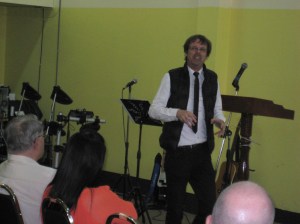
Excerpts from Spring Teaching Lessons: Even though  most of the colleges and seminaries that I serve bring their academic year to a close in March I have continued to work close with ICF (International Christian Fellowship) in Udon Thani, Thailand teaching lessons. ICF is a church and school that serve Thai Christians who want to worship and learn in an English speaking setting, Falang (foreigners) from Australia, Europe and America as well as Laos students who come to Thailand for 6 to 8 weeks at a time to study. ICF gains its funding from many sources including A G churches in the USA.  Here follows terse excerpts from several of these lessons.

The Second Question: In the parable of the Samaritan (which we call the Good Samaritan) we hear the lawyer, a scholar of the law, the Torah, attempting to save face by asking a second question. The lawyer had already asked Jesus one question and from this inquiry he came out looking a little suspect in the eyes of the people standing by. This can be deduced from the fact that he ended up answering his own question. This showed he already knew the answer to the question he had asked. Wanting to save face the lawyer ventured a second question. It goes something like this. “okay Jesus if you affirm that loving one’s neighbor as oneself is the gateway into life eternal who is my neighbor?” Without knowing it this question revealed the root of the lawyers spiritual – ethical disease. He had boundaries and limits to his neighborliness. The lawyer’s problem was sort of like the blinders the Amish put on their horses so that they cannot see anything except what is straight in front of them. He could not envision an application of the love your neighbor ethic beyond the horizons of his own kind. His family and kin, his Judean neighbors that lived in his sector, his Jewish people and the Jewish nation were the horizon of his love your neighbor as yourself ethic. In Jesus’ response to this second question he told the Samaritan story and literally burst the seams of the lawyers constricted ethical circumference.

WP_20150405_027

After Jesus’ story neighbor ceased to be parochial. It referred to anybody in need. The horizon of the love ethic was released from the cramped little religious, ethnic, familial, national spaces and places it was habitually caught in. Jesus’ love your neighbor ethic cast a light on the future world, what it will look like and the way of life it will incarnate, namely a true brotherhood and sisterhood where all care for each other and where difference ceases to divide. At first glance Jesus shows up in this story as its teacher –  a storyteller calling us into a new kind of future. But reading this tale in light of the New Testament Gospel Jesus pedagogy is wrapped in a riddle. He shows up in the human drama clothed in the Samaritan’s garb and is discovered hoisting our half dead bodies onto his donkey and taking us to a place where our souls are safe with and in God.

Spring 2015 Mission Report: Part Two

IMG_4233 copy

Excerpts Taken from Spring 2015 ICF Lessons.

One of the lessons I developed at ICF this spring was taken from the parable of the Pharisee and Publican who went into the same temple at the same time to pray. Here follows one small excerpt about the pharisee from my teaching notes.

Some one recently reminded me that 80% of human communication is nonverbal. The first thing we learn about the Pharisee is non verbal.  He positioned himself alone and central in the temple and lifted up his head. Not only did the Pharisees words signal his separation, as will be pointed out next, his physical posture and location sent this message. As soon as he opened his mouth his religious ethic that required him and prided him to separate from others became explicit. Words interpret actions. The Pharisee’s opening words “I thank you God I am not like other men” betray him. He views himself as morally – and religiously separated from “other men”. Indeed this assertion is historically precise – the Pharisees’ religion was fanatically focused on keeping themselves pure and separated from Gentiles and other Jews who they deemed were not careful in their Torah observance lest they be contaminated. The goal was not merely to be righteous by keeping righteous moral standards but to be righteous by being separated from the ‘unrighteous”. Righteousness was a sociological (and ecclesial) category. Separation from took on a life of its own and became the defining signature of the Pharisee religion.

These opening words not only betray his relation to others but to God. He assumes God is on the same page with him on this conclusion that he is fundamentally different – morally. He has not only made himself a stranger to other men but a friend of God. He views himself as on the inside circle with God so much so that he can speak for God. By thanking God that he is not like other men he assumes that God views him as he views himself – embodying the full righteous difference of the Torah, fundamentally cut from a different cloth, in a religious moral league of his own.

IMG_4232

Here are a couple of my reflections on this double entendre.

The real struggle in life is to remain connected to others who are different either in their moral sensibilities or absence of moral sensibilities all while being true to the way of truth and right that one understands and believes God requires of him. It is easy to remain true to one’s beliefs about how one is to live in this world if one keeps oneself separate from others who are different and lives safe and secure inside one’s own group (“he that shall save his life will lose it”). But the real struggle is interact with and befriend others who are different or ‘worldly’ while remaining true to oneself and one’s God. Jesus did this as the gospels tells us – eating with publicans and sinners. This is a practical observation but not one Jesus over looked (see Matthew 5:13 -you are the salt of the earth not the salt of the church ). Listening to the Pharisee’s prayer in light of the Gospel of Jesus Christ the root of the problem becomes evident.

“Jesus Christ” means the end of all elitist familiarity with God based on any and all distinctions that differentiate individuals and groups one from the other. Like the Pharisee, humans often imagine that their special, exceptional parts, whether they be moral, religious, doctrinal, denominational, spiritual, national, ethnic, racial or economic, not only set them apart from other women and men but set them at the table with God and God’s favor and blessing. There is a universal unbridgeable gap between God and humans. “Jesus Christ” is the name of that gap. Jesus Christ is God’s NO to all presumptions of intimacy and familiarity with God based on one’s darling differences no matter their source. “Jesus Christ” is the sword in the hand of God cutting the legs out from under ever person and people who have become intoxicated with the presumption that they are a breed apart, on the inside circle with God because of some distinguishing difference. The beginning of a relation to God founded costly grace is at the same time the end of all attempts to relate to God on the basis of something special within one’s person or people. Soren Kierkegaard somewhere writes that the Publican forgot the danger of God.  “Jesus Christ” is the presence of the danger of God toward all who cast about to find something within themselves and their religious, familial or national group that establishes common ground with God. There is no common ground with God there is only the ground of grace  incarnated and proffered in the Cross of Christ. The cross is at the same time enunciates a human gap and a  divine bridge between heaven and earth

A New Christian Bible College Comes Into Existence In Udon Thani, Thailand

The following is taken from my discussion with Ben McClure director of  International Christian Fellowship (ICF) and founder of ICF’s new Bible College.

Pastor Ben started working in Laos 20 years ago. Christianity is limited to three official expressions in Laos, Catholic, a branch of the Evangelical spectrum of Protestantism and the Seventh day Adventists. Any other Christian group was and still is not allowed the rights of assembly. These three groups persisted from an earlier period by virtue of their pre-existing establishment before Laos became communist. Working under an NGO status doing teaching and beneficent work by day and meeting and teaching Laotians the way of Christ by night had its limitations – there was no good way to build believing communities. Their NGO status was closely monitored. Just across the border in Thailand religious liberty existed. This led to pastor McClure’s call to ICF in Udon Thani in the northeastern sector of the country and building the multicultural congregation that exists today. But part of Ben’s heart remained in Laos and this affection led him to start the Bible College. Now with about 10 students, many from Laos he has commenced classes. He has a vision and a fine partner and many native helpers to see it forward. He has his eye on purchasing land and piece by piece, the Lord willing, developing a school where students can become bi-vocational missionaries, going out with the ability and training necessary to plant churches leaving their training period with both a BA degree and the ability to support themselves and support their mission work. It is his hope as well that in time and in a rural location the school will be self-sustaining by developing agricultural horticultural endeavors. I assured him that from time to time I would bring my short-term intensive courses to help him as I have to other fledgling educational endeavors in Southeast Asia.

Photo: Pastor Ben McClure with members of the International Christian Fellowship

Image