Zoe Aeon: A Mekong Easter Missive (Take Two)

“That which was from the beginning, which we have heard, which we have seen with our eyes, which we have looked upon and touched with our hands, concerning the word of life, the life was made manifest, and we saw it, and testify to it, and proclaim to you the eternal life which was with the Father and was made manifest to us, that which we have seen and heard we proclaim also to you, so that you may have fellowship with us; and our fellowship is with the Father and with his Son Jesus Christ.” (1 John 1:1-3 RSV)

Here Follows an Exegesis (an attempt open up and bring out something of the meaning) of the above passage followed by an application or two.

Many years ago I remember sitting in Greek Class under Ms. Knapp and all on my own without her help, or anyone else’s help, for the first time I translated a portion of the New Testament out of the first century C E (Common Era) Greek into English. The above lines from 1 John were the verses I translated. As the words of the verses took shape and began to cohere, like the pieces of a puzzle coming together sufficient to begin to make out the picture, it was as if I had never read them before. Awe and wonder came over me. Here follows my thoughts on this passage penned here from the Udon Thani Landmark Plaza coffee shop Easter morning April 5, 2015 starting about 7:30 AM. The little fellowship I attend here decided to cancel the sermon and in its place hold a free McDonalds breakfast fellowship. My absence is my silent protest. Easter morning of all mornings the Gospel should be preached. Not preaching the Gospel on Easter morning is like a bride not showing up for the wedding. I will preach in a couple weeks the Lord willing and my sermon looks to be from this passage.

The thoughts that follow fall into two pieces. The first (Part One) is a simple attempt to open up the core meaning of the verses. The second (Part Two) looks at the text through a particular problem that confronted the believers to whom this epistle of 1st John was written. This piece contains an application to the dominant religion here in S. E. Asia with reflections on American culture.

Mekong River Tai-Lao Friendship Bridge

Mekong River Tai-Lao Friendship Bridge (Nong Khai, Thailand)

Part One

These opening words (1 John 1:1-3 quoted at the lead of this article) contain the foundation for everything else that is written in the five chapters that follow. Here I will make a few comments on the core meaning in these three opening verses then in Part Two I will shift my attention on the significance of the surprising physicality and ‘sensuality’ of the phrase “that which we have heard, which we have seen with our eyes, which we have looked upon, and our hands have handled (KJV).

The message in these opening verses, while poetic and profound, remain simple enough to grasp. Something hidden with God from the beginning was manifested to John and his fellow disciples and then they, doing what they were suppose to do, proclaimed it to the rest of us. When we receive this revelation we have fellowship with them and with God the Father and the Son. This is the ABC structure of the verses.

Manifested Over Against Hidden

The center piece of our passage tells us that something hidden in God was manifested. Something cloistered and hidden in God from the beginning made a debut. This is the structure of the text. “Hidden in God” is the flip side of manifestation and as such, while not stated explicitly, is certainly inferred. In order to get the full thrust of this word manifested it is helpful to think about the hiding that persisted prior to this manifestation and the effect of this.

Human beings only know what they experience. Reflecting on experience we distill wisdom and are able to speak about the future. The chief lesson life teaches us is that life, as we know it, is pinched by injustice, evil, greed, disease and death. There are a host of external and internal forces that humans are overcome by. In the USA we like to say only two things are sure – death and taxes. Life is not free to fulfil itself but in the grip of forces that obstruct life. Any other assessment is naïve. To believe in God or the gods as in former times does not necessarily help one’s outlook.

Where women and men have believed in a god or gods they simply imputed on their gods human attitudes. If life was severe God was severe, if they prospered they were favored by God or their gods. And most assuredly if and when humans failed the right formed in their conscience they believed God was out to get them and punish them. Humans have always created God after their own image. After the psychological, social and emotional ferments that inhabit their being humans sculpt the face of God. Beyond the changing canvass of the human mind beset with anxieties, guilts, fears, failures and morbid common sense experience God inhabits a different reality true to God’s own being. “For my thoughts are not your thoughts neither are your ways my ways says the Lord. For as the heavens are higher than the earth so are my ways higher than your ways, and my thoughts your thoughts” (Isaiah 55:8-10).

What was hidden in God and with God that no one was able to penetrate or grasp? Submerged in the human experience of this world we cannot see God nor penetrate the mind of God. What we see, touch, feel and experience is the boundary of our knowledge. We cannot see past our experience. But John’s word to us is that beyond this boundary of our experience and in contradiction to our experience, Zoe Aeon existed hidden in God from the beginning and was manifested here on earth through the “Son.”

The Manifestation of Zoe Aeon

The thing that was hidden was manifested and John is happy to tell us what it is – Zoe Aeon. The manifestation of eternal life in and through the Son is the big deal in this passage and the heart of all John and the other Apostles have to tell us. Everything else is superfluous in comparison. The curtain was pulled back and something that was there from the very beginning in the mind and will of God was manifested – Life with a capital L. Here follows a couple ways to get a handle on Zoe Aeon so as to grasp what it is.

Early on the disciples who threw in with Jesus began to recognize this thing John calls Zoe Aeon. Bringing Zoe Aeon to people was Jesus mission from the get go. At the very start of Jesus’ ministry returning from 40 days of fasting in the wilderness he went home to Nazareth and on the Sabbath entered the synagogue and when it came time to read the designated Scripture for that Sabbath day he stood up and read from the book Isaiah chapter 61 “The Spirit of the Lord is upon me, because he has anointed me to preach good news to the poor, he has sent me to proclaim release to the captives and the recovering of sight to the blind, to set at liberty those who are oppressed, to proclaim the acceptable day of the Lord”. When he finished he sat down and commenced to speak saying this day this Scripture is fulfilled in your hearing”. From the beginning Jesus was about life, about opening up life where it had closed.

When John the Baptist sent his disciples to see Jesus and ask him if he was the Christ-messiah that was to come Jesus was not quick to answer, rather he invited them to hang around and observe after which he said “go and tell John what you see: the blind receive their sight and the lame walk, lepers are cleansed and the deaf hear and the dead are raised up and the poor have good news preached to them. Blessed is he who takes no offense of me” Matthew 11:4-6 RSV.

Jesus in his ministry was about life, restoring it to the people who had lost it. Everywhere he went he removed anything and everything that obstructed life. He forgave them, healed them, restored their sight, and gave them hope where no hope existed. No doubt when John wrote that Zoe Aeon was manifested in Jesus Christ he also recalled Jesus’ earthly ministry. Even so Jesus life and ministry trekking around Galilee and Judea is not the main or primary antecedent of these words Zoe Aeon.

Indeed in Christ’s ministry life was being liberated wherever he went. That is the picture we get from the Evangelists (Matthew, Mark, Luke and John”. But the problem was that this ministry of liberation smashed up against the evil political powers and religious anxieties of the time exciting their furry. Reaching the threshold of tolerance, excited by bigotry and anxiety in one quick swift movement the charismatic Nazarene was branded a religious blasphemer and a political seditionist and brought before Pilot, who, to please the mob released him to the soldiers to be hung on a gibbet outside of Jerusalem on a hill. Life made an auspicious beginning in Jesus’ ministry but the darkness in men’s souls and the evil that easily embraces death as a solution to protect the lie that they had become, regained the upper hand as it always does. Hanging on the cross that black Friday of Passover the Zoe Aeon party was suddenly over. By early Saturday morning all the disciples ran off to Galilee to save their own necks. Zoe Aeon, they were sure, had disappeared for good. Disenchanted they were sure of one thing only, evil men of power ruled, death reigned and righteous men and women who touch people’s lives with healing, compassion and truth end up where they always do. Everything I have written thus far in this meditation comes to this climax. Zoe Aeon as it came to light in Jesus’ earthly ministry was partial, intermittent, veiled and ultimately showed itself to be fragile. Only on the other side of passover and the crucifixion did Zoe Aeon decisively and dramatically emerge. The full power and meaning of Zoe Aeon embodied in Jesus Christ was seen and comprehended only in the immediate wake of Easter by the disciples in time and place. Standing at the intersection of two colliding powers capsulated in the contrast between Friday afternoon and evening at passover and Sunday morning (Easter)  the message of the triumph of Zoe Aeon Zoe would be propelled out of the backwaters of Galilee and Judea into a cosmic playing field (no wonder when Peter tried to thwart Jesus’ decision to go to Jerusalem and Passover Jesus rebuked him saying “get thee behind me Satan”).

Easter reversed the disciple’s precipice fall into nihilism when it pulled up the stakes of their ideas about Jesus’ mission and reset them far beyond anything they had imagined before. By the day of Pentecost, fifty days after Passover, they had sufficiently comprehended what had happened and what had been manifested to commence preaching the Christian Gospel. And perhaps John, better than his Apostle colleagues, and with greater simplicity than any of the others, was able to convey what went down. The Jesus mission that came to light  in the wake of Easter, that is to state the horizon of Zoe Aeon that came to light in his travels in Judea and Galilee were exceeded by what happened Easter morning. All the liberating words and acts that had occurred in his thee and half year ministry were a preparation for and prologue to the main event when Zoe Aeon would come into its own in the risen Christ. Embodied in Jesus Christ is the power of God for life eternal and this power ultimately can never be subdued by the powers of darkness that seem so strong in this world.

Stated in the vernacular the following summarizes the meaning embedded in John’s language. Everything that is lame, that turns life away from the fulness that it was created to fulfill, everything that is false, fickle and untrue, everything that perverts and misuses the gift and power of life, everything that turns life against the blessing, power and purpose for which was created, everything that harms, hurts and destroys life is overcome on the cross and goes down into the grave and on Easter morning Zoe Aeon emerges in Jesus Christ full and free and is proclaimed to all as a gift in him. “This is the record God has given to us eternal life and this is in his Son he that has the Son has life.” (1 John 5:12, 4:9&10, 2:1&2). We do not have Zoe Aeon in ourselves as a possession it is in Jesus Christ united to him by faith we await its bestowal.

 What is An Apostle?

The Apostles like John were not especially wise, especially spiritual or moral. Their credentials for ministry turn on one little detail. They saw something up close and personal. They happened to be on the scene of the accident and just because of this they were summoned to testify to what they saw. When you sweep all the extra religious clutter that accumulates over time within Christian cultures this is what we are left with. Of course John and the other Apostles didn’t just happened to stumble on the scene they were called to the scene, chosen and groomed to see this manifestation of Zoe Aeon that emerged through the suffering and death of one come from God. Once the confusing dust of  the Passover crucifixion settled and the Easter encounters passed they began to grasp more fully the universal–human significance of what they had experienced, what had been manifested to them. Starting fifty days after Passover their new job commenced – preach the “word of life”. Through the suffering and death of the “Son”, through One life had been wrenched free from all that obstructs it and turns against it. Measured by their proclamation hope is no more a hope so hope. Hope waits for the coming of what has been manifested.  [see endnote*]

What is Fellowship?

In the final verse of our text John writes of a new fellowship that forms in the wake of the proclamation of the Apostles. And what is this fellowship other than the celebration of life, life wrenched free from the clutch of sin, evil, death and all that obstructs and negates it through the One who came from God. Many people celebrate life in different ways and find fellowship in doing so. The fellowship of which John writes certainly shares something in common with any group who exalts what truly sets the blessing of life free for all peoples. Even so it has a distinctive ring. It celebrates life in its fullness as a gift already given to us in and through the way God chose to give it. As such our celebration of life has a Christo – centric ring to it. We glory not only in the great blessing of life but in the God and Lord over us all who gave this gift of life reclaiming it for us in this surprising and costly way. This praise and jubilation for life and the life giver unfortunately transits from fellowship to religion whenever the teaching persists but the fellowship and jubilation cease.

Part Two

Will the Real Jesus Please Stand Up

In this Part Two I pay attention to the surprising physicality and ‘sensuality’ of the phrase “that which we have heard, which we have seen with our eyes, which we have looked upon, and our hands have handled (KJV). When I first translated the passage I was struck by the physicality of the Apostle’s encounter later I began to understand something about the purpose and importance of this physical emphasis and ‘sensual’ language. Remembering this can help us find the distinctive significance in our Christian faith.

For a long time scholars have suggested that pre Gnostic ideas had begun to infect the Christians this letter was written to. The early verses of chapter 4 are the give away. In these verses John explicitly warns against a new heresy making its way into the church that claims Jesus “did not come in the flesh”. Gnosticism would claim that Jesus was spiritual indeed but not physical at least by the time he achieved divinity. Gnosticism(s) generally taught that through esoteric (secret) gnosis i.e. knowledge or enlightenment one rises to the divine (Spirit) and this would have to include Jesus as well. He does not come from the father but achieves enlightenment and ascends to God and this ascension to or toward divinity is a movement away from physicality and materiality toward pure spiritual being. The teaching that the Christ as the Son was the eternal life, the word of life who was with the father, from the beginning who the Apostles saw with their eyes, looked upon and their hands handled is not merely poetic but a radical rebut to this kind of belief and a assertion of the union of the spiritual and material in Jesus Christ over against the splitting of these two.

The Eternal life written of here, also called the word of life, is not spiritual transcendence from the physical – material realm, it is corporeal. In Jesus Christ, his person, body and being, Zoe Aeon is manifested. He embodies this life. This is life wrenched free from the grip of everything that is not life, that is against life and these things are not psychosomatic per se, i.e. materiality and desire. This is a full-bodied life not the lame pseudo version pawned off as life sold to us in this world where the model of life has increasingly become measured by material and sensual fulfillment. Nor is this life a flight from the material existence via asceticism (denial of bodily and material desire and comforts) to spiritual being (the historical context these words addressed). It is embodied life rather than bodiless life, where every good and healthy desire, socially and physically remains intact but ceases to become the be all and end all. Rather it is asked to take second place, service to God and others taking preeminence.

John’s words here recall Jesus’ encounter with Thomas after the resurrection. Then he said to Thomas, “Put your finger here, and see my hands; and put out your hand, and place it in my side; do not be faithless, but believing.” Thomas answered him, “My Lord and my God!” (John 20:28 RSV). Whatever else that is true about this manifestation of Zoe Aeon one thing is clear – it comes to us embodied. Spiritual indeed it is because it comes from God who is Spirit (Gospel of John 4) and leads to worship of God. But this spirituality is not antithetical to materiality and all that is right and good in material existence and embodied human desires.

Application to Southeast Asia and the Euro and American West

Here in Southeast Asia these words that describe physicality and materiality of Jesus Christ and the eternal life that he is the bearer of finds a relevance partly different from that in the West. Thailand, Burma (Myanmar), Laos and Cambodia are 98 % Buddhist and almost, if not all Asian countries possess a significant presence of Buddhism. Here follows a description of the Buddhist view of reality for the purpose of rethinking what is invested in John’s Zoe Aeon and also for rethinking the crisis in the modern world and both contemporary Christianity’s and Buddhism’s religious and spiritual antidotes to this crisis. My Buddhist description is not perfect but it is not far off base.

In Buddhism one achieves enlightenment and learns self-denial by recognizing that all bodily material desire is fickle. Through spiritual enlightenment and asceticism (denial of desire, including body desires) one achieves through practice a level of karma toward the coveted state of nirvana (spiritual peace and serenity). In proportion to a person’s achievement or lack of achievement of positive spiritual energy their level of karma is raised or lowered and this karma energy is not lost but reborn in another life form after death. At death the karma that one has generated in their life and choices/acts is released from its body home and reborn in another to potentially ascend up the ladder toward pure spiritual subsistence -nirvana. The higher one ascends the more one is emancipated, not only from desire, but also from the mirage of selfhood as a discrete distinct unique identity. Depending on how Buddhism is interpreted the apex of this development of Karma finally involves the emancipation from form i.e. materiality

In this view of reality there is of course no body-self future, no resurrection of the body, no discrete self – ego in a new heavens and a new earth, no “the meek shall inherit the earth,” no “thy kingdom come thy will be done on earth” no “creation groaning in travail waiting for the glorious liberty of the children of God,” no “you shall plant vineyards and eat the fruit, build houses and in habit them.” Here life is conceived as a wheel, a never ending cycle of birth, decay and death and rebirth, during which the potential exists to raise the level of positive spiritual energy (karma) to a higher and higher level to be passed on and reborn into a new form to carry forward this quest. The level of spiritual energy is raised through turning away from desire fulfillment to nobler pursuits. And the potential of this elevation can reach the highest of ten levels that attained by the Buddha. Transcending desire via enlightenment and meditation and asceticism is the key to raising one’s spiritual karma. Desires lodged in the body subsistence – are the cause of suffering. Desire includes what in Christian Scripture is called the lust of the flesh, the lust of the eye and the pride of life. These are body desires, material desires and the desires that connect to the human spirit like pride and preeminence.

Buddhism and much of eastern religion are on the cusp of a crisis. The pursuit of happiness dogma enshrined in the Declaration of the Independence has arrived in the east with a vengeance and Buddhism is hard put to tame it. Even so Buddhism just because of this meeting of East and West is modernizing. It always knew something about the synergy between human suffering and desire and now when desire and the possibilities to realize it are really heating up in many places in the East, Buddhism is fine tuning its message to find a point of contact. Its meditation and praxis empowers a kind of transcendence of desire and ameliorates the downside of desire gone bad – psychological suffering. Buddhism was always confident that desire and the fulfillment of desire were a fickle facade and the answer was ascetic and spiritual transcendence modeled by the life of monks and nuns who eat one meal a day, earn and own nothing, desire nothing thereby endeavoring to transcend the mundane world by their meditation and by practicing their enlightenment teaching. Most assuredly Buddhism will not stem or stop the new materialistic party that the east from Shanghai to Mumbai, from Singapore to Bangkok are celebrating with great fervor and enthusiasm, but it will minister to its casualties and provide a reprieve to its exhausted adherents. Because Buddhism fundamentally impugns the reality and validity of desire and sets out to transcend material and bodily desire, it can only provide a Band-Aid. The whole world now is drinking deep of Jefferson’s libation – the pursuit of happiness doctrine. Ironically Buddhism’s ontological presuppositions (its understanding of the structure of reality) may turn out to be practically justified. Every order that supports human existence is now trembling, ready to come apart at the seams under the stress of a world that wants more – for the door of desire once opened can never be closed and can never be fulfilled. Ironically the world is becoming fuller and hungrier than it ever has heretofore. Indeed we do desperately need restraint of desire – all desires. My disagreement with the Buddhist antidote to desire and materialism is not in its call for restraint but the nihilism that lies at the root of their message (the claim that there is nothing good or meaningful or purposeful, human or divinely ordained in desire and the enhancement of the material base of life. Add to this problem the fact that the ethic of restraint, while justified and empowered by a negative assessment of desire, is pinned to and worked out by living under rules and disciplines.

It is easy to see your neighbor’s flaws far more difficult to see and face one’s own. Madonna sang a lyric in one of her songs something to the effect “if it’s so good why is it so bad”. Here I ask rhetorically, if materiality and desire satisfied are really good and not bad, really part and parcel of life, an assessment that the West has assumed is fact, why is the world in such a heap of trouble. I submit Buddhism is not far from the truth at least when it focuses its attention on desire and restraint. Perhaps it is closer than the West who has baptized desire and materiality as a simple good. But at the end of the day the East in its religious presuppositions and the West in it religious amnesia are both powerless to proffer a real antidote to the world where materialism and desire are heating up to a crisis point psychologically, socially and physically (i.e. ecologically – nature).

In my book, “Suffering the Tension Between the Seen and the Unseen,” I opened the antidote that is within the reach of the West, if the church that is Christian can put it back into play. The Christian way does not deny the goodness of food, sex, pleasure, material enhancement or anything wholesome in the sensual – physical, social realm of this world. Its call to self – denial is not a turn against wholesome bodily material existence. In order to grasp the root of the Christian ethic of restraint one must understand the nature of faith and hope and this leads us back to our text.

The eternal life that was manifested to the Apostles and proclaimed to us through them reveals the advent of something better than this life. When Zoe Aeon that has been manifested, present in Christ and coming, is really grasped the magnitude of the life as we have it here and now shrinks. Once this life as we know it ceases to become the be all and end all, ceases to charm us as it once did, because something bigger and better comes into view, restraint is born. It is sort of like Jacob’s love for Lea once he struck a new deal with Uncle Laban for seven more years of service to acquire Rachael. No doubt during those seven years he took care of Lea, he denied her or himself nothing right and proper, but his love for her was under restraint because his deepest affection and desire belonged to and waited for Rachael. Now if Jacob had never met Rachael no doubt Lea would have become the be all and end all.

Something hidden and coming has been manifested and its beauty and magnitude is so much greater than anything we have here and now that the Lea of this world cannot tempt us as it once could, tempt us to try and satisfy our bodies and souls feasting on her affections. We continue to enjoy her and also suffer her fickle love but now we cannot be drowned by her pleasures or disappointments. Restraint as such is born not from a law of restraint nor from a doctrine that desire is a bad trick of physical nature to be amputated from one’s being through ascetic heroism. Rather under the attraction of a greater reality already seen by the Apostles and proclaimed to us, desire for the good in this time, in this world as we know and experience it now, is downsized.

Here is the riddle of the Judeo –Christian view of life. Unless we have discovered the higher good namely love for God and first God’s love for us and commence to put these first in our hearts and in our service then the good in this world will be like the manna which, when the Israelite slaves tried to hoard it in route to Canaan, turned and spoiled.

This understanding does not mean that we need not live by an ethic and discipline of restraint rather it means that this ethic and discipline becomes empowered by Gospel rather than law. Both Buddhism and Christianity from their script know that submersion into desire and materialism can destroy, but how to awaken restraint in an age of excess, greed, materialism and bold and bald pleasure seeking seems to be out of reach? The Christianity in the West has almost failed to identify the problem or the cure. When the good things are put in the room of the best things then it is that good becomes evil. Take the good things out of the best room and the good stays good. This saying is ethical and a little scoop of precious wisdom but insufficient unless we discern that it is the Gospel that frees our hearts and minds for the best things us by revealing them and alluring our affections and interest. Without the Gospel witness religious laws of restraint multiply and then tether and fray and then we are back where we were and soon recommence to  adopt formal rules and discipline as if these were the essence of religion.

‘Sanctification’ – The New Vs. the Old Way is a Key to Understanding Galatians

During February, by request from the principal Ben McClure, again I taught a course on Galatians this time at his fledgling school ICF (International Christian Fellowship & Bible School) in Udon Thani, Thailand (see photo below). Here follows a brief sketch of one of the main insights presented in the course. Asked, no challenged, to write something substantive about what I am teaching my students, I decided to provide the following digest. Beware it’s not a casual read. It contains some of my own arguments for and against the New Perspective on Paul.

photo


 Sanctification to God and From the World- The New Versus the Old Way:

A Key to Understanding Galatians

Reading between the lines it becomes evident that the new Gentile believers in Galatia were being succored into thinking that if they entered Abraham’s special ethnic religious family (via circumcision) and lived by the laws and ways of this family (i.e. the laws, codes and rules contained in the Torah – the first five books in the Bible) they would graduate to first class in the coach called ‘the people of God.’ A close reading of Galatians reveals that the Apostolic leadership from James the brother of Christ on down including Peter and Barnabas were still confused about the Gospel of Christ and the Law given through Moses; that is to state they had fused or joined these two. Galatians 2:11ff reveals that this confusion persisted after the circumcision decision was agreed upon in Jerusalem — but why?

I have come to conclude with other scholars that the problem is best understood by thinking about something that might be rightly dubbed sanctification — how God’s people are to live devoted to God and separate from the world. Maybe it was impossible for the primitive Church, all made up of Jews in its beginning (in Jerusalem in the early years still worshipping at the temple and frequenting the synagogue) to envision that following and believing in Jesus as the Christ/messiah also transformed the ways and means of the people of God’s sanctification from the world.

That the law would not survive intact as the way and means of living in and separate from the world as the people of God never crossed their minds. To state the matter bluntly, of course the Jewish people of God could not simply say to the world we are different, we are the children of Abraham the chosen people of God. They had to live differently and the script that guided them for living their righteous difference from the world was the Law of Moses. The law incarnated and ensured their ‘sanctification’ to God and from the world. Take the law away and they would meld into the world and lose all their difference. This equation was the unchallenged ABC’s of Jewish existence and the way they survived time and again over the centuries from the Babylonian captivity to the time of Christ and from the time of Christ through the centuries until the present time. The law circumscribed them and set them apart and living inside this circumscription according to the law’s dictates was the unchallenged foundation of Jewish people of God’s existence.

Agreeing the Gentile believers did not need to be circumcised to be saved (the so called Jerusalem Council –Acts 15 & Galatians 2:1-10) does not mean the leading Apostles, especially James the brother of Christ, had arrived at the post law, post Jewish ways and means of sanctification that Paul would pioneer. The no circumcision agreement for Gentiles was focused on circumcision as a condition for salvation for Gentiles. Out of necessity they had to deal with this question. Whether the circumcision law, which identified Jews as the Abrahamic people of God was required of Gentile believers was hotly debated (Acts 15:7) but with one accord all the leaders affirmed circumcision was not required of Gentiles to be saved. Here the Gospel logic holds strong. The primitive apostolic affirmation was simple – Jesus Christ is Lord and quoting the prophet Joel they preached “whosoever called on the name of the Lord will be saved.” This “whosoever” included Gentiles. In short at this meeting (Acts 15 and Galatians 2) it was concluded that Gentiles do not have to proselytize and become Jews via circumcision to be saved.

But there was evidently a blind spot that this agreement never focused. This was how Gentile believers were to live in the world as the people of God – this was never thought through. How were they to be sanctified to God and from the world? I remain convinced (with other scholars) that this blind spot is the substance of the problem between Peter and Paul in the incident in Galatians 2:11-16. Here Paul recounts how some came from James to Antioch and disrupted the freedom of Jew believer and Gentile believer to fellowship together even though the Gentiles had not proselytized and commenced living by the law. This is the Gentile side of the coin but it also involved a benign antinomianism on the part of Jewish believers. Jewish believers (in Antioch) had ceased to live consistently under the law thereby exercising a freedom the law forbade by fellowshipping and eating with uncircumcised Gentiles.

Here I repeat my thesis. Every red blooded Jew knew that they were sanctified to God and from the evil world by keeping the law – all of it, all 613 laws. By keeping the law they lived out the separation of their Abrahamic election. In time, considerable time, it would become clear to the church that the law as the Jews and early Jewish believers knew it and had lived under it had come to an end as the ways and means of sanctification of the people of God from the world. But only Paul got this transformation clear from the get go. He needed to in order to do his job – Apostle to the Gentiles. In Galatians for the first time in one mighty impassioned theological blow he drove a wedge between law and Gospel and pioneered a new doctrine of sanctification; that is to state, a new way for believers to live their lives in this world as the people of God. This is huge! After I completed this last class with ICF which included a survey of Romans my conclusion was that the heat from this one single but massive revolution glowed like radioactivity from a nuclear accident through the remainder of his writings, ministry and life and for years and years to come until such a time arrived that this revolution settled in as business as usual in the life of the church – but even then the church time and again all the way to the present would hedge on this revolution and the new sanctification dynamics it laid down. I invite the reader who is a weathered New Testament student to recall all the chapters in Paul’s epistles, Romans especially, where he develops the ways and means of Sanctification. What is Paul doing by what he is saying (writing) in these sections? The answer I have come to is that he is working out his new basis of sanctification to God and in distinction from the world after sacking the old basis. The onus is on him more than any other to do this because he was the guy that spear headed this revolution.

Essentially Paul is up to three main things in the little epistle to the Galatians. One he argues that the Law’s job administering righteousness for the people of God was dated from the get go and that date has arrived with the coming of the messiah. Two he begins to unpack what the new administration of righteousness for the people of God looks like – how it works. If not via Law, where does the sanctification of the people of God from the world come from? What is its modus operandi? Third he wants to show the Gentile Galatian believers, and the whole church listening to him, that this transition from under Law sanctification to his new way of sanctification for the people of God is freighted with importance. On this side of the coming of the messiah to continue to practice the law means of sanctification from the world, especially for the new Gentile believers coming on board, is to “Fall from Grace” (See Galatians 5:3,4) Here follows a brief on each of these.


(1) The Temporality of the Law as the Means of ‘Sanctification’

Despite the historical emergency (i.e. the influx of Greek culture and the ruling presence of the Romans in the Jews’ homeland) necessitating increased focus on the law to save the Jewish people of God from melding into the world that surrounded them Paul insists that the sanctification plan and purpose of the law was flawed and dated from the beginning and the time for its termination had arrived. The heart of his argument in a word is that the law was always destined to become a historical artifact when its time was up. The best the law could do during its term of office was act as a disciplinarian to God’s people until the way of faith came with the messiah. Basically he reasons the law was sort of like a type of baby sitter until the parents came home. This image of a baby sitter is close but not exact. The Law was a warden, a custodian, a “paidagogos” (3:24) – a person hired by rich people to supervise and discipline their children and instruct them in the right and proper way to live until they reached maturity. Such a relationship was necessary but not ideal or permanent. As a temporary measure it was empowered to discipline, exact righteous obligations, to curse and punish disobedience but not bless and give life (3:21). This synopsis is taken from Chapter three of Galatians. Later in his letters to the Romans and Corinthian believers he makes positive statements about the law. For instance in Romans 3:31 he makes it clear that the righteousness in the law is not swept away by faith but established and in Corinthians he writes that the commandments of God ( ostensibly those containing eternal righteousness) are to be obeyed. The two Corinthian statements I regard as peripheral statements and do not supplant the new way of sanctification he worked out in Galatians and went on to develop.


( 2) The New Administration of Sanctification According to Paul

 The new way of sanctification ( the setting apart of the people from the world and to God) that replaced the old came by way of understanding (standing under) faith over against works of the law, living by and in the Spirit over against the flesh and the service of love to one’s neighbor over against existence centered on serving self. These three contrasts as brief, sleek and slender in substance as they might appear, compared to the 613 laws of the Torah, contain for the Paul of Galatians the sum and substance of the new sanctification of the people of God from the world. By the time he wrote Romans he has had sufficient time to more fully develop his new doctrine of sanctification. Reading and reflecting on this way over against the old way the first thing that is noticeable is that it is so much more spiritual rather than nomos powered ( the fruit of the Spirit is love, joy, peace…). Second it is much more ethically offensive (love as a mandate to serve one’s  neighbor vs. thou shalt not) than one might expect. Most of all it is so much freer. Love takes all the rules of the law and reduces them to one way of being in the world that transcends and transforms righteous rules and asks only that one be true to love in all their relationships with others. Paul, following Jesus, is a moral magician of sorts. He throws 613 laws up into the air but only one comes down and that one inverts all the rules into a new way of being in the world. In this transformation of law into love of neighbor the robust ethical shape of righteousness is not lost but really gained. Love pushes righteousness into every nook and cranny of human relations. It takes righteousness  to the deep places within the heart and motives and far beyond these to the inexhaustable varied complexity of life situations and circumstances, places that laws and rules if multiplied a million fold could never reach.

When it’s all said and done, Paul quipped, love fulfilled all the righteousness, the true and eternal righteousness that is contained in law (5:14 & 23). In fact it goes beyond it and transforms it. ‘Transformation’ indicates nothing is lost but is taken up in a new form. More must be discussed on these three categories – faith, Spirit and love ­– but an essential part of understanding what is invested in first of these comes to light in the following discussion.


(3) This Side of the Coming of the Christ – Messiah Practicing the Former Ways and Means of the Sanctification of the People of God from the World (Especially for the New Gentile Believers) is to Fall from Grace

In Galatians 5:4,5 Paul asserts all is lost if the new believers turn from freedom from the law and commence to live life under the law like Jewish Proselytes. The new and old ways of living in the world as the people of God are mutually exclusive. Freedom from the old way of Torah sanctification was real freedom not merely something spiritual and experiential – subjective.

This side of the coming of the messiah the People of God, Paul asserts, are no more under the Law that is to state they are no more obligated to live out their calling and identity as the people of God by conforming to and living by the dictates and details of the Mosiac Law. Why?

Paul’s primary argument circles around grace. The law way of living out one’s righteous separation from the world, in the context of Paul’s Galatians argument is antithetical to grace. Clearly the the context, the Galatian problem, was one in which believers came to entertain the possibility that entering Abraham’s special family and living by the family rules upgraded their religious standing ( see Galatians 3:1-5 which indicates the Galatians set about to go beyond faith to something higher). As such their move contained the seeds antithetical to standing 100% in and on grace. But Paul’s treatment of the law is more than contextual. Now that Christ has come and the Gospel is revealed he is taking the law to the wood shed once and for all. It maybe that the law – rule based way of living out one’s identity as belonging to the people of God, even when this living according to the law is deemed as the appointed way of incarnating and empowering one’s sanctification and election always contained a potential subtle antibody to grace.

In the middle of Chapter 3 at the height of his theological diatribe Paul as much as states that that keeping the law feels like such obedience can give life but in actual fact the law was only able to render a curse. Some Biblical scholars arguing for “The New Perspective on Paul” argue the Jews were birthed in grace election and the law was never antithetical to grace but merely their means of sanctification even up and through the New Testament period. This is without question true for Israel’s beginning but is it that easy? Consider the following argument. Historically if not existentially and collectively I believe the law possessed a subtle weakness which without constant celebration and worship of the gracious goodness of God, the likes of which are seen in David’s Psalms, obedience to the law crowds out grace.

Time and again the Jews forgot their election in grace and succumbed to pride. Their separation from the sinful world incarnated in their religio – ethnic difference before the exile (see Ezekiel 16 for instance) seduced them into national pride causing them to lose sight of their grace origin. Is not grace difficult to hold onto even in the messianic age and if so all the more so in its shadowy, penultimate, elementary and eschatological formulation given to the Jews in their Abraham – Sarah election and Egyptian Slave deliverance? Consider the well-known fact that after the Babylonian exile keeping of the law snow balled [commencing from the time of the return the 5th Century B C Babylonian exile onward] as a way of accentuating the Jews difference and separation in a time of ethnic and geographic pluralism. It had to. Whilst the law was never intended to become legalistic it always tempted a back door legalism. And this became all the more the case when the world encroached into the Jew’s land and cities after the exile. How were they to remain separate from the godless wicked world except by radicalizing law keeping especially the legal codes that prohibited any kind of intercourse between Jew and Gentile? But this was a damned if they did and damned if they didn’t emergency measure. Keeping the law with radical zeal surely empowered the difference they needed to remain separate but seduced them into a self (group) righteousness as it always does.

The more dramatic their difference and separation from the world, incarnated by their law keeping, the wider the door opened for the group to view itself as righteous over against the sinful evil hated world encroaching around them culturally and politically over them. That they disdained this encroachment is an under statement! The Hasidium originating several centuries before Christ was the parent of the Essenes and Pharisee both of whom incarnated a radical separation from the world, one, the Pharisees, while living in the midst of the evil world, the other, the Essenes by living apart from it. Both achieved this by radicalizing the claims of the law especially the clean and unclean mandates. This radical dualism contains within it a subtle fall from grace. The separation achieved by intensifying the righteousness prescribed in the law was drawn so tight that it finally split. An ontological rupture resulted creating a church (ecclesia) world dualism or antithesis.  The good  were on one side and  the evil on the other, the righteous and the wicked / “sinners” (note the language in Galatians 2:15). Standing humbly in an election of grace ceases to obtain in such a climate.

Not attending to the law with radical zeal surely would have ended in the Jews absorption into the world that had moved into their national neighborhood but attending to it also had a potential down side –falling from their election in grace. In short they would have lost their distinctive Jewish people of God color. “Bad company spoils good manners”. Indeed it was a damned if you do damned if you don’t situation. And the latter damn was that there was a “new” disease in the cure. Despite the historical emergency necessitating increased focus on the law that persisted into the time of Christ and the birth of the Church I believe Paul proves that the sanctification plan and purpose of the law was flawed and dated from the beginning. The best the law could do was act as a disciplinarian to God’s people until the way of faith and grace came with the messiah. The worst it could do is blind its adherents to their origin and standing in grace. In principle the way of sanctification via the law I believe always contained the potential to compete with and polarize against grace?

Not theologians but many Biblical scholars of late seem in my judgment to have not reflected deeply on this question if they are able. Is it possible to have a law, any law that defines righteousness and set about to zealously keep it and not end up concluding either directly or indirectly that one collectively and individually is righteous in this keeping especially viewed over against those that do not keep it. Add to this scenario the effect that a weak realization that one’s origin derived from grace and one’s standing was maintained in grace? Even if a group, and here I am mainly referring to the Jews, at one point in time started from a belief that their election by God was in and by grace and not because they were in and of themselves special, what is this grace identity over time compared to the seeable, tangible, measurable, dictates of the law that tells them that they are righteous or not in their obedience or disobedience. And this righteousness need not be hyper individualistic to spoil grace. It maybe that, as recent scholarship has pointed out with regards to Paul and Galatians, more about getting into and living inside the special God blessed group and from the Jewish side of the problem being and incarnating their righteous separation from the world around them. Most likely the righteousness of the Pharisee was the tangible evidence that they belonged to the true remnant of God’s people and if so what sliver of distance is this perspective from looking inward to oneself and one’s groups righteous difference instead of outward to God’s mercy and grace election as the grounding basis of their existence- “God I thank Thee that I am not like other men” ( The Parable of the Pharisee and the Tax Collector, Luke 18:9ff).

Reading the New Perspective on ‘Covenantal Nomism” (something I started doing in the 1980’s) one would think that the human tension with grace, and here I am especially but not exclusively thinking of the first century Jews, was not subtle, deep pervasive. When did the human antipathy to grace become so banal, superficial as if it was a one size, one form fits all spiritual malady. All forms of specialness, above all religious specialness is vulnerable to pride and susceptible to grace antipathy. This is a fundamental Christian insight recaptured by Luther affirmed by the Protestant Churches in every generation since. That there was no exceptionalism and group self righteousness in fIrst century Judiasm seems total untenable. The law basis of Sanctification, especially under certain historical circumstances explicated above, I believe opened the door to attitudes of individual and group self righteousness.  The mere doctrine and memory of the Jews birth in grace was not sufficient to ground their identity in grace without renewed experiences of God’s mercy and a continual pedgagogy instructing the people accordingly.The intense magnification and expansion of the law’s requirements as in the first century was a seed bed for self righteousness.

That the law means of sanctification lived on within the early Christian movement is evident. One, of course, must think kindly about Jewish believers living alongside Gentile believers in the early church in Rome who were born and bred keeping their law and in his letter to the Romans ( Chapter 14) Paul does go easy on certain Jewish believers continuing obedience to particular facets evidently derived from the law. But the Church Paul is building as Apostle to the Gentiles is on the move, headed out into the world where it must realize and incarnate a new kind of sanctification that draws its power and ethos from the Gospel not the law.

In this move in Galatians back sliding from a faith/Spirit/love basis of sanctification to a Torah basis of sanctification, Paul polemicizes as the loss of freedom. And this loss of freedom is first about the loss of faith. By faith in and through the messiah Jew and Gentile believers were already were 100% the true people of God (Galatians 3:26-29). When faith is lost only one thing remains – works (“works of the law” Galatians 2:16ff & 3:6ff). Where no faith is to be found there works of one kind or another exists. Paul is to be shammed or praised because he is an all or none theologian. If one has dropped the faith ball, perhaps unwittingly and unknowingly, it is because one has already picked up the works ball. There is no middle ground or third state of being for Paul. Faith transcends the inward appraisal of whether one is righteous in him or her self only because faith believes God’s word spoken to us through the gospel of Christ that we sinners are right with God by grace. This is the divine fiat spoken to us sinners. We humans, whether miserable or lovely (so called), are right with God only by virtue of costly grace given to all through the Christ who died on the cross (3:1 & 6:14). Faith frees us from the proclivity of looking to ourselves either individually or collectively to establish our right and favor with God and others. There is nakedness to faith. It refuses to look at what we humans might think makes us God’s darlings or God’s enemies.

Here there is spiritual freedom of the purest sort and highest value. No wonder Paul wrote “O foolish Galatians who has bewitched you.” Without faith there is works. As surely as moss grows heavy on the north side of the tree in a dark dank forest, pride (or despair) grows where evangelical faith is lost in the church (6:14). While it is helpful to know something about the first century and the language used within Judaism like the phrase “works of the law” here the meaning of “works” is clearly defined by its opposite. Faith and works are opposites (2:16ff and 3:1-14 & Romans 4:5). Faith stands free of self and lives by God’s grace via the cross (6:14) while works looks inward to self’s specialness no matter the crutches this specialness is supported on – collective incorporation into Abraham’s family and this family’s special identifying ways and rules (Paul’s context of JBF) or individual good works (Luther’s context of JBF). These two – faith and works – answer to freedom and bondage.

When The View From Below Comes From Above

Daniel Age Pastor

I have just returned from my 5th trip to China in the last five years. Here follows a few of my reflections one week after completing another teaching marathon providing a course in Christian Ethics in four seminaries in different provinces. In this visit I saw everything I saw before, only more!   China’s reconstruction of its society continues unabated. The countryside continues to be emptied at a stunning pace. While reputedly independent business has slowed marginally the State’s own investment in China’s economic boom has not slowed. The marvel of China’s transformation is the marvel of top down power and authority.

The State is very wealthy and powerful and it continues to build China at a pace that boggles the mind. High Speed rail continues to expand in leaps and bounds every year connecting more of its cities. For every one significant public works project currently in progress in America China probably has a few thousand projects under way. Over the last year I had read that China’s economy was slowing but one thing is everywhere evident, that part of the economy sustained by the Central Government’s industry and investment is not slowing. The breadth of the State’s construction activities is likely unrivaled in the history of governments. Literally everywhere one turns major public works projects, often gigantic in size, are occurring. Immense national greatness is about to be intentionally hall marked and the consequences dimly grasped.

Top down authority is showing its economic muscle in a grandiose remake of China. It’s a stunning display. Centralized power is over seeing an economic – cultural shift in its vision for China. It’s awesome, pervasive, and tremendously ‘successful’- effecting a sea change – the urbanization, capitalization and ‘factorization’ of a mere billion or so people!

The question that everyone in the West is debating is whether this top down power is really moderating and liberalizing. Hong Kong is an exception and the verdict on whether they will gain even the freedom they were promised is still out. In the main land the people seem most interested in making money and tasting the good life. It is true people are expressing their grievances more but little evidence exists that the Beijing governing elite are really having a rethink about their principle of top down power and the rights of the people and whether the people really want such an arrangement.

My impression is that many of the people in Mainland China seem to have formed a kind of cynical paternalism in their attitude toward the government although their love for and pride of China is strong. The governing elite on the other hand seem driven to over function and publically prove a kind of Aristotelian ethic of moral superiority to rule by their anti corruption, anti prostitution campaign within and against high ranking members in the party. The attitude of top down power seems characterized by over functioning while the attitude of the people seem to me one of under functioning – a kind of laissez –faire attitude toward their government except for a few ethnic separatists groups on the parimeter, a few intellectuals and poet types –and one other small group.

This group is the ‘Underground’ or ‘House Church’ movement. This movement was born sixty-six years ago because enough Christians did not take well to the then new Communist government’s attempts to control the church, a policy and practice that remain in place to this day. The birth of the underground church occurred because some Christians refused to submit to the top down impress and control on the church. The new communist government wanted to domesticate and socially quarantine the Christian church’s cultural impact and potential political threat by virtue of its independence and feared interaction with the ‘imperialist’ West. And this going underground was not merely about freedom from a Western viewpoint. The underground church went underground because of obedience not modern freedom sensibilities. It is true this movement is just a tempest in a teacup but one must beware of despising the day of small things. The Kingdom of God in this world almost always lives in the shadows of small insignificant things.

During my working visit this year I learned a little more about this movement. The underground or house church movement remains vital and growing. Country/rural congregations have lost members over the last ten years because of the shift to a factory industrial economy based in the cities but city congregations are growing. There are five streams or developments in the movement numbering several million. But these exist, for the most part, in strings of house congregations with pastors who are under pastors. In most settings one cannot go to any publically recognizable place and see this church and find out where it is at and who is in charge. Indeed it is underground and disparate, loosely but in fact really connected in one of these five streams.

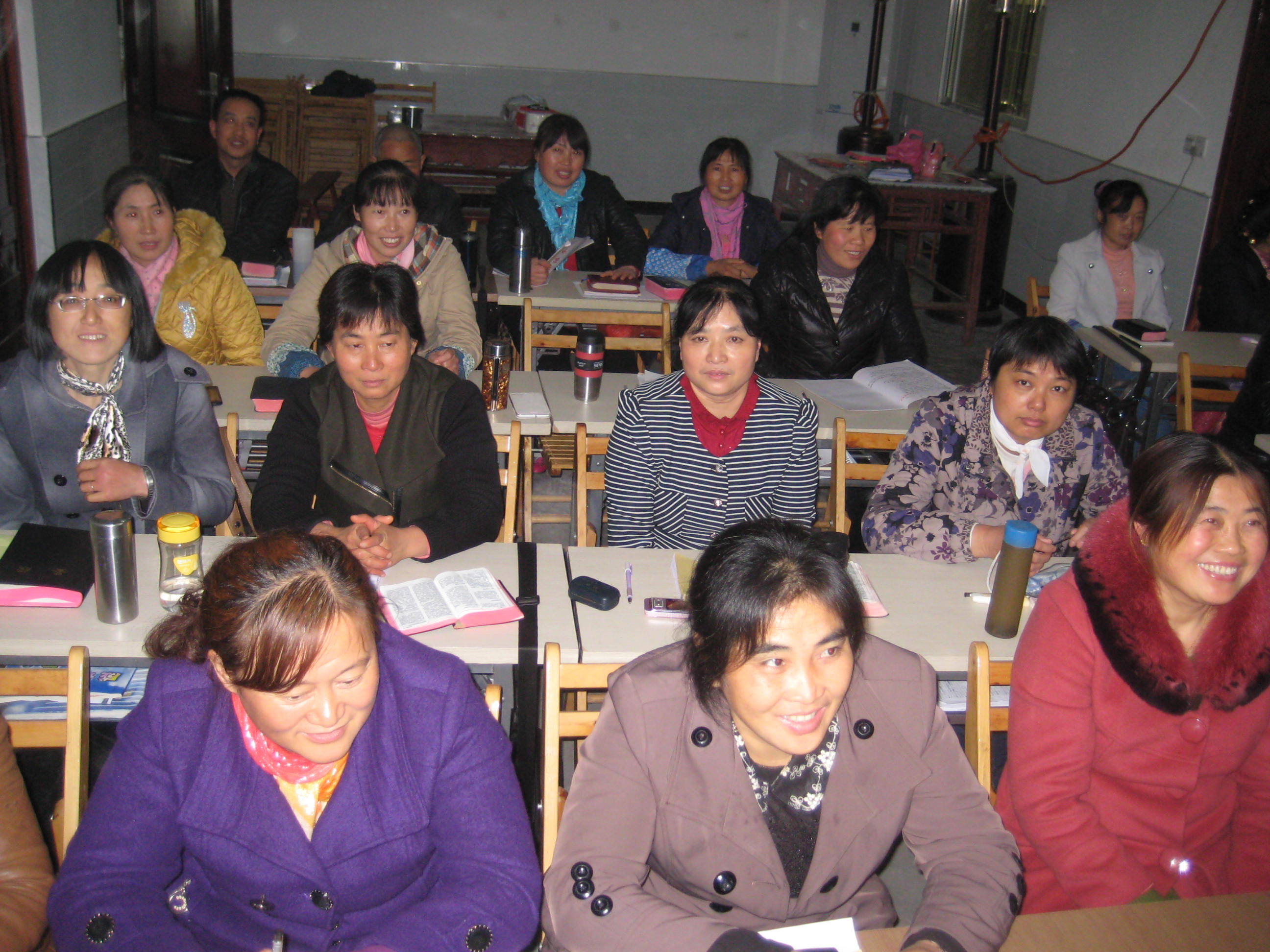
In many locations women provide the leadership needed and their number far exceed men. One pastor’s class I taught for a week in the mountains was composed of approximately 25 women and 3 men. The ladies were a force to be reckoned with. They were wives, mothers as well as the main leaders of the church. One pastor may in fact shepherd 10 or 20 house church congregations. In one seminary/college I served in a major city the principle in his forties introduced me to their founder – a woman around eighty years of age. She gave me a lusty smile her countenance bearing the impress of an undefeated warrior.

In a very few locales congregations have emerged above ground and come to tacit working arrangements with the government and with the official government registered ‘Three Self Churches’ without becoming registered. But my experience now 5 years in the making, confirmed by new conversations, argues that the popular narrative of growing tolerance by the government is not consistent and nor reliable. Because of economic development assumptions are made about the liberalization of Chinese society. But just about the time a person makes this conclusion some one in the top down power chain becomes anxious or randy and a new series of intrusions occur. Even so in many locales especially in the far north persecution of underground church leaders has moderated little over the years. The Communist Party still possesses a vision, albeit a changing vision, of what does and does not contribute to Chinese culture and an inbred fear of groups assembling and indoctrinating independent of government control. In the West we make a distinction between the civil and the sacred, the religious and the secular. But my sense is that the Communist party does not get this distinction and for one reason – they had too much ‘religion’ in their political platform from the get go.

To state the matter directly, along with the explicit paternalism, there is still some ‘religion’ in the State’s communism – Marxism was always a secular variant of the Kingdom of God. Beyond order and justice, the rightful vocation of all governments, the communist government remains committed designers and mangers in their socio –culture project even though this task has become more complex as China modernizes, as socio-economic mobility occurs among its people and as it is more exposed and responsible to international values and critique.

This year in a province once thought to have gained considerable religious tolerance and which enjoyed in many instances ‘above ground’ normality churches were forced back to a more subtle covert posture because local authorities returned to their policy of repression. One church costing millions of RMB thought to have established itself above ground was bull dozed to the ground. Top down power is by nature unpredictable, fickle and unsafe. Seasoned leaders in this Underground/House Church movement know this. Even so their caution is not to be interpreted as fear. While few openly defy the government I have not talked to anyone who obey demands to cease and desist. They just go down and come up somewhere else most often within the space of 24 hours. One group upon being instructed to disband and join a near by government registered church simple reset their meeting times at hours apparently too early for the authorities.

In some locales authorities have been at times tolerant and the believers have built churches or rented facilities then intolerance revives and these are closed or destroyed.

In Beijing a different sort of group of non – government church has emerged and become bold. They bought their own building and commenced to meet publically. But within a short time their pastor was arrested and jailed then released and the building chained and it remains chained. Now for three years they meet year around in the park in the open air. On any given Sunday up to 2000 members gather but their pastor is often arrested on Friday and released on Monday.

This year in all but one of the house church seminaries I taught in I was required to go into the school facility under cover and remain inside for the entire week – no leaving the premises. These schools exist with as little a social footprint in their environs as possible and their facilities are almost always not recognizable from the outside and the students living inside leave the premises very seldom, which means for most students once every four months. Most schools offers a diploma, a bachelors and masters as well as a program for practicing pastors needing formal education. All degrees ultimately come from an established accredited Asian theological school outside China and most of the teachers come in as missionaries with their own support.

When the View From Below Comes From Above

In a future posting I will develop one of my ethics lectures that I taught this year. The lecture I will post provides the theological and ethical rationale for a segment of the church in China breaking away and going underground and staying underground (more or less for nearly seven decades). My lecture (given at three of the four seminaries, to be posted in the near future) returns to Karl Barth, Martin Niemoller, and the Barman Declaration by the Confessing Church in the 1930’s. In crafting this Declaration Barth whetted his sword razor sharp in order to expose the Nazi’s ‘trespass’. Hitler and his Nazis required official control of the Church in Germany and wanted to domesticate it and organize it around their top down cultural National Socialism project. In a word (here paraphrased) Barth and the Confessing Church said in effect “the church does not belong to you or to us that you may require it and we may give it over to you. Obedience to a higher claim on us the church obligates us to decline your demand and name it for what it is. You have trespassed the propriety of your rightful reach over society – the church belongs to Christ. It exists for his mission and purpose alone and no others and he alone is its head and sole authority and as Lord over the church he is alive through the Spirit, the preaching of the Gospel and the administration of Baptism and the Lord’s Supper.” (The Barman Declaration was a declaration not written in the first person nor composed as a letter to Hitler but indeed sent to and read by him.)

Not unlike the Confessing Church in 1930’S Germany the underground church in China is indeed a free church movement in its radical obedience to Christ’s sole Lordship over the Church. It was born over against the centralized government’s attempt to control Christ’s church and it continues vigilant in this posture.

While the historical situation is entirely different between Germany and China the issue of propriety and domain as regards the church remains the same. There is clarity, timeless clarity, in the Barman Declaration especially regarding the church’s relation to any egregious behavior of the state whenever and wherever that occurs.

Christmas /Advent Mission Appeal

By the time this academic year concludes, the Lord willing and if the creek doesn’t rise, I will have completed my goal of serving between 8 and 10 schools. My vice has been that while I have succeeded in getting into these schools and teaching for credit college and masters level courses I have not succeeded in raising sufficient support to balance even my expenses. If you are looking for a micro mission project to support please consider this one.

May you claim the Peace that Christ came to give; the peace that gives favor with God and serenity in the soul.


* Some of you who read the title of this article will recognize the phrase “ the view from below”. It comes from Dietrich Bonhoeffer description of his experience as a prisoner. Here it is obviously infused with a different meaning

Dr. Daniel Age in China: A Show and Tell Report

On November 1st Dr. Dan landed in Shanghai for a four week, four seminary teaching marathon. Here follows his personal account in a show and tell report – enjoy!

( The captions precede the pictures)

The students in the picture below are all church pastors working to earn their degrees. Unfortunately this shot only shows about two thirds of the class. There were about 25 ladies and three men in the class. The women were a force to be reckoned with. They are mothers, wives and the main stay of leadership in the church. Leaving their homes and families they came from quite a distance to learn for a week at a time. They were serious students and took meticulous notes often stopping me to get everything down on paper and demanding clarification. When they prayed during their worship time and at the beginning and ending of a class day the earth would shake because whilst one woman prayed at every phrase the entire group would resound “Amen”. It was awesome. It felt sort of like warriors ready to charge an enemy. I was suffering from the cold but it did not phase them. We would do class close to seven hours each day and then I would retire and take a foot bath out of a wooden basin. But I would give them assignments for each evening, which they would work on into the evening returning to their same seats till nearly ten P M.  This means in the cold they inhabited their seats over ten to twelve hours. Often bodily noises would be heard rising from among the group. I said to myself these women are the real deal. If one wants a yardstick to measure commitment look no further.

These are underground church pastors


This school shown below is my favorite school. They took very good care of me –  washing my clothes and walking me to town and buying me fruit and whatever I needed. It was the only school where they were free to move about in their community. Each day at the end of the day we have an open forum for any question or comment. The ladies who on the whole excelled above the young men when given a chance to ask questions often focused on marriage whilst the young men wanted to stump me by asking me to interpret the most esoteric discombobulated texts in the Bible and there are more than a few. Gathered together there was no verse in the Bible they did could not find its whereabouts within 90 seconds (no WIFI needed). Even so like almost all the students I taught they struggled with my conceptual approach to teaching and learning. They wanted a more mathematical hard information approach. I wanted them to grasp a theological insight and apply it on their own to a new frontier of life and thought. They would rather undergo a root canal than follow this approach.

This school shown in a previous pic is my favorite school

This is another school sandwiched in huge city in an area where a mix of industries coexist with low income housing. I call this the “Jack Hammer Factory School.” The school founders bought the facility from a company who moved their operation leaving the huge factory vacant. It sort reminds me of the catacombs because there are so many rooms and niches in the building and the presence of a school inside the old factory is obscure.

This year about 80 students live and study in 4 month stretches most not leaving the premises during this term time. This is a master’s level class. The picture was shot from the rear because no frontal/facial view was not permitted. I have taught here three times. Maybe this school had the most mature and promising students at the Masters level.

This school sandwiched in huge city in an area where a mix of industries coexist with low income housing. The school founders bought the facility from a company who moved their operation leaving the huge factory vacant. Maybe this school had the most mature and promising students at the Masters level.

This is the entire student body of the seminary and Bible college located in one of China’s huge cities. All students no matter their level took my ethics course. The young man to my left I made the class Sergeant at Arms because he had a voice so powerful the window pains would rattle when he raised it.  I decided half way through the class to baptize him with an official role – calling the class to session and announcing break time. This is my fourth year teaching here.

This is the entire student body

The young man in the picture below is my interpreter hired for the week he traveled by train 35 hours to reach the school in this mountainous region. He was a fine interpreter. Freshly married 4 weeks previous he pined for his wife and often received and sent texts. But he was fully present and deeply intrigued by my ethics course thesis. I realized early on I had the wrong idea about translation. I didn’t need to teach the whole class, but rather just teach him and he would teach the pastors. So while teaching publically and privately I expended all my energy helping him grasp the idea and if and when he got it my job was over. He would take it from there. The gap between Mandarin and English is that great! The glow in the corner is an electric heater. It was cold. But the power in the region went off often.

The young man in the picture

I went from the city to the country, actually the mountains to a middle province. When I arrived at the ‘school’ which was a two story house with many rooms I was sure at last I would be allowed to walk about outside because their neighbors were few and the location a sparsely populated mountain valley. But I was confined to the indoors lest neighbors caught sight and the gossip chain stirred unwanted attention. These are pastors walking to catch their ride after a week away from their homes and congregations to do my ethics course.

i went from the city to the country

Located in another massive city finding this school would be like finding a needle in a industrial hay stack. Picking me up at a hotel they drove me to the parameter of the city into a maze of heavy industrial operations and then when we arrived at their building they threw a coat over my head and hustled me to the third floor where I lived and lectured for a week. All the students inhabited the second floor. The living was a notch above camping maybe but they were spirited, dancing and singing during break time.  My interpreter hired for the occasion was first rate. There were about 25 students in all. The founder was a woman approaching eighty years.

Located in another massive city

Among Hmong – For Two Weeks: Teaching Mission Report For September 2014.

On Tuesday September 2nd located in ICF, Udon Thani, Thailand 45 minutes south of the Laos –Thai border crossing at Nong Khai I commenced a two-week course on ethics.

After a bit of a shake up in Laos I had only seven students in total, four earning their BA. Most students were Hmong from hill tribes in Laos and all relatively new Christians seeking to prepare themselves for ministry. The subject I agreed to teach was on ministerial ethics. Since there are no separate ethics for any particular class of people, and because all are called to minster, I set about to apply the ethical insights I developed in my new book, “Suffering the Tension Between the Seen and the Unseen” to ministry. In total our discussion ran about 45 hours. During this time the students, using our very capable interpreter and the principle/founder of the school, Ben McClure, expressed themselves ensuring that communication was occurring. Their input and responses kept the class interesting but no time more than on the last day.

September 2014 Teaching Report

On the last day I asked the students to present their papers. Part of the assignment was to share some of their pre Christian religious experiences and reflect on them in light of the insights taught in the course. The Hmong people have practiced Spirit Worship for centuries, maybe millennia. All my Hmong students shared personal experiences about their involvement in these practices having participated in them growing up in their families and tribes before they became Christian. For this reason they resonated with one discussion more than others. In order to appreciate the students’ responses I indulge the reader in the lesson in question that I opened up during one of our classes. Understanding this lesson a little will help one appreciate the students’ response and the story retold below on the last day.

In my book I have a chapter entitled “Don’t Get Your Exercise Jumping to Conclusions.” In this chapter I show that from times eternal humans encountering events remarkably good or bad tended to jump to far-flung spiritual conclusions. For instance, Hitler having escaped an attempt on his life by underground conspirators, because a thick wooden table shielded the explosion of a bomb placed under a desk near him concluded that his survival proved God’s favor rested on his work. My argument is that faith imposes a form of blindness on us — we cannot look at events on earth (the things that are seen) and correlate them correctly and directly to the movements of the unseen God in heaven. Time to time life as we experience it directly and immediately ‘heats up’ and when this occurs we are more often then not, seduced into jumping to false conclusions.

‘Sight’ without faith, (faith that anchors one in the ‘hiddeness’ and mystery of God) tempts antimony. The physical is thought to mirror the metaphysical. True faith interferes with this ‘spiritual’ correlation. Faith respects God’s ‘hiddeness’ in the earthly sensual, physical realm not only in terms of the invisibility of God’s eternal being but God’s day-by-day activity, God’s doing. Later with faith glasses we can see a little and at least say that what has happened was made purposeful by God (Romans 8:24) but up close in the moment we surely cannot say for sure what is happening and where or how God is in what is happening. Faith means to respect the ‘hiddeness’ of God. If we don’t live by faith we trespass and get our exercise jumping to conclusions. Here the street value of faith, on account of the fact that it grounds us spiritually to a greater unseen reality and the spiritual truth of that reality, is that it prevents us from being sucked into and under our immediate experience. It gives us a measure of distance from the charm and terror of our experience.

The Apostles and Prophets via word and Spirit reveal the reality of God, the relation God has to us and the kind of life God is backing and promising. And precisely because this revelation is different than that which direct immediate experience suggests is true we can cool and minimize the impact direct experience has on us when it ‘heats up.’ Experience without faith renders us fully exposed to the emotional, psychological and ‘spiritual’ impact of the phenomena we are confronted with. Experience with faith intact downsizes and qualifies this impact and anchors the soul in something greater.

This lesson intersects with the students’ stories on the last day. At class time each Hmong student told a spirit worship story. I chose to include this one. My youngest student, 18 years old, told us about what happened when his brother died. Immediately his father offered a chicken on the family alter replete with chanting in a non-literate ‘language’ to appease angry spirits. Unsure whether this would suffice his parents went to the Hmong shaman. Because their religion teaches that death always comes in twos they wanted to be sure their sacrifice would avail. Confident that the spirits had turned against the family the shaman made his judgment. The premature death of their young son revealed that the spirit’s displeasure with their family was very great. The antidote he concluded must be commensurate with the gravity and severity of the spirit’s anger – the sacrifice of a cow! The sacrifice of a cow would likely protect them and appease the spirits’ anger.

Daniel Age September 2014 Teaching Report

The trouble with this prescription was that the family was not well enough off to sacrifice a cow. Offering a cow would ruin them financially. For this reason they turned to a friend who suggested another possible solution – go to a Christian minister in a near by village and seek help. Under financial duress they opened their mind to things they were heretofore closed. After hearing out the matter the pastor assured the parents that there was no link between the death of their son and malicious spirit activity. Essentially the pastor said “don’t get your exercise jumping to conclusions” illness and death are related to real life and health not spirits. Not convinced the parents brushed aside the pastor’s attempt to disentangle spirit activity with illness and pressed the pastor for protection from another death strike on their family. This is what he wanted and expected.

Because the belief that physical life is the playground of fickle spirits is so deep in the Hmong’s psyche he did not expend too much energy trying to convince them otherwise. He pointed them to the unseen God who was greater than all spiritual and earthly powers and introduced this God as benign, just, good, merciful and loving. This unseen God, alone above all and before all was their refuge. Worship and trust this God and your life will abide under his care.

This helped a little. The pastor was mixing spirit with truth, truth with and into the spiritual realm and engendering faith. He was painting and coloring the spiritual realm in such a way that it ultimately took on a new shape in their minds and they imagined things differently. The truth of the existence of one God, good, faithful, merciful and caring whose power was greater than all earthly and spiritual powers began to disenchant their minds and lower their anxiety.

This coloring of the Unseen metaphysical /spiritual realm differently indeed helped, but only when the pastor broke out of the language of pure metaphysics and began to tell them this worldly Gospel story about how an anointed one came from God, sent from God (i.e. messiah) to earth and triumphed over evil and death did the fear of spirits begin to loosen their grip on them. The Gospel’s flesh and blood history, portrayed in a drama of defeat and triumph on earth where a real person, in real time and events, occurred in a real place provided the crucial stepping stone out of the spirit world morass they were caught in. The ‘physicality’, simplicity of the story transpiring in real time, combined with its spiritual interpretation broke the charm of the seamless erratic spirit world they were caught in. No cow was sacrificed and in time they became Christian and with them their entire family became Christian. Conversions from spirit worship to Christ among the Hmong people are rarely individual. The whole family transitions together under the leadership of the father.

Daniel Age September 2014

The unseen of the spiritual shaped and informed by the gospel and the nebulous unseen of the world of spirit worship competed for their minds but the power of the former compelled faith and freedom while the power the latter, real or imagined, seduced them, making them fearful. Using the help of the other Hmong students and their stories I have taken the freedom to shape the pastor’s way of leading the parents to faith. The irony is that we are not really that different. A faith that is able to resist the seduction of awesome phenomena needs the word of the Gospel of Christ. In this world, this world reality, a victory has occurred. The gospel of Christ alone gives faith in the unseen teeth!

My next stop is Phenom Penh. In an up coming post I will share the details this project.

Walking on Water With Peter– Everyday!

August 2014 Teaching Mission Report.

The last week of August I returned from the US to Asia and made my way to Udon Thani in northeastern Thailand where on Sunday August 31st I preached at the ICF (International Christian Fellowship). I chose for my text Matthew’s account of Peter walking on water.  My message circled around a theological and ‘homiletical’ involvement with the text. Here follows a digest.

Sooner or later you and I find our self at a juncture in life’s journey where the firm foundation under our feet disappears and Jesus’ call to Peter to get out of the boat and journey across the water to him transitions us from a voyeur amused by a tale from the comfort of our arm-chair to a soul at the crossroads called to surrender his anxious grip on fixity.

WP_20140831_002 (1)

Suddenly the love of another under one’s life may pass away or fail, the material means that sustains and protects us erodes threatening to thrust us into the vicious grip of want. Our vitality and health may slowly or rather quickly falter when an accident happens, disease or the downside of aging makes an unwanted call. And when any or all of these or other mishaps come knocking just as surely toxic anxiety, cynicism, bitterness, forcefulness, anger and despair come knocking at the door of the soul. At such times the good word of the gospel calls us to keep on keeping on and trust the invisible foundations under us more than ever. Happening upon any of these eventualities we must, as Paul writes, “look not on the things that are seen but on the things that are unseen.”

When the visible and tangible foundations that have been holding us up and taking care of our shalom fail all the more we must retreat to the invisible foundations and weather the storm. Then more than ever we must, as it were, abandon the boat and walk on water with Peter. When all that we see, touch and feel under our lives – socially, materially or physically – slips and slides and reveals its fragility and we begin to sink into anxiety or despair Scripture reminds, “underneath are the everlasting arms” (Deuteronomy 33:27).

The invisible God in Christ reveals Himself to be the invisible foundations of our life. The love that steadies and grounds us is ultimately invisible, the visible material pinions of our lives are ultimately connected to an invisible Provider and sustainer. Behind, before and independent from all the forms, orders and relations that steady and support us, as good and proper as they are, an invisible foundation abides that the eyes of faith alone are able to see looking past the weather of our lives fair or foul.

The presence of this invisible foundation is often made imaginatively clear through the Spirit when at kairos moments we need it the most. When fortune presents itself and life appears steady, secure and intrinsically good on its own accord the Spirit against the flesh, points us beyond the present but soon fading jubilee to an invisible security that abides under us on account of costly grace. Or the scene changes and life presents itself as intrinsically bad and insecure and fickle. At such times life ‘heats up’ and attempts to seduce us into thinking and feeling that “what we see is what we get,” that what we see, touch and feel is the be all and end all. Learning to follow after the invisible security presented in the Gospel i.e. learning to walk on water we refuse to give too much dignity to abundance or scarcity, trouble or triumph, success or failure, want or wealth, the presence or absence of the love of another or even our righteous life or lack thereof. Faith sees something invisible that trumps the visible.

Eventually walking along on this invisible foundation of life, love and righteousness under us we come to a place in the journey of life similar to that which Dietrich Bonhoeffer came to, although hopefully absent the malice that pursued him. Upon facing his imminent demise he stepped to the gallows and for the last time ‘walked on water’ firmly confessing, “this for me the end is the beginning of Life.” “Ah to die well is an exquisite but rare victory.” ( Author Unknown)

This message seemed to be received fairly well and was welcomed by ICF’s pastor Ben McClure who back in July wrote me in New York and asked me to preach on this theme hoping members would be attracted to audit the class I would commence teaching two days later on September 2nd.

June 12th Book Party Report

On Thursday evening Dr. Dan held his first Book Party Discussion in Midtown Manhattan. As a participant I was asked to write a little a report. Here follows a few of my observations

The event was very well attended by a group with diverse religious and non-religious backgrounds. The room reserved for the party could not have been better. Situated adjacent to beautiful Bryant Park in Midtown Manhattan it was a warm cozy room, well lit, smartly laid out, and perfect for a relaxed engaging discussion.

First Daniel shared the inspiration that led to writing the book: “I kept encountering students all over Asia in the colleges and seminaries where I taught who had a naive romantic notion of American religion and culture” he said.  Asked to develop some ethics lectures in Burma he worked out some thoughts taken from the little phrase by Paul the Apostle: “We walk by faith and not by sight.” “The truth in this phrase” he said, “gradually opened up a new horizon providing fodder for a rethink about what is going on in many strands of Christian spirituality, religion and culture – especially in America.”

Daniel Age Book Party

Daniel Age Book Party   Daniel Age Book Party

Here follows a couple fragments from the notes I took during the discussion.

“Poets, prophets, sages and apostles spoke of the spiritual magnitude, God, who is under, in and over all of life (‘underneath are the everlasting arms’ Deuteronomy 33:27). Hidden behind the material veil this spiritual power – God – is present and real. But this hiddenness sets up two follies, spiritualism and secularism. Spiritualism, or better described as toxic spirituality, tries too hard to discover the Spirit. It wants to see, touch, feel and verify if not possess these hidden ‘everlasting arms’ that are said to be under us.  But this attempt to remove the veil that clothes the unseen means trespassing a boundary.  The attempt to bring the hidden spiritual things of God out into open where they can be seen and experienced without faith may be sweet in the mouth but bitter in the belly. The insect that flies too close to the light is burned. Hiddenness protects God’s godness, and when faith is in the equation, it protects humans’ humanness.”

“Secularism on the other hand has staked its honor on the premise ‘what you see is what you get.’ But when what we see, touch, feel and decipher through, reason becomes the be all and end all, the measure of life’s offering, sooner or later life will take us too high and too low. It’s like hooking one’s skates to a roller coaster. Severed from the invisible the visible becomes everything and destroys us. Severed from hidden divine love we are left with human love, and whether fickle or constant, it is not enough. Separated from hidden divine forgiveness and mercy we are left alone with our immediate experience of life and the regrets, hates and hardness of heart that follow in its train. Exorcise ‘hiddenness’ out of the equation of life and one ends up with a banality that progressively destroys everything wise and precious. Taking its queue from the sacred text, faith posits hidden meaning, hidden value, hidden love, hidden mercy, pity and compassion, and hidden grounds for hope all rooted in the invisible magnitude of God. Exorcise this hidden reality and sooner or later the visible immediate experience itself gains a demonic magnitude that becomes our undoing.”

“Faith is a form of spirituality that respects this ‘hiddenness’ of God and releases an ethic of restraint, reverence and respect.”

The application of this thesis explicitly within Christian understandings was saved for another discussion.

These thoughts provoked comments and discussion, several books were purchased and everyone had a good time. Stay tuned for the next report preceded with an announcement of the date, time and place of the next book party/discussion.

Elizabeth Age
Blog Editor

Hosting a Book Party: A Letter of Invitation to My Friends and Supporters

I have a fun plan to share my mission work. Many of you know I wrote a book (286 pages) while packing around Asia, which was published by a Malaysian Seminary early this year. The book is not perfect but it has, what I believe to be, a keen challenging insight and, as it intersects our life journey at many points, it is written in such a way that is accessible to all.

Now back to the States and looking for a way to promote the book I came on a plan. I have decided to hold book parties. The plan requires that I secure the commitment of someone to host a small home party, someone who is sympathetic to my teaching mission and or intrigued by the thesis in the book. This person would then agree to host a book party of about 8 to 12 people in their home who they invite. On an agreed upon time and date I would come and talk about the thesis in the book, taking sufficient time to open up one of its many insights so that a spiritual blessing could be gained. At the gathering I would give an introduction of the book’s insight inside the greater framework of my teaching mission in the Far East, sharing some of the stories and experiences I have had. After the presentation I would have an open Q&A time and provide books available for purchase while sharing refreshments.

Maybe you are thinking you would like to host a book party? Because of the nature of the material and the easy setting that ‘a party’ affords and because the material is around one of the most basic of themes– faith and hope. This venue provides a great setting for anybody to gather in a not too serious, not overly religious setting and gain a blessing and this includes non-believers. My insights, stories and experiences whilst doing my teaching mission in Asia would further lighten and spice up the evening.

Take a look at the below fliers for a sample of discussion topics. To make a date for a book party simply email me.

Daniel Age Book Party Daniel Age Flyers 1 Final


Spring and Summer 2014 Book & Mission Tour Launches in the US 

I am writing this week’s blog post from New York City. Still suffering from jet lag a few days ago I left Bangkok and via Hong Kong and made my way back to the States. Since most of the schools I have been serving in Asia are now on break for several months I opted to return home until August. During this time I will be building a couple of new courses and sharing my teaching experiences. Along with this I will also share themes from my new book Suffering the Tension Between the Seen and the Unseen. My arrival opens up an opportunity.

With this letter you are being invited to book a date with me this spring or summer to speak to your Christian circle in your home, church or town. Here follows a synopsis of the above two areas I would bring to your circle.

One: Stories, Insights and Observations From My Teaching Ministry in the Far East.

Recalling tales and insights garnered from teaching all over the Far East I will open up to your circle first hand experiences and reflections about what is happening in the churches and schools in many places in Asia where I worked. My educational ministry led me into China (as a ‘visitor’ many times), India, Cambodia, Thailand and Myanmar. I am offering you an opportunity to learn about the underground church in China, about the educational endeavors of the Karen Baptists refugees from Burma now still in camps along the Thai-Burma border and other endeavors.

Two: My New Book and Its Thesis – Applied to Life

While tramping around Asia I wrote a book which by now many of you are reading – Suffering the Tension Between the Seen and the Unseen:The Doing and Undoing of Christian Faith, Spirituality, Ethics, Religion and Culture. My thesis contains a fresh insight and challenge subtly radical in its scope. Reflecting on many of life’s experiences that all people struggle with I argue for the recovery of the native tension inherent in faith and hope. Faith’s trust in the unseen sets up a tension with that which is directly seen, felt and experienced when these gain magnitude – real or imagined. And in the same way hope’s interest in better things coming creates a tension and struggle with the problems and pleasures of the present when these gain ascendancy as if they were the be all and end all. The present and the seen time and again suck us in and under them. Faith and hope reassert a healthy tension without falling into the dualism of Eastern religions. I argue that if and when the Church and individual Christians embrace this tension we risk losing easy favor and friendship of the modern world, but if we fail this tension we risk losing the salt that savors the world (‘earth’).

When you book a meeting inviting me to speak to your church or circle I will open up and apply my simple but far reaching thesis developed from Paul’s dictum “we walk by faith and not by sight” (2 Corinthians 5:7). From the truth embedded in this little phrase I work my insight forward indirectly calling into question many of the forms of spirituality, religion and culture that much of American Christianity has been and is presently generating. Could it be that much of our religion is trespassing faith and hope? This would not be a weighty matter if faith and hope were merely two virtues in a long list spiritual Christian graces but faith and hope along with love are the ethical DNA of the Christian way.

Nothing is quite as dangerous as a new insight into an old truth. Once it is grasped it forever stretches the mind beyond the boundaries once considered fixed, safe and secure.

Booking Details: Timelines and Geographical Areas

You can contact me about booking a meeting via email or by phone: 516-996-0905.

  • April and May – the Northeastern USA
  • May and June the Southern USA
  • June and July Midwest and Western USA

There are no travel or speaking charges to book a meeting except in unique situations. This is an opportunity to learn, think and challenge your faith and broaden your vision of the church in the world. Seize the moment and send me an invitation or inquiry, let’s make a date!

Daniel Age

Kawthoolie Karen Baptist Bible School and College Spring 2014 Graduation

A First Hand Report With Reflections

KKBBSC Spring 2014 Graduation

On Sunday March 22 leaving Chiang Mai I traveled 7 hrs by bus to Mae Sot, Thailand. The next morning Sunday the 23rd bright and early I boarded a pick up bus and traveled along the Burma border for an hour and half north to the Mae La Refugee Camp where I have taught many times since 2011. Kawthoolie Karen Baptist School and College (KKBBSC) was graduating their senior college students and I wanted to be present to encourage and congratulate them. The first service was at 10 AM and lasted till 1pm the second service started at 2 pm and lasted past 6pm. Seated in the congregation I was summoned to the platform where it was hotter but free bottled water was passed out. Three students spoke all toll and many adults – leader figures – honored guests from far and wide. On the platform there were VIPs so called, many seemed a cross between NGO and Church leader with a smattering of volunteer teachers and a couple preachers. These came from Germany, Denmark, Australia, Korea, Malaysia and the US as well as from Thailand and of course the Karen from Burma (most everyone present were already working in Thailand or Asia). I would estimate the entire count of persons present including students to be over 900. This being the case it was especially difficult for anyone with preacher blood coursing through his or her veins to sit down once he mounted the pulpit.

Here follows a few brief reflections taken from my 6 hrs on the platform on this auspicious day with its auspicious guest speakers and honored students.

KKBBSC Spring 2014 Graduation

1. First consider the setting. Mae La Refugee Camp is situated 65 kilo north of Mae Sot along the Thai- Burma border on the Thai side. It is nestled at the base of a great mountain with a sheer rock face and it is out in nowhere. There are no towns or villages even close. It is rugged mountainous terrain typical of the Tak province of Thailand. 50,000 refugees live in this camp their dwellings cut from the flora and fauna they inhabit. In this desolate outback approximately 70 seniors, all Karen save two or three, robed and polished, as the proverb states, “after the similitude of a palace” filled the outdoor pavilion. With all the pomp and ceremony one might find on graduation day in a great cathedral on 5th Avenue Manhattan the occasion went forward. The setting made me recall a chance casual conversation I had with a young lady sitting at the table next to me in Manhattan a few years back. She told me at long last she believed she now lived in the center of the planet – Hells Kitchen downtown Manhattan. This is where she believed culture peaked and she experienced herself on the cutting edge. I openly scoffed at her judgment but sitting on the platform the thought lit upon my mind like a butterfly delights a blossom – this, here and now, is the center of the planet. Here is why.

2. The Karen have many gifts but among their finest is music and especially singing. They not only love to sing and fill the valley with song from morning to night they have developed exceptional skill. At one point in the ceremony the entire student body rose and sang the Hallelujah Chorus. During the chorus I closed my eyes for a moment and saw the angels weeping. No words can describe the harmonic ecstasy and the sheer spiritual and aesthetic power of this moment. Where such worship occurs, I mused, then and there we find the center of the universe. This is so because in my humble judgment when such exquisite praise occurs in the midst of such hardship, there one has pushed trouble to the periphery and found the goodness of God to be the center of life.

KKBBSC Spring 2014 Graduation

3. Dr Simon the founder and director spoke of the origin of the school. Even though I had heard the story many times before it moved me again.  In 1990 having fled Myanmar for the terror of the military that was reaping violence on their land and having found sanctuary in this camp Dr Simon dreamed a dream. With three other teachers and 6 students he opened KKBBSC and now 24 years later it has 500 students. But what’s more, the military who were motivated by ethnic hatred to destroy the Karen will in the end be defeated. Because soon the Karen will return and instead of returning beaten, weakened and begging for land and a share of the means of life they will return stronger, educated their native talents and gifts developed more than anytime in the past and confident of their belonging and right. What is the saying “revenge is sweeter when served cold.” And here certainly no revenge is intended but in the dues of God, (“God laughs at the wicked” the good book tells us) what was chased out and under will reemerge more potent and resilient than before. When justice, dignity and right are violated then it is, if and when education, study and reflection are mixed with this experience, that these become stronger, more self–conscious and determined. From the black churches in America the greater church at large awoke to the Prophets and Christ’s vision of justice. The Kawthoolei Karen Baptist have a distinctive fabric of justice and dignity woven into their religion and from the church in their midst (if they will) other churches in Asia may also awakened to the cause of justice incorporating it into their evangelism. This leads me to my 4th reflection

4. Of all the distinguished and illustrious guests rich in experience and degrees no one in my humble opinion spoke with the poignancy and clarity as two senior Karen students. Each from his own perspective cast an eye upon their return to their homeland. They spoke of restoration of the land, the community and the work that needs to be done to replant and re-root their culture and nation again. These were at the same time concrete practical and visionary speeches. Never before visiting KKBBSC have I felt the imminence of the Karen hopes as with these seniors. It is as if many of them do indeed carry the burden for the return even more than the elders whose work is passing. “Young men grown up in their youth daughter polished after the similitude of a palace.”

KKBBSC Graduation 2014

5. Much was said during these speeches about the Karen nation and indeed a nation they were and a nation in exile they remain and a nation determined to be again in their homeland.  Sitting there on the platform I could not help but think of the Jewish nation and their Babylonian exile. The shape and form of their nation before and after it changed. National ‘restoration’ no doubt echoed during the seventy years in Babylonian captivity but when the time of restoration came what occurred was not simply a restoration of the way things were in the past but a transformation of it. Judaism did not go forward in the same shape it was before. ‘Restoration’ on the other side of all exiles, no matter their cause, whether personal or collective, is found and built in a new way. The old that was lost when it is reborn goes through a change and re-emerges in a new form. Judaism returned to new religious and ethnic pluralism and keeping their identity depended more upon piety and taking care of the law (Torah) and embodying the way of the law in life. From henceforth the synagogue and the teaching that occurred within it began to emerge and eventually became an important center to hold the people together. This piece of Jewish history is, I believe, very instructive to Karen people at this time in their history – perhaps even more instructive now than the Nehemiah text of rebuilding the wall – the Scripture reading for the graduation.

Add to this historic reflection and comparison the fact that when messiah Jesus came upon the Jewish 1st century scene he laid the groundwork so as to tie their ethnic identity as the historic people of God to ecclesia not nation perse. The future of nation was caught up by Jesus into the coming Kingdom of God something much bigger and broader than nation. And ecclesia i.e. the called or called out (church) became the gathering point this side of the kingdom and included all believers, Jew and Gentile and existed separate from state/nation. All confusion of church and state stand not only under the judgment of Christian history but also the ways and means of messiah Jesus. Nations do not cease to exist but they cease to be  ‘Christian bodies’. There is only one Christian body – “where two or three are gathered in my name there I am present”.  Nations who have within them genuine Christian communities (salty eccelsias) indeed benefit and are built up, strengthened and ennobled in a tangential accidental way. This side of the kingdom this is as close as ‘Christian’ comes to any institution whether it be a nation, marriage, political or social body.

KKBBSC Graduating Class

Epilogue

I was asked to speak and introduce myself in a 2-minute envelope of time. I may have by passed my name I am not sure. Having taught many of the graduating students some of my insights on faith and hope I wanted to remind them of their significance for the time at hand. So instead of an introduction I told them that if they were to fulfill their graduation commission to serve Christ they must venture what Peter did – walk on water, not literally but after a similitude. The key to walking on water I said was learning to walk by faith not by sight. With this rather abrupt cryptic message lasting 1 minute 43 seconds I sat down. Here follows my meaning that I trust will make it round robin to a few of the graduates.

Yesterday (March 22,2014 and before) you  (the graduates) were in the boat called KKBBSC. In this you were not much different than the 12 in the boat called GMS (Galilean Missionary School) under the head master Jesus. Today (March 23) you have gathered with family and friends in the presence of your teachers and elders to hear Christ bid you leave the boat and serve him in the world. In the boat you have each other close and you have the KKBBSC institution under your feet and in this boat you sing, study and play despite your refugee survival. You sing your dream song “row row row your boat gently down the stream merrily merrily merrily life is but a dream.” But now graduation has come and with it the definite word and time has come to arise and get out of the boat and get about your work. Times have and are changing for you. It is time to enlist your youth, zeal, time, strength and talents in service (with the exception of those of you who will post pone this calling and go on and study more).  Like Peter, Christ bids you to get out of the boat and serve him in the face of humanity.

The boat symbolizes a degree of security. It is under you and saves you from being submerged in the often troubled waters beneath you. Some of you when you grasp the degree of the challenge ahead will say Lord just let us stay together and row the boat where you want us to go, others will say “give me a bridge Lord.” “Lay up a bridge and I will walk over it and go where it leads and there serve you.” But in the call to serve Christ bids you like Peter to abandon the security of the boat and walk on water.

KKBBSC 2014 Graduation

If you are to get anything done for the Lord, if you are to make your way in service and be fruitful you must now graduate from life in the boat to life walking on water, that is to say you must forego the luxury of having a clear, strong, firm and secure foundation under your feet thereby upholding your journey. You must forego your predilection to first have in place all the material needs to get the job done; forgo having a firm foundation under your feet. No, to truly serve and obey his call you are and will be a little beyond the safe zone, beyond your means, beyond your native strength, beyond what hard logic and good common sense dictates and beyond the measure of competence that the preparations you have made heretofore equip you. And here in this place all that is solid melts into air and water and here you learn and relearn to trust something that cannot be seen, touched or felt. And when you venture forth without having all you need to hold you up then and then only have you graduated. Even so be sure all of us without exception fail and graduate over and over by the grace of God. We all hanker after a material foundation under us before we go forward, often demanding it in vain from God and others.  Yes where opportunity puts helps, better preparations and supports within your reach do not be foolish, avail yourself to these but know one thing for sure – again and again God calls us out of the boat onto the water to get us where He wants us to go, do what he wants us to do and become what He wants us to be.

Look straight at what is not there, what ‘should’ be there, look directly at your lack of good support and the lack of material economic subsistence under you and your lack of thorough preparations and this absence will gain a negative spiritual magnitude will subdue and overcome your faith and destroy it and you will retreat. Sooner or later in life we all must learn to walk on water else we will either sink into despair and retreat or we will become graspy, demanding and forceful, ways far from the Kingdom of God that Christ has sponsored.

“Underneath are the everlasting arms” so reads the good book but most often you and I cannot see, touch or feel these sturdy caring arms. Courage, duty and Christ call you beyond feeling and sight to go forward on by faith alone and lay up good work and efforts in service to Him and his kingdom.

Together with you in His service,

Daniel Age
Teacher of the Gospel of Christ and Way of Faith

KKBBSC Spring 2014 Graduation