
The following devotion is crafted from Dr Daniel Age’s pulpit notes revised and edited. The occasion was the 9 A M Chapel service for Kawthoolei Karen Baptist Bible School and College (KKBBSC), Mae La Refugee Camp, Tak Province, Thailand. February 10, 2020. The source of these thoughts return to the insights pioneered in Dr Dan’s book Existence and Faith here rediscovered in a “new” text over looked in 2013 &14 study.
Preface
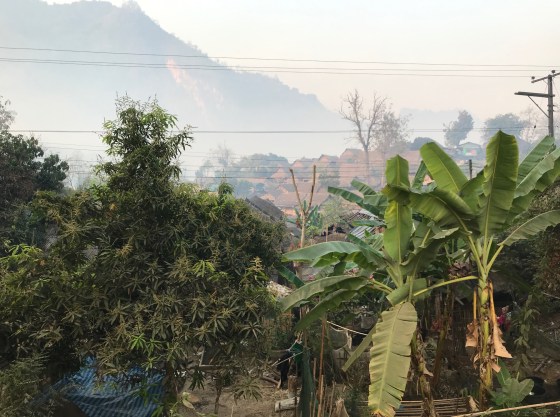
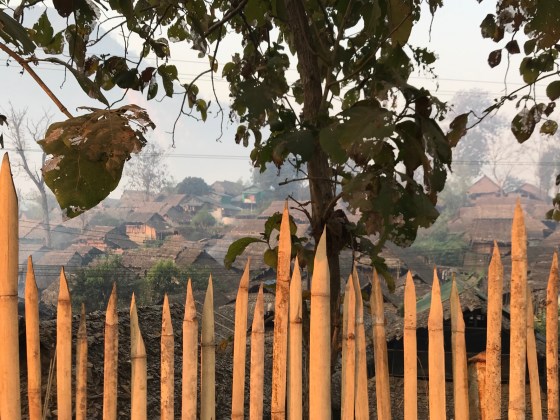
During the four weeks of February (2020) Dr Dan traveled from Mae Sot, Thailand by way of a pickup line bus approximately one hour and 40 minutes north into to mountains to Mae La Refugee Camp where KKBBSC is located in Section C. The Camp is not small. Over 50,000 Refugees from the Karen State live in this encampment. Mae La has been sanctuary for Karen people driven from their homeland over 25 years ago. KKBBSC’s enrollment remains over 400 students. If the threat of violence from the Burmese army was truly past and new agreements were to be signed ensuring peace and security the Karen would gladly return and reclaim their homeland and rebuild their lives. I was asked to preach for three chapel services during February. Each of my preaching lessons were devoted to a particular aspect of Israel’s Exodus from Egypt. The following article is crafted from my pulpit notes of my first devotion preached on February 10th
“ By faith he (Moses) forsook Egypt, not fearing the wrath of the king: for he endured, as seeing him who is invisible.” (Hebrews 11:27 ASV) “We walk by faith and not by sight” (2 Corinthians 5:7)
The Spiritual Roots of Fear and Courage: Lessons from Moses Encounter With Pharaoh (Part One)
There are junctures and intersections in our journey through this world when life ‘heats up’. Consider Moses. Seemingly by the luck of the draw he not only was miraculously saved from Pharaoh’s sword as a baby boy, simultaneously he was destined to become swaddled and trained inside the luxury of kings court and enjoy the king’s comforts and favor. He would know nothing of the want and ruin of Goshen ghetto existence with its brutal slavery. But as a young man with the wind at his back and great promise before him his fortunes suddenly changed. It all started with a flash of anger, a momentary eruption of misguided zeal to right a wrong that he had no right to settle. Judge, jury and executioner, trespassing beyond his rightful place, he privately and secretly administered justice to an abusive Egyptian soldier who was mercilessly beating up on a Hebrew slave. Afterward Moses buried the soldier in the sand. Confident that neither the deed nor evidence would come to light he assuaged his conscience. But like most secrets his transgression refused to remain hidden. And once the news reached the king Moses’ coveted favor with him abruptly disappeared and in its place wrath and vengeance.
At that precise moment life for Moses heated up and anxiety, dread and fear came knocking. Life is like the happenstance depicted in this story. There are junctures and intersections that one arrives at that, for fault of one’s own doings, or absolutely no fault of one’s own doings, the shalom of life tethers and breaks under one’s feet and then one is exposed to forces that threaten to undo him. And in this scenario the forces that threatened Moses were far greater than any push back he could muster.
Moses was in over his head. His internal and external resources to meet this thing that faced him were far too puny to make a difference. No doubt anxiety, dread and fear came knocking and struggled for the mastery. What prevented these toxic ferments from taking residence within him and overcoming him? This question is subtly lodged in our text (Hebrews 11:27). Where did Moses get the solidity of mind and spirit to endure the wrath of the king, forsake the comforts of Egypt and abandon himself to an uncertain and precarious trek into the desert?
This is where Hollywood and the Bible part ways on this story (cf Charlton Heston). No doubt Moses was groomed and trained physically and mentally in the royal courts. Certainly this should not be discounted, however, to focus on this fitness is to miss the real antidote to fear that the writer of Hebrews points to. Ultimately faced with the wrath of the king Moses did not succumb to fear, nor was he overcome with despair in his wilderness flight. The text simply states “By faith Moses forsook Egypt not fearing the wrath of the king: for he endured seeing him who is invisible”.
“He endured seeing him who is invisible”, in this terse phrase is the seed of a great truth. There is a dialectic between the seen and the unseen, which, while important and vital at all times, is especially important when life heats up. Pharaoh’s wrath suddenly erupted. It became the elephant in the room. It was immediate, up close and personal bearing down on Moses like a freight train. If he was not to be overcome by fear Moses must not only see the threatening situation that was immediately and directly and visible in front of him, he must also, as it were, see something that was invisible.What if Moses only had ‘singular’ vision? According to the thesis presented here he would have lost his courage. But the text states that “he endured seeing him who is invisible”.
By faith Moses saw the invisible, while facing the visible. Seeing the visible, i.e. that which is directly and immediately at hand must be joined together with faith sight that enables one at the same time and place to see the invisible. Herein is my thesis, what God joined together let no one put asunder. If Moses would not have had glasses of faith that enabled him to see the invisible God who was for him and with him sooner or later he would have succumbed to fear and despair.
All through life’s journey, but especially when life heats, we need eyes of faith. With eyes of faith we see our lives inside the circumference of God who is with us and for us. When this vision comes into focus the magnitude of the things that we see directly and immediately do not cease to exist rather they are dramatically downsized. Pharaoh with all his power to do Moses harm was downsized! With these faith glasses on Moses had the inner freedom and courage to do what he had to do. It is the power of the Spirit of God and the good word that support and empower eyes of faith.
Faith is not a leap in the dark. Faith embraces the light that discloses the goodness of God that is behind the veil. Faith does not merely close with the mere existence of a God like a buyer and seller close a perfunctory deal. Faith sees what the Prophets and the Apostles ( the seers of old) tells us is there – namely a God who is for and with us. Faith, seeing the invisible, makes courage possible and necessary.
When life heats up the thing that is seen, felt and experienced swells to toxic proportion and becomes the be all and end all. At this moment in time one must see, by virtue of the good word and the help of the Spirit, her plight as ultimately existing inside the One who is invisible. If all one has is the linear, immediate, direct encounter, if this is all she sees, sooner or later her spirit will succumb to the wreck and ruin of dark spirits both forceful and anemic, both inordinately strong and pathetically weak.
Under duress human beings oscillate between pathetic weakness and aggressive forcefulness. At one moment self-pity, resignation and desperate loneliness come knocking in the next moment anger and aggressiveness. Life is replete with circumstances that create ‘heat’. Moses’ sense of justice and anger suddenly flared and he did things he should not have done. In the direct wake of this malfeasance toxic emotions came knocking. In the text we are only given a small window into Moses’ existential struggle. When an animal dies myriads of maggots almost immediately appear on the scene, from whence they come is a mystery. When life heats up circumstance arrive at one’s doorstep which become the seed bed for toxic guilt and shame, for self reproach and even thoughts of self destruction. These and other morbid and destructive ferments almost involuntarily spring up within us when the climates of our life change. Hardness of heart and bitterness, once regarded as alien and strange, under the emotional impact of new circumstance easily become permanent residents in our souls.
Standing alone before forces like the magnitude of Pharaoh’s wrath, lacking faith in the presence of the unseen, Moses would almost surely have succumbed to run away anxiety and fear. “Seeing him who is invisible”, Moses “endured” and escaped fear. One must not only see what is physically and sensibly in front of her, putting on the glasses of faith that is literally handed to us by and through the sacred text, she must see the invisible. Following the unction of the Spirit and the good word given to us that pulls back the veil, if only a little, by faith we see better things, enduring things, things that enable us to see a greater reality and it is these that downsize the spiritual magnitude of the things that impinge upon us. Seeing these greater invisible things breaks the toxic charm that the visible reality gains on our minds.
At this point in my devotion I have reached the didactical crunch of my argument and it is this. Pharaoh’s power possesses idolatrous power unless he is seen in light of something greater that is invisible. The seen must be viewed in light of something that is greater that is unseen. Unless one sees by faith that which alone is ultimate then the penultimate will loosen from its proper moorings and become ultimate in our minds and experience. When this occurs the victory of darkness in the soul is secure.
Herein lies the spiritual roots of captivity and freedom. In the journey of life Pharaoh has a 1000 suits and masks and seduces us to take him too seriously and as soon as we do poisonous habits of the heart indwell us. The antidote is simple even though it involves a struggle for the mastery of the unseen over the preeminence of the seen, felt and directly experienced. Like Moses it is imperative that we see our lives inside the care of the invisible God who is far greater than Pharaoh. Believing in the existence of this care would be spiritually heroic if it were not for the fact that the hidden reality of this care has been made known to us through the good and faithful words of the Gospel of Christ.
We see here in this lesson that faith arises from an existential point of contact to truth. That is to state we do not comprehend God rationally and conclude that he exists. Rather God comprehends us by addressing himself directly to our existence. And when this occurs our existence, unless we turn away, becomes, like Moses, re grounded in the invisible grace and love of God who is never absent. And when this occurs we begin to comprehend that no matter our temporal and earthly lot, our being is secure forevermore through Christ in God.
If there is a real hero in the story of Moses’ courage in the face of Pharaoh’s wrath and his will to embrace and endure the wilderness it most likely goes back in time to the surrogate nurse maid who his sister Miriam fetched for the queen. The queen whilst bathing in the Nile, came upon baby Moses floating it a basket and saved and adopted him. This nursemaid, fetched to care for and suckle the baby for the queen, over time no doubt subtly planted the seeds of truth about the invisible God in the tender mind of the young boy. Moses’ true mother, wise as a serpent harmless as a dove, is the real hero because she shouldered the physical and spiritual calling of her motherhood never enjoying her rightful public honor.
This concludes Part One of my February 10 Chapel Devotion. Part Two will focus on the implications of this truth for the Emancipation of the Hebrew slaves from bondage to Pharaoh.


 existence and faith
Good to hear about you